(nafarelin acetate)

Prescribing Information
Download Prescribing Information

WARNINGS

WARNINGS

The diagnosis of central precocious puberty (CPP) must be established before treatment is initiated. Regular monitoring of CPP patients is needed to assess both patient response as well as compliance. This is particularly important during the first 6 to 8 weeks of treatment to assure that suppression of pituitary-gonadal function is rapid. Testing may include LH response to GnRH stimulation and circulating gonadal sex steroid levels. Assessment of growth velocity and bone age velocity should begin within 3 to 6 months of treatment initiation.

Some patients may not show suppression of the pituitary-gonadal axis by clinical and/or biochemical parameters. This may be due to lack of compliance with the recommended treatment regimen and may be rectified by recommending that the dosing be done by caregivers. If compliance problems are excluded, the possibility of gonadotropin independent sexual precocity should be reconsidered and appropriate examinations should be conducted. If compliance problems are excluded and if gonadotropin independent sexual precocity is not present, the dose of SYNAREL may be increased to 1800 µg/day administered as 600 µg tid.

Psychiatric events have been reported in patients taking GnRH agonists. Postmarketing reports with this class of drugs includes symptoms of emotional lability, such as crying, irritability, impatience, anger, and aggression. Monitor for development or worsening of psychiatric symptoms during treatment with SYNAREL.

Post-marketing reports of convulsions have been observed in patients receiving GnRH agonists. These have included patients with a history of seizures, epilepsy, cerebrovascular disorders, central nervous system anomalies or tumors, and patients on concomitant medications that have been associated with convulsions such as bupropion and SSRIs. Convulsions have also been reported in patients in the absence of any of the conditions mentioned above.

Severe cutaneous adverse reactions (SCARs) have been reported in patients receiving other GnRH agonists. These reactions include Stevens-Johnson syndrome/toxic epidermal necrolysis (SJS/TEN), drug reaction with eosinophilia and systemic symptoms (DRESS), and acute generalized exanthematous pustulosis (AGEP), including cases with visceral involvement and/or requiring skin grafts. If a SCAR is suspected, discontinue SYNAREL. Consult with a healthcare provider with expertise in the diagnosis and management of SCARs. If a diagnosis of SCAR is confirmed, permanently discontinue SYNAREL.

Pseudotumor cerebri (idiopathic intracranial hypertension) has been reported in pediatric patients receiving GnRH agonists. Monitor patients for signs and symptoms of pseudotumor cerebri, including headache, papilledema, blurred vision, diplopia, loss of vision, pain behind the eye or pain with eye movement, tinnitus, dizziness, and nausea.

PRECAUTIONS

General

As with other drugs that stimulate the release of gonadotropins or that induce ovulation, in adult women with endometriosis ovarian cysts have been reported to occur in the first two months of therapy with SYNAREL. Many, but not all, of these events occurred in women with polycystic ovarian disease. These cystic enlargements may resolve spontaneously, generally by about four to six weeks of therapy, but in some cases may require discontinuation of drug and/or surgical intervention. The relevance, if any, of such events in children is unknown.

Information for Patients, Patients' Parents or Guardians

An information pamphlet for patients is included with the product. Patients and their caregivers should be aware of the following information:

1. Reversibility of the suppressive effects of nafarelin has been demonstrated by the appearance or return of menses, by the return of pubertal gonadotropin and gonadal sex steroid levels, and/or by advancement of secondary sexual development. Semen analysis was normal in the two ejaculated specimens obtained thus far from boys who have been taken off therapy to resume puberty. Fertility has not been documented by pregnancies and the effect of long-term use of the drug on fertility is not known.

2. Patients and their caregivers should be adequately counseled to assure full compliance; irregular or incomplete daily doses may result in stimulation of the pituitary-gonadal axis.

3. Inform parents and caregivers that reports of convulsions have been observed in patients receiving GnRH agonists. Patients with a history of seizures, epilepsy, cerebrovascular disorders, central nervous system anomalies or tumors, and patients on concomitant medications that have been associated with convulsions may be at increased risk [see Warnings].

4. Inform patients and caregivers that reports of pseudotumor cerebri (idiopathic intracranial hypertension) have been observed in pediatric patients receiving GnRH agonists. Advise patients and caregivers to monitor for headache, and vision issues such as blurred vision, double vision, loss of vision, pain behind the eye or pain with eye movement, ringing in the ears, dizziness, and nausea. Advise patients and caregivers to contact their healthcare provider if the patient develops any of these symptoms [see Warnings].

5. During the first month of treatment with SYNAREL, some signs of puberty, e.g., vaginal bleeding or breast enlargement, may occur. This is the expected initial effect of the drug. Such changes should resolve soon after the first month. If such resolution does not occur within the first two months of treatment, this may be due to lack of compliance or the presence of gonadotropin independent sexual precocity. If both possibilities are definitively excluded, the dose of SYNAREL may be increased to 1800 µg/day administered as 600 µg tid.

6. Patients with intercurrent rhinitis should consult their physician for the use of a topical nasal decongestant. If the use of a topical nasal decongestant is required during treatment with SYNAREL, the decongestant should not be used until at least 2 hours following dosing with SYNAREL.

Sneezing during or immediately after dosing with SYNAREL should be avoided, if possible, since this may impair drug absorption.

Drug Interactions

No pharmacokinetic-based drug-drug interaction studies have been conducted with SYNAREL. However, because nafarelin acetate is a peptide that is primarily degraded by peptidase and not by cytochrome P-450 enzymes, and the drug is only about 80% bound to plasma proteins at 4°C, drug interactions would not be expected to occur.

Carcinogenesis, Mutagenesis, Impairment of Fertility

Carcinogenicity studies of nafarelin were conducted in rats (24 months) at doses up to 100 µg/kg/day and mice (18 months) at doses up to 500 µg/kg/day using intramuscular doses (up to 110 times and 560 times the maximum recommended human intranasal dose, respectively). These multiples of the human dose are based on the relative bioavailability of the drug by the two routes of administration. As seen with other GnRH agonists, nafarelin acetate given to laboratory rodents at high doses for prolonged periods induced proliferative responses (hyperplasia and/or neoplasia) of endocrine organs. At 24 months, there was an increase in the incidence of pituitary tumors (adenoma/carcinoma) in high-dose female rats and a dose-related increase in male rats. There was an increase in pancreatic islet cell adenomas in both sexes, and in benign testicular and ovarian tumors in the treated groups. There was a dose-related increase in benign adrenal medullary tumors in treated female rats. In mice, there was a dose-related increase in Harderian gland tumors in males and an increase in pituitary adenomas in high-dose females. No metastases of these tumors were observed. It is known that tumorigenicity in rodents is particularly sensitive to hormonal stimulation.

Mutagenicity studies were performed with nafarelin acetate using bacterial, yeast, and mammalian systems. These studies provided no evidence of mutagenic potential.

Reproduction studies in male and female rats have shown full reversibility of fertility suppression when drug treatment was discontinued after continuous administration for up to 6 months. The effect of treatment of prepubertal rats on the subsequent reproductive performance of mature animals has not been investigated.

Pregnancy

Teratogenic Effects

See Contraindications. Intramuscular SYNAREL was administered to rats during the period of organogenesis at 0.4, 1.6, and 6.4 µg/kg/day (about 0.5, 2, and 7 times the maximum recommended human intranasal dose based on the relative bioavailability by the two routes of administration). An increase in major fetal abnormalities was observed in 4/80 fetuses at the highest dose. A similar, repeat study at the same doses in rats and studies in mice and rabbits at doses up to 600 µg/kg/day and 0.18 µg/kg/day, respectively, failed to demonstrate an increase in fetal abnormalities after administration during the period of organogenesis. In rats and rabbits, there was a dose-related increase in fetal mortality and a decrease in fetal weight with the highest dose.

Nursing Mothers

It is not known whether SYNAREL is excreted in human milk. Because many drugs are excreted in human milk, and because the effects of SYNAREL on lactation and/or the breastfed child have not been determined, SYNAREL should not be used by nursing mothers.

WARNINGS

Safe use of nafarelin acetate in pregnancy has not been established clinically. Before starting treatment with SYNAREL, pregnancy must be excluded.

When used regularly at the recommended dose, SYNAREL usually inhibits ovulation and stops menstruation. Contraception is not insured, however, by taking SYNAREL, particularly if patients miss successive doses. Therefore, patients should use nonhormonal methods of contraception. Patients should be advised to see their physician if they believe they may be pregnant. If a patient becomes pregnant during treatment, the drug must be discontinued and the patient must be apprised of the potential risk to the fetus.

Clinical Depression

Depression may occur or worsen during treatment with GnRH agonists including SYNAREL 2 mg/mL. Carefully observe women for depression, especially those with a history of depression and consider whether the risks of continuing SYNAREL 2 mg/mL outweigh the benefits. Women with new or worsening depression should be referred to a mental health professional, as appropriate [see Precautions].

Severe cutaneous adverse reactions (SCARs) have been reported in patients receiving other GnRH agonists. These reactions include Stevens-Johnson syndrome/toxic epidermal necrolysis (SJS/TEN), drug reaction with eosinophilia and systemic symptoms (DRESS), and acute generalized exanthematous pustulosis (AGEP), including cases with visceral involvement and/or requiring skin grafts. If a SCAR is suspected, discontinue SYNAREL. Consult with a healthcare provider with expertise in the diagnosis and management of SCARs. If a diagnosis of SCAR is confirmed, permanently discontinue SYNAREL.

PRECAUTIONS

General

As with other drugs that stimulate the release of gonadotropins or that induce ovulation, ovarian cysts have been reported to occur in the first two months of therapy with SYNAREL. Many, but not all, of these events occurred in patients with polycystic ovarian disease. These cystic enlargements may resolve spontaneously, generally by about four to six weeks of therapy, but in some cases may require discontinuation of drug and/or surgical intervention.

Information for Patients

An information pamphlet for patients is included with the product. Patients should be aware of the following information:

1. Since menstruation should stop with effective doses of SYNAREL, the patient should notify her physician if regular menstruation persists. The cause of vaginal spotting, bleeding or menstruation could be noncompliance with the treatment regimen, or it could be that a higher dose of the drug is required to achieve amenorrhea. The patient should be questioned regarding her compliance. If she is careful and compliant, and menstruation persists to the second month, consideration should be given to doubling the dose of SYNAREL. If the patient has missed several doses, she should be counseled on the importance of taking SYNAREL regularly as prescribed.

2. Patients should not use SYNAREL if they are pregnant, breastfeeding, have undiagnosed abnormal vaginal bleeding, or are allergic to any of the ingredients in SYNAREL.

3. Safe use of the drug in pregnancy has not been established clinically. Therefore, a nonhormonal method of contraception should be used during treatment. Patients should be advised that if they miss successive doses of SYNAREL, breakthrough bleeding or ovulation may occur with the potential for conception. If a patient becomes pregnant during treatment, she should discontinue treatment and consult her physician.

4. Those adverse events occurring most frequently in clinical studies with SYNAREL are associated with hypoestrogenism; the most frequently reported are hot flashes, headaches, emotional lability, decreased libido, vaginal dryness, acne, myalgia, and reduction in breast size. Estrogen levels returned to normal after treatment was discontinued. Nasal irritation occurred in about 10% of all patients who used intranasal nafarelin.

5. The induced hypoestrogenic state results in a small loss in bone density over the course of treatment, some of which may not be reversible. During one six-month treatment period, this bone loss should not be important. In patients with major risk factors for decreased bone mineral content such as chronic alcohol and/or tobacco use, strong family history of osteoporosis, or chronic use of drugs that can reduce bone mass such as anticonvulsants or corticosteroids, therapy with SYNAREL may pose an additional risk. In these patients the risks and benefits must be weighed carefully before therapy with SYNAREL is instituted. Repeated courses of treatment with gonadotropin-releasing hormone analogs are not advisable in patients with major risk factors for loss of bone mineral content.

6. Inform patients that depression may occur or worsen during treatment with GnRH agonists, including SYNAREL, especially in patients with a history of depression. Advise patients to immediately report thoughts and behaviors of concern to healthcare providers [see Warnings].

7. Patients with intercurrent rhinitis should consult their physician for the use of a topical nasal decongestant. If the use of a topical nasal decongestant is required during treatment with SYNAREL, the decongestant should not be used until at least 2 hours following dosing with SYNAREL.

Sneezing during or immediately after dosing with SYNAREL should be avoided, if possible, since this may impair drug absorption.

8. Retreatment cannot be recommended since safety data beyond 6 months are not available.

Drug Interactions

No pharmacokinetic-based drug-drug interaction studies have been conducted with SYNAREL. However, because nafarelin acetate is a peptide that is primarily degraded by peptidase and not by cytochrome P-450 enzymes, and the drug is only about 80% bound to plasma proteins at 4°C, drug interactions would not be expected to occur.

Drug/Laboratory Test Interactions

Administration of SYNAREL in therapeutic doses results in suppression of the pituitary-gonadal system. Normal function is usually restored within 4 to 8 weeks after treatment is discontinued. Therefore, diagnostic tests of pituitary gonadotropic and gonadal functions conducted during treatment and up to 4 to 8 weeks after discontinuation of therapy with SYNAREL may be misleading.

Carcinogenesis, Mutagenesis, Impairment of Fertility

Carcinogenicity studies of nafarelin were conducted in rats (24 months) at doses up to 100 µg/kg/day and mice (18 months) at doses up to 500 µg/kg/day using intramuscular doses (up to 110 times and 560 times the maximum recommended human intranasal dose, respectively). These multiples of the human dose are based on the relative bioavailability of the drug by the two routes of administration. As seen with other GnRH agonists, nafarelin acetate given to laboratory rodents at high doses for prolonged periods induced proliferative responses (hyperplasia and/or neoplasia) of endocrine organs. At 24 months, there was an increase in the incidence of pituitary tumors (adenoma/carcinoma) in high-dose female rats and a dose-related increase in male rats. There was an increase in pancreatic islet cell adenomas in both sexes, and in benign testicular and ovarian tumors in the treated groups. There was a dose-related increase in benign adrenal medullary tumors in treated female rats. In mice, there was a dose-related increase in Harderian gland tumors in males and an increase in pituitary adenomas in high-dose females. No metastases of these tumors were observed. It is known that tumorigenicity in rodents is particularly sensitive to hormonal stimulation.

Mutagenicity studies were performed with nafarelin acetate using bacterial, yeast, and mammalian systems. These studies provided no evidence of mutagenic potential.

Reproduction studies in male and female rats have shown full reversibility of fertility suppression when drug treatment was discontinued after continuous administration for up to 6 months. The effect of treatment of prepubertal rats on the subsequent reproductive performance of mature animals has not been investigated.

Pregnancy

Teratogenic Effects

See Contraindications. Intramuscular SYNAREL was administered to rats during the period of organogenesis at 0.4, 1.6, and 6.4 µg/kg/day (about 0.5, 2, and 7 times the maximum recommended human intranasal dose based on the relative bioavailability by the two routes of administration). An increase in major fetal abnormalities was observed in 4/80 fetuses at the highest dose. A similar, repeat study at the same doses in rats and studies in mice and rabbits at doses up to 600 µg/kg/day and 0.18 µg/kg/day, respectively, failed to demonstrate an increase in fetal abnormalities after administration during the period of organogenesis. In rats and rabbits, there was a dose-related increase in fetal mortality and a decrease in fetal weight with the highest dose.

Nursing Mothers

It is not known whether SYNAREL is excreted in human milk. Because many drugs are excreted in human milk, and because the effects of SYNAREL on lactation and/or the breastfed child have not been determined, SYNAREL should not be used by nursing mothers.

Pediatric Use

Safety and effectiveness of SYNAREL for endometriosis in patients younger than 18 years have not been established.

Medication Guide

MEDICATION GUIDE

SYNAREL
nafarelin acetate
Nasal Spray

Patient Instructions for Use

Introduction

Your doctor has prescribed SYNAREL Nasal Solution to treat your symptoms of endometriosis. This pamphlet has two purposes:

1.)
to review information your doctor has given you about SYNAREL; and
2.)
to give you information about how to use SYNAREL properly.

Please read this pamphlet carefully. If you still have questions after reading it or if you have questions at any time during your treatment with SYNAREL, be sure to check with your doctor.

SYNAREL is used to relieve the symptoms of endometriosis. The lining of the uterus is called the endometrium, and part of it is shed during menses. In endometriosis, endometrial tissue is also found outside the uterus and, like normal endometrial tissue, can bleed during a menstrual cycle. It is, in part, this monthly activity that causes you to have symptoms during your cycle. Most often, this out-of-place endometrial tissue is found around the uterus, ovaries, the intestine or other organs in the pelvis. Although some women with endometriosis have no symptoms, many have problems such as severe menstrual cramps, pain during sexual intercourse, low back pain, and painful bowel movements.

Endometrial tissue is affected by the body's hormones, especially estrogen, which is made by the ovaries. When estrogen levels are low, endometrial tissue shrinks (perhaps even disappears), and symptoms of endometriosis ease. SYNAREL temporarily reduces estrogen in the body and temporarily relieves the symptoms of endometriosis.

Important Information about SYNAREL

1.
You should not use SYNAREL if
you are pregnant.
you are breast feeding.
you have abnormal vaginal bleeding that has not been checked into by your doctor.
you are allergic to any of the ingredients of SYNAREL (nafarelin acetate, benzalkonium chloride, acetic acid, sodium hydroxide, hydrochloric acid, sorbitol, purified water).
2.
SYNAREL is a prescription medicine that should be used according to your doctor's directions. SYNAREL comes as a special nasal spray that gives a measured amount of medicine. To be effective, SYNAREL must be used every day, twice a day, for the whole treatment period.
3.
It is important to use a non-hormonal method of contraception (such as diaphragm with contraceptive jelly, IUD, condoms) while taking SYNAREL. You should not use birth control pills while taking SYNAREL.
4.
If you miss 1 or more doses of SYNAREL, vaginal bleeding (often called breakthrough bleeding) may occur. If you miss successive doses of SYNAREL and have not been using contraception as described above, release of an egg from the ovary (ovulation) may occur, with the possibility of pregnancy. Under these circumstances you must see your physician to make sure you are not pregnant. If you should become pregnant while using SYNAREL, you must discuss the possible risks to the fetus and the choices available to you with your physician.
5.
Because SYNAREL works by temporarily reducing the body's production of estrogen, a female hormone produced by the ovary, you may have some of the same changes that normally occur at the time of menopause, when the body's production of estrogen naturally decreases. For the first two months after you start using SYNAREL, you may experience some irregular vaginal spotting or bleeding. The duration and intensity of this bleeding may vary; it may be similar to your usual menstruation, or it may be lighter or heavier. The duration may also vary from brief to prolonged. In any case, you can expect this bleeding to stop by itself. After the first two months of treatment with SYNAREL, you can expect a decrease in menstrual flow, and your periods may stop altogether. However, if you miss one or more doses of SYNAREL, you may continue to experience vaginal bleeding. If you continue to experience normal menstrual cycles after two months use of SYNAREL, you should see your doctor about the continued periods. Other changes due to decreased estrogen include hot flashes, vaginal dryness, headaches, mood changes, and decreased interest in sex. Most of these changes are caused by low estrogen levels and may occur during treatment with SYNAREL. Some patients may also experience acne, muscle pain, reduced breast size, and irritation of the tissues inside the nose. These symptoms should disappear after you stop taking the drug.
6.
When you take SYNAREL, your estrogen levels will be low. Low estrogen levels can result in a small loss of mineral from bone, some of which may not be reversible. During one six-month treatment period, this small loss of mineral from bone should not be important.
There are certain conditions that may increase the possibility of the thinning of your bones when you take a drug such as SYNAREL. They are:
excessive use of alcohol;
smoking;
family history of osteoporosis (thinning of the bones with fractures);
taking other medications that can cause thinning of the bones.

You should discuss the possibility of osteoporosis or thinning of the bones with your physician before starting SYNAREL. You should also be aware that repeat treatments are not recommended since they may put you at greater risk of bone thinning, particularly if you have the above conditions.

7.
Depression may occur or worsen during treatment with GnRH agonists, including SYNAREL 2 mg/mL, especially in patients with a history of depression. Immediately report thoughts and behaviors of concern to your healthcare providers.
8.
Severe cutaneous (skin) adverse reactions (SCARs) may happen with treatment with GnRH agonists like SYNAREL. Stop using SYNAREL and call your child’s doctor right away if your child has any of the following signs or symptoms during treatment with SYNAREL:
skin rash or acne
dry skin
itching
blisters on your skin
redness or swelling of your face, hands, or soles of your feet
blister or sores in your mouth
peeling of your skin
fever
muscle or joint aches
swollen glands
9.
During studies, menstruation usually resumed within 2 to 3 months of stopping treatment with SYNAREL. At the end of treatment 60% of patients treated with SYNAREL were symptom free, 32% had mild symptoms, 7% had moderate symptoms and 1% had severe symptoms.

Of the 60% of patients who had complete relief of symptoms at the end of treatment, 17% had moderate symptoms at the end of the six month post-treatment period; 33% had mild symptoms; 50% were symptom free; no patient had severe symptoms.

10.
Retreatment cannot be recommended since the safety of such retreatment is not known.
11.
It is all right to use a nasal decongestant spray while you are being treated with SYNAREL if you follow these simple rules. Use SYNAREL first. Wait at least 2 hours after using SYNAREL before you use the decongestant spray.
12.
You should avoid sneezing during or immediately after using SYNAREL, if possible, since sneezing may impair drug absorption.

Proper use of SYNAREL for Treatment of Endometriosis

1.
When you start to use SYNAREL, the first dose should be taken between the second and fourth day after the beginning of your menstrual bleeding. You should continue taking SYNAREL every day as prescribed.
Do not miss a single dose.
2.
Unless your doctor has given you special instructions, follow the steps for using SYNAREL twice each day, about 12 hours between doses:
once in the morning in one nostril (for example, 7 a.m.)
once in the evening in the other nostril (for example, 7 p.m.)

The length of treatment is usually about 6 months, unless your doctor has given you special instructions.

3.
Because it is so important that you do not miss a single dose of SYNAREL, here are some suggestions to help you remember:
Keep your SYNAREL in a place where you will be reminded to use it each morning and each evening — next to your toothbrush is one possibility.
Keep track of each dose on a calendar.
Make a note on your calendar on the day you start a new bottle of SYNAREL. You can also mark the date you started right on the bottle. Be sure to refill your prescription before the 30 days are up so you will have a new bottle on hand.
4.
A bottle of SYNAREL should not be used for longer than 30 days (60 sprays). Each bottle contains sufficient quantity of nasal solution for initial priming of the pump and 30 days (60 sprays) of treatment. At the end of 30 days, a small amount of liquid will be left in the bottle. Do not try to use up that leftover amount because you might get too low a dose, which could interfere with the effectiveness of your treatment. Dispose of the bottle and do not reuse.
5.
If your doctor increases your daily dose of SYNAREL, then your bottle will not last the standard 30 days. Please discuss this with your doctor to be sure that you have an adequate supply for uninterrupted treatment with SYNAREL to complete the recommended treatment period.

Preparation of the SYNAREL Nasal Spray unit

For use in your nose only.

Before you use SYNAREL nasal spray for the first time, you will need to prime it. This will ensure that you get the right dose of medicine each time you use it.

Important Tips about using SYNAREL

Your pump should produce a fine mist, which can only happen by a quick and firm pumping action. It is normal to see some larger droplets of liquid within the fine mist. However, if SYNAREL comes out of the pump as a thin stream of liquid instead of a fine mist, SYNAREL may not work as well, and you should talk to your pharmacist.
Be sure to clean the Spray Tip before and after every use. (See Step 4). Failure to do this may result in a clogged tip that may cause you not to get the right amount of medicine that is prescribed for you.
The pump is made to deliver only a set amount of medicine, no matter how hard you pump it.
Do Not try to make the tiny hole in the spray tip larger. If the hole is made larger the pump will deliver a wrong dose of SYNAREL.

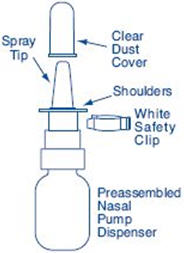
Figure A

Figure A

To Prime the Pump:

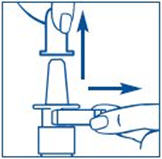
Figure B

Figure B
1.
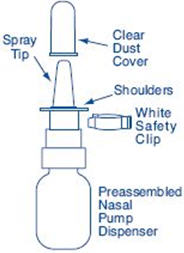
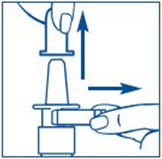
Remove and save the white safety clip and the clear plastic dust cover from the spray bottle (See Figure B).

Figure C
Figure C

2.
Hold the bottle in an upright position away from you. Put two fingers on the "shoulders" of the spray bottle and put your thumb on the bottom of the bottle. Apply pressure evenly to the "shoulders" and push down quickly and firmly 7 to 10 times, until you see a fine spray. Usually you will see the spray after about 7 pumps. (See Figure C).
3.
The pump is now primed. Priming only needs to be done 1 time, when you start using a new bottle of SYNAREL. You will waste your medicine if you prime the pump every time you use it and may not have enough medicine for 30 days of treatment.

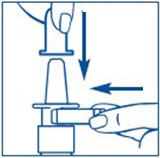
Figure D
Figure D

4.
Clean the Spray Tip after Priming:
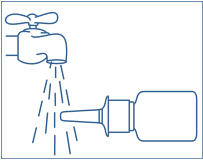
Hold the bottle in a horizontal position. Rinse the spray tip with warm water while wiping the tip with your finger or soft cloth for 15 seconds.
Wipe the spray tip with a soft cloth or tissue to dry.
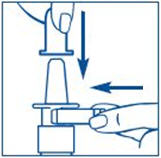
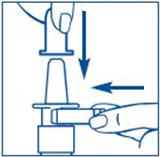
Replace the white safety clip and the clear plastic dust cover on the spray bottle (See Figure D).
Do Not try to clean the spray tip using a pointed object. Do Not take apart the pump.

How to use the SYNAREL Nasal Spray unit for the treatment of Endometriosis

Figure E
Figure E

5.
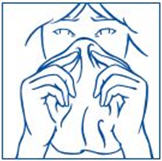
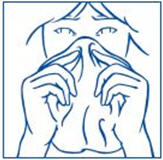
Gently blow your nose to clear both nostrils before you use SYNAREL nasal spray (See Figure E).

Figure F
Figure F

6.
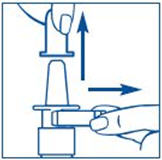
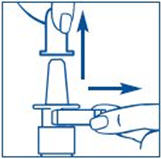
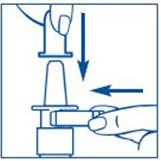
Clean the Spray Tip. Remove and save the white safety clip and the clear plastic dust cover from the spray bottle (See Figure F).
Hold the bottle in a horizontal position. Rinse the spray tip with warm water while wiping the tip with your finger or soft cloth for 15 seconds.
Wipe the spray tip with a soft cloth or tissue to dry.
Do Not try to clean the spray tip using a pointed object.
Do Not try to take apart the pump.

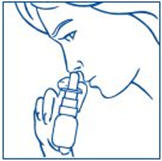
Figure G

Figure G
7.
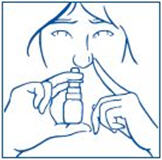
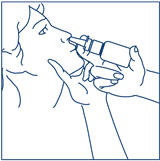
Bend your head forward and put the spray tip into one nostril. The tip should not reach too far into your nose. Aim the spray tip toward the back and outer side of your nose (See Figure G).

Figure H
Figure H

8.
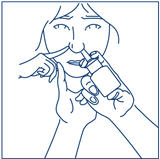
Close the other nostril with your finger (See Figure H).
9.
Apply pressure evenly to the "shoulders" and push down quickly and firmly. Pump the sprayer 1 time, at the same time as you sniff in gently. If the sprayer fails to deliver the dose clean the spray tip (See Step 6 Clean the Spray Tip).

Figure I
Figure I

10.
Remove the spray tip from your nose and tilt your head backwards for a few seconds. This lets the SYNAREL spray spread over the back of your nose (See Figure I).
Do not spray in your other nostril unless your doctor has instructed you to do so.

Figure J
Figure J

11.
Clean the Spray Tip after use (See Step 4).

It is important that you clean the spray tip before and after every use. Failure to do this may result in a clogged tip that may cause you to get the wrong dose of medicine.

Important Reminder: Treatment with SYNAREL must be uninterrupted with no missed doses to be effective.
Make sure you use SYNAREL exactly as your doctor tells you. Make sure to note the date you start each bottle so you do not run out of medicine and miss doses.

Keep out of the reach of children and use carefully as directed.

Storage Instructions:

Store SYNAREL at 59°F to 86°F (15°C to 30°C).
Store the SYNAREL bottle upright.
Keep SYNAREL out of the light.
Do not freeze SYNAREL.

This product's label may have been updated. For current full prescribing information, please visit www.pfizer.com.

Logo

LAB-0278-10.0
Revised: November 2025

MEDICATION GUIDE
SYNAREL (sin-na-rell)
(nafarelin acetate) nasal solution

What is the most important information I should know about SYNAREL?

Some people taking GnRH agonists like SYNAREL have had new or worsened mental (psychiatric) problems. Mental (psychiatric) problems may include emotional symptoms such as:
crying
irritability
restlessness (impatience)
anger
acting aggressive

Call your child's doctor right away if your child has any new or worsening mental symptoms or problems while taking SYNAREL

Some people taking GnRH agonists like SYNAREL have had seizures. The risk of seizures may be higher in people who:
have a history of seizures.
have a history of epilepsy.
have a history of brain or brain vessel (cerebrovascular) problems or tumors.
are taking a medicine that has been connected to seizures such as taking bupropion or selective serotonin reuptake inhibitors (SSRIs).

Seizures have also happened in people who have not had any of these problems.
Call your child's doctor right away if your child has a seizure while taking SYNAREL.

Severe cutaneous (skin) adverse reactions may happen during treatment with GnRH agonists like SYNAREL. Stop using SYNAREL and call your child’s doctor right away if your child has any of the following signs or symptoms during treatment with SYNAREL:

skin rash or acne
dry skin
itching
blisters on your skin
redness or swelling of your face, hands, or soles of your feet
blisters or sores in your mouth
peeling of your skin
fever
muscle or joint aches
swollen glands

What is SYNAREL?
SYNAREL is a gonadotropin releasing hormone (GnRH) medicine used for the treatment of children with central precocious puberty (CPP).

Do not give SYNAREL if your child:

is allergic to gonadotropin releasing hormone (GnRH), GnRH agonist medicines, or any of the ingredients in SYNAREL. See the end of this Medication Guide for a complete list of ingredients in SYNAREL.
has unusual vaginal bleeding that has not been checked by her doctor.
is pregnant or may become pregnant. SYNAREL can cause birth defects or loss of the baby. If your child becomes pregnant call your doctor.
is breastfeeding or plans to breastfeed. It is not known if SYNAREL passes into breast milk. You and your child's doctor should decide if your child will take SYNAREL or breastfeed. Do not breastfeed while taking SYNAREL.

Before your child takes SYNAREL, tell your doctor about all of your child's medical conditions, including if they:

have a history of mental (psychiatric) problems.
have or have had a history of seizures.
have a history of epilepsy.
have a history of brain or brain vessel (cerebrovascular) problems or tumors
are taking a medicine that has been connected to seizures such as bupropion or selective serotonin reuptake inhibitors (SSRIs).

Tell your doctor about all the medicines your child takes, including prescription and over-the-counter medicines, vitamins, and herbal supplements.

How should your child take SYNAREL?

Your child's doctor should do tests to make sure your child has CPP before treating your child with SYNAREL.
Keep all scheduled visits to the doctor. If scheduled doses are missed, your child may start having signs of puberty again. The doctor will do regular exams and blood tests to check for signs of puberty.
Take SYNAREL exactly as your doctor tells you to take it. See detailed "Instructions for Use" at the end of this Medication Guide for information about the right way to use SYNAREL.
Your child's doctor will tell you how much SYNAREL your child is to take and when to take it. If your doctor increases your child's daily dose of SYNAREL, 1 bottle will not last the standard 7 days. Talk with your child's doctor to make sure your child has enough SYNAREL to take their prescribed dose every day.

What should your child avoid while taking SYNAREL?

Your child should avoid sneezing while taking SYNAREL or right after using it, if possible. This could reduce the amount of medicine your child's body absorbs.
If your child needs to use a nasal decongestant spray while being treated with SYNAREL, they should not use the decongestant spray for at least 2 hours after taking the dose of SYNAREL.

What are the possible side effects of SYNAREL?
SYNAREL may cause serious side effects, including:

See "What is the most important information I should know about SYNAREL"
in the first month of treatment, SYNAREL can cause an increase in some hormones. During this time you may notice more signs of puberty in your child, including vaginal bleeding and breast enlargement in girls. Within 1 month of treatment, you should see signs in your child that puberty is stopping.
increased pressure in the fluid around the brain can happen in children taking gonadotropin releasing hormone (GnRH) agonist medicines including SYNAREL. Call your child's doctor right away if your child has any of the following symptoms during treatment with SYNAREL:
o
headache
o
eye problems, including blurred vision
o
double vision and decreased eyesight
o
eye pain
o
ringing in the ears
o
dizziness
o
nausea

The side effects of SYNAREL include:

allergic reactions such as shortness of breath, chest pain, hives, rash, and itching
acne
temporary increase in pubic hair
body odor
flaky, scaly skin
hot flashes
stuffy or runny nose (rhinitis)
white or brown vaginal discharge

These are not all of the possible side effects of SYNAREL. Call your doctor for medical advice about side effects. You may report side effects to FDA at 1-800-FDA-1088.

General Information about the safe and effective use of SYNAREL.
Medicines are sometimes prescribed for purposes other than those listed in a Medication Guide. Do not use SYNAREL for a condition for which it is not prescribed. Do not give SYNAREL to other people, even if they have the same symptoms that you have. It may harm them.
You can ask your doctor or pharmacist for information about SYNAREL that is written for health professionals.

What are the ingredients in SYNAREL?
Active ingredient: nafarelin acetate
Inactive ingredients: benzalkonium chloride, glacial acetic acid, sodium hydroxide or hydrochloric acid (to adjust pH), sorbitol, and purified water

Instructions for Use
SYNAREL (sin-na-rell)
(nafarelin acetate)
nasal solution

For use in the nose only.

Figure A

Figure A

Before you use SYNAREL nasal spray for the first time, you will need to prime it. This will make sure that you get the right dose of medicine each time you use it. Priming only needs to be done 1 time, when you start using a new bottle of SYNAREL.

To Prime the Pump:

Figure B
Figure B

1.
Remove and save the white safety clip and the clear plastic dust cover from the spray bottle (See Figure B).

Figure C
Figure C

2.
Hold the bottle in an upright position away from you. Put 2 fingers on the "shoulders" of the spray bottle and put your thumb on the bottom of the bottle. Apply pressure evenly to the "shoulders" and push down quickly and firmly 7 to 10 times, until you see a fine mist spray. Usually you will see the spray after about 7 pumps. (See Figure C). The pump is now primed.
It is normal to see some larger droplets of liquid within the fine mist. However, if SYNAREL comes out of the pump as a thin stream of liquid instead of a fine mist, SYNAREL may not work as well, and you should talk to your pharmacist.

Figure D
Figure D
Figure E
Figure E

3.
Clean the Spray Tip after Priming:
Hold the bottle in sideways (horizontal) position (see Figure D).
Rinse the "spray tip" with warm water while wiping the tip with your finger or soft cloth for 15 seconds.
Wipe the spray tip with a soft cloth or tissue to dry.
Replace the white safety clip and the clear plastic dust cover on the spray bottle. (See Figure E).
Do not try to clean the spray tip using a pointed object.
Do not take apart the pump.

How to use the SYNAREL Nasal Spray for the treatment of Central Precocious Puberty

Figure F
Figure F

4.
Have your child blow their nose to clear both nostrils before using SYNAREL nasal spray (see Figure F). If the child is too young to blow their nose, you may need to clear the child's nostrils with a bulb syringe.

Figure G
Figure G

5.
Clean the Spray Tip each time before and after using SYNAREL.
Remove and save the white safety clip and the clear plastic dust cover from the spray bottle (See Figure G).
Hold the bottle in sideways (horizontal) position. Rinse the spray tip with warm water while wiping the tip with your finger or soft cloth for 15 seconds.
Wipe the spray tip with a soft cloth or tissue to dry.
Do not try to clean the spray tip using a pointed object.
Do not try to take apart the pump.

Figure H
Figure H

6.
The child's head should be bent back a little and the spray tip put into one nostril. The tip should not reach too far into the nose. Aim the spray tip toward the back and outer side of the nose (See Figure H).

Figure I
Figure I

7.
Close the other nostril with a finger (See Figure I).

Put pressure evenly to the "shoulders" and push down quickly and firmly. Pump the sprayer 1 time, at the same time as the child sniffs in gently. Wait about 30 seconds and put one more spray in the same nostril. Repeat this process in the other nostril, for a total of four sprays. If the sprayer fails to deliver the dose, clean the spray tip (See Step 5 Clean the Spray Tip each time before and after using SYNAREL).

Figure J
Figure J

8.
Remove the spray tip from the child's nose after all sprays are completed. Keep the child's head tilted back for a few seconds. This lets the SYNAREL spray spread over the back of the nose (See Figure J).

Figure K
Figure K

9.
Clean the Spray Tip after use (See Step 5. Put on the white safety clip and the clear plastic dust cover (see Figure K).

It is important that you clean the spray tip before and after every use. Not doing this may result in a clogged tip that may cause you to get the wrong dose of medicine.

How should I store SYNAREL?

Store SYNAREL at room temperature between 59°F to 86°F (15°C to 30°C).
Store the SYNAREL bottle upright.
Keep SYNAREL out of the light.

Keep SYNAREL and all medicines out of the reach of children.

For more information call 1-800-438-1985.

This Medication Guide and Instructions for Use have been approved by the U.S. Food and Drug Administration.

Manufactured for: Pfizer Inc., 235 East 42nd Street, New York, NY, 10017

Logo

LAB-1049-4.0
Revised: November 2025

Additional Resources

Chat online with Pfizer Medical Information regarding your inquiry on a Pfizer medicine or vaccine.

Speak with a Pfizer Medical Information Professional regarding your Pfizer medicine or vaccine inquiry.

Available 9AM-5PM ET Monday to Friday; excluding holidays.


Submit a medical question for a Pfizer medicine or a vaccine. 

The submission will be reviewed during our standard business hours.

To report an adverse event related to a Pfizer product and you are not part of a clinical trial* for this medication, click the link below to submit your information: 
Pfizer Safety Reporting Site

*If you are involved in a clinical trial for either product, adverse events should be reported to your coordinating study site.

If you cannot use the above website to report an adverse event related to a Pfizer medication, please call (800) 438-1985.

You may also contact the U.S. Food and Drug Administration (FDA) directly to report adverse events or product quality concerns either online at www.fda.gov/medwatch or by calling (800) 332-1088.