(conjugated estrogens)
14 CLINICAL STUDIES
14 CLINICAL STUDIES
14.1 Effects on Vasomotor Symptoms
In the first year of the Health and Osteoporosis, Progestin and Estrogen (HOPE) Study, a total of 2,805 postmenopausal women (average age 53.3 ± 4.9 years) were randomly assigned to one of eight treatment groups of either placebo or CE, with or without MPA. Efficacy for vasomotor symptoms was assessed during the first 12 weeks of treatment in a subset of symptomatic women (n = 241) who had at least seven moderate to severe hot flushes daily, or at least 50 moderate to severe hot flushes during the week before randomization. PREMARIN (0.3 mg, 0.45 mg, and 0.625 mg tablets) was shown to be statistically better than placebo at weeks 4 and 12 for relief of both frequency and severity of moderate to severe vasomotor symptoms. Table 3 shows the adjusted mean number of hot flushes in the PREMARIN 0.3 mg, 0.45 mg, and 0.625 mg and placebo groups during the initial 12-week period.
| ||||
Treatment (No. of Patients) | ---------------No. of Hot Flushes/Day--------------- | |||
Time Period (week) | Baseline Mean ± SD | Observed Mean ± SD | Mean Change ± SD | p-Values vs Placebo* |
0.625 mg CE (n = 27) | ||||
4 | 12.29 ± 3.89 | 1.95 ± 2.77 | -10.34 ± 4.73 | <0.001 |
12 | 12.29 ± 3.89 | 0.75 ± 1.82 | -11.54 ± 4.62 | <0.001 |
0.45 mg CE (n = 32) | ||||
4 | 12.25 ± 5.04 | 5.04 ± 5.31 | -7.21 ± 4.75 | <0.001 |
12 | 12.25 ± 5.04 | 2.32 ± 3.32 | -9.93 ± 4.64 | <0.001 |
0.3 mg CE (n = 30) | ||||
4 | 13.77 ± 4.78 | 4.65 ± 3.71 | -9.12 ± 4.71 | <0.001 |
12 | 13.77 ± 4.78 | 2.52 ± 3.23 | -11.25 ± 4.60 | <0.001 |
Placebo (n = 28) | ||||
4 | 11.69 ± 3.87 | 7.89 ± 5.28 | -3.80 ± 4.71 | - |
12 | 11.69 ± 3.87 | 5.71 ± 5.22 | -5.98 ± 4.60 | - |
14.2 Effects on Vulvar and Vaginal Atrophy
Results of vaginal maturation indexes at cycles 6 and 13 showed that the differences from placebo were statistically significant (p < 0.001) for all treatment groups. (CE alone and CE/MPA treatment groups).
14.3 Effects on Bone Mineral Density
Health and Osteoporosis, Progestin and Estrogen (HOPE) Study
The HOPE study was a double-blind, randomized, placebo/active-drug-controlled, multicenter study of healthy postmenopausal women with an intact uterus. Subjects (mean age 53.3 ± 4.9 years) were 2.3 ± 0.9 years on average since menopause and took one 600 mg tablet of elemental calcium (Caltrate™) daily. Subjects were not given Vitamin D supplements. They were treated with PREMARIN 0.625 mg, 0.45 mg, 0.3 mg, or placebo. Prevention of bone loss was assessed by measurement of bone mineral density (BMD), primarily at the anteroposterior lumbar spine (L2 to L4). Secondarily, BMD measurements of the total body, femoral neck, and trochanter were also analyzed. Serum osteocalcin, urinary calcium, and N-telopeptide were used as bone turnover markers (BTM) at cycles 6, 13, 19, and 26.
Intent-to-treat subjects
All active treatment groups showed significant differences from placebo in each of the four BMD endpoints at cycles 6, 13, 19, and 26. The mean percent increases in the primary efficacy measure (L2 to L4 BMD) at the final on-therapy evaluation (cycle 26 for those who completed and the last available evaluation for those who discontinued early) were 2.46% with 0.625 mg, 2.26% with 0.45 mg, and 1.13% with 0.3 mg. The placebo group showed a mean percent decrease from baseline at the final evaluation of 2.45%. These results show that the lower dosages of PREMARIN were effective in increasing L2 to L4 BMD compared with placebo, and therefore support the efficacy of the lower doses.
The analysis for the other three BMD endpoints yielded mean percent changes from baseline in femoral trochanter that were generally larger than those seen for L2 to L4, and changes in femoral neck and total body that were generally smaller than those seen for L2 to L4. Significant differences between groups indicated that each of the PREMARIN treatments was more effective than placebo for all three of these additional BMD endpoints. With regard to femoral neck and total body, the active treatment groups all showed mean percent increases in BMD, while placebo treatment was accompanied by mean percent decreases. For femoral trochanter, each of the PREMARIN dose groups showed a mean percent increase that was significantly greater than the small increase seen in the placebo group. The percent changes from baseline to final evaluation are shown in Table 4.
| ||||
Region Evaluated Treatment Group* | No. of Subjects | Baseline (g/cm2) Mean ± SD | Change from Baseline (%) Adjusted Mean ± SE | p-Value vs. Placebo |
L2 to L4 BMD | ||||
0.625 | 83 | 1.17 ± 0.15 | 2.46 ± 0.37 | <0.001 |
0.45 | 91 | 1.13 ± 0.15 | 2.26 ± 0.35 | <0.001 |
0.3 | 87 | 1.14 ± 0.15 | 1.13 ± 0.36 | <0.001 |
Placebo | 85 | 1.14 ± 0.14 | -2.45 ± 0.36 | |
Total Body BMD | ||||
0.625 | 84 | 1.15 ± 0.08 | 0.68 ± 0.17 | <0.001 |
0.45 | 91 | 1.14 ± 0.08 | 0.74 ± 0.16 | <0.001 |
0.3 | 87 | 1.14 ± 0.07 | 0.40 ± 0.17 | <0.001 |
Placebo | 85 | 1.13 ± 0.08 | -1.50 ± 0.17 | |
Femoral Neck BMD | ||||
0.625 | 84 | 0.91 ± 0.14 | 1.82 ± 0.45 | <0.001 |
0.45 | 91 | 0.89 ± 0.13 | 1.84 ± 0.44 | <0.001 |
0.3 | 87 | 0.86 ± 0.11 | 0.62 ± 0.45 | <0.001 |
Placebo | 85 | 0.88 ± 0.14 | -1.72 ± 0.45 | |
Femoral Trochanter BMD | ||||
0.625 | 84 | 0.78 ± 0.13 | 3.82 ± 0.58 | <0.001 |
0.45 | 91 | 0.76 ± 0.12 | 3.16 ± 0.56 | 0.003 |
0.3 | 87 | 0.75 ± 0.10 | 3.05 ± 0.57 | 0.005 |
Placebo | 85 | 0.75 ± 0.12 | 0.81 ± 0.58 | |
Figure 1 shows the cumulative percentage of subjects with changes from baseline equal to or greater than the value shown on the x-axis.
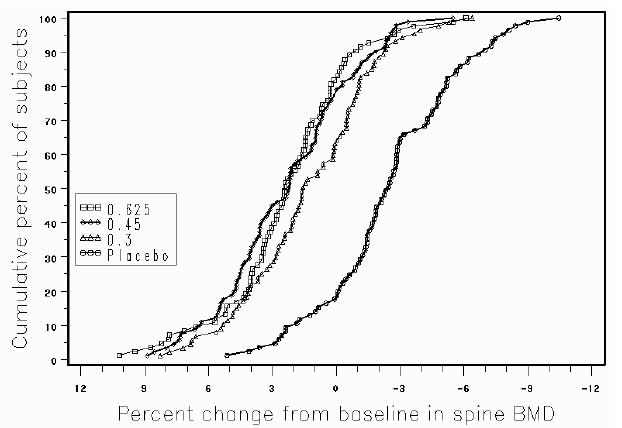
Figure 1. Cumulative Percent of Subjects With Changes From Baseline in Spine BMD of Given Magnitude or Greater in PREMARIN® and Placebo Groups
The mean percent changes from baseline in L2 to L4 BMD for women who completed the bone density study are shown with standard error bars by treatment group in Figure 2. Significant differences between each of the PREMARIN dosage groups and placebo were found at cycles 6, 13, 19, and 26.
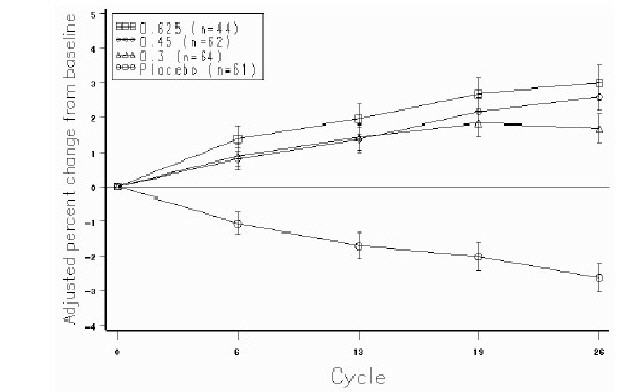
Figure 2. Adjusted Mean (SE) Percent Change From Baseline at Each Cycle in Spine BMD: Subjects Completing in PREMARIN Groups and Placebo
The bone turnover markers, serum osteocalcin and urinary N-telopeptide, significantly decreased (p < 0.001) in all active-treatment groups at cycles 6, 13, 19, and 26 compared with the placebo group. Larger mean decreases from baseline were seen with the active groups than with the placebo group. Significant differences from placebo were seen less frequently in urine calcium.
14.4 Effects on Female Hypogonadism
In clinical studies of delayed puberty due to female hypogonadism, breast development was induced by doses as low as 0.15 mg. The dosage may be gradually titrated upward at 6-to 12 month intervals as needed to achieve appropriate bone age advancement and eventual epiphyseal closure. Clinical studies suggest that doses of 0.15 mg, 0.3 mg, and 0.6 mg are associated with mean ratios of bone age advancement to chronological age progression (ΔBA/ΔCA) of 1.1, 1.5, and 2.1, respectively. (PREMARIN in the dose strength of 0.15 mg is not available commercially). Available data suggest that chronic dosing with 0.625 mg is sufficient to induce artificial cyclic menses with sequential progestin treatment and to maintain bone mineral density after skeletal maturity is achieved.
14.5 Women's Health Initiative Studies
The WHI enrolled approximately 27,000 predominantly healthy postmenopausal women in two substudies to assess the risks and benefits of daily oral CE (0.625 mg)-alone or in combination with MPA (2.5 mg) compared to placebo in the prevention of certain chronic diseases. The primary endpoint was the incidence of CHD (defined as nonfatal MI, silent MI and CHD death), with invasive breast cancer as the primary adverse outcome. A "global index" included the earliest occurrence of CHD, invasive breast cancer, stroke, PE, endometrial cancer (only in the CE plus MPA substudy), colorectal cancer, hip fracture, or death due to other causes. These substudies did not evaluate the effects of CE-alone or CE plus MPA on menopausal symptoms.
WHI Estrogen-Alone Substudy
The WHI estrogen-alone substudy was stopped early because an increased risk of stroke was observed, and it was deemed that no further information would be obtained regarding the risks and benefits of estrogen alone in predetermined primary endpoints.
Results of the estrogen-alone substudy, which included 10,739 women (average 63 years of age, range 50 to 79; 75.3% White, 15.1% Black, 6.1% Hispanic, 3.6% Other) after an average follow-up of 7.1 years, are presented in Table 5.
| |||
Event | Relative Risk | CE | Placebo |
(95% nCI†) | Absolute Risk per 10,000 Women-Years | ||
CHD events‡ | 0.95 (0.78–1.16) | 54 | 57 |
Non-fatal MI‡ | 0.91 (0.73–1.14) | 40 | 43 |
CHD death‡ | 1.01 (0.71–1.43) | 16 | 16 |
All Stroke‡ | 1.33 (1.05–1.68) | 45 | 33 |
Ischemic stroke‡ | 1.55 (1.19–2.01) | 38 | 25 |
1.47 (1.06–2.06) | 23 | 15 | |
Pulmonary embolism‡ | 1.37 (0.90–2.07) | 14 | 10 |
Invasive breast cancer‡ | 0.80 (0.62–1.04) | 28 | 34 |
Colorectal cancer¶ | 1.08 (0.75–1.55) | 17 | 16 |
Hip fracture‡ | 0.65 (0.45–0.94) | 12 | 19 |
0.64 (0.44–0.93) | 11 | 18 | |
0.58 (0.47–0.72) | 35 | 59 | |
0.71 (0.64–0.80) | 144 | 197 | |
1.08 (0.88–1.32) | 53 | 50 | |
1.04 (0.88–1.22) | 79 | 75 | |
Global IndexÞ | 1.02 (0.92–1.13) | 206 | 201 |
For those outcomes included in the WHI "global index" that reached statistical significance, the absolute excess risk per 10,000 women-years in the group treated with CE-alone was 12 more strokes while the absolute risk reduction per 10,000 women-years was 7 fewer hip fractures.9 The absolute excess risk of events included in the "global index" was a non-significant 5 events per 10,000 women-years. There was no difference between the groups in terms of all-cause mortality.
No overall difference for primary CHD events (nonfatal MI, silent MI and CHD death) and invasive breast cancer incidence in women receiving CE-alone compared with placebo was reported in final centrally adjudicated results from the estrogen-alone substudy, after an average follow up of 7.1 years. See Table 5.
Centrally adjudicated results for stroke events from the estrogen-alone substudy, after an average follow-up of 7.1 years, reported no significant difference in distribution of stroke subtype or severity, including fatal strokes, in women receiving CE-alone compared to placebo. Estrogen-alone increased the risk for ischemic stroke, and this excess risk was present in all subgroups of women examined.10
Timing of the initiation of estrogen-alone therapy relative to the start of menopause may affect the overall risk benefit profile. The WHI estrogen-alone substudy stratified by age showed in women 50–59 years of age, a non-significant trend toward reduced risk for CHD [hazard ratio (HR) 0.63 (95% CI 0.36–1.09)] and overall mortality [HR 0.71 (95% CI 0.46–1.11)].
WHI Estrogen Plus Progestin Substudy
The WHI estrogen plus progestin substudy was stopped early. According to the predefined stopping rule, after an average follow-up of 5.6 years of treatment, the increased risk of invasive breast cancer and cardiovascular events exceeded the specified benefits included in the "global index." The absolute excess risk of events included in the "global index" was 19 per 10,000 women-years.
For those outcomes included in the WHI "global index" that reached statistical significance after 5.6 years of follow-up, the absolute excess risks per 10,000 women-years in the group treated with CE plus MPA were 7 more CHD events, 8 more strokes, 10 more PEs, and 8 more invasive breast cancers, while the absolute risk reductions per 10,000 women-years were 6 fewer colorectal cancers and 5 fewer hip fractures.
Results of the estrogen plus progestin substudy, which included 16,608 women (average 63 years of age, range 50 to 79; 83.9% White, 6.8% Black, 5.4% Hispanic, 3.9% Other) are presented in Table 6. These results reflect centrally adjudicated data after an average follow-up of 5.6 years.
| |||
Relative Risk | CE/MPA | Placebo | |
Event | (95% nCI‡) | Absolute Risk per 10,000 Women-Years | |
CHD events | 1.23 (0.99–1.53) | 41 | 34 |
Non-fatal MI | 1.28 (1.00–1.63) | 31 | 25 |
CHD death | 1.10 (0.70–1.75) | 8 | 8 |
All Strokes | 1.31 (1.03–1.68) | 33 | 25 |
Ischemic stroke | 1.44 (1.09–1.90) | 26 | 18 |
Deep vein thrombosis§ | 1.95 (1.43–2.67) | 26 | 13 |
Pulmonary embolism | 2.13 (1.45–3.11) | 18 | 8 |
Invasive breast cancer¶ | 1.24 (1.01–1.54) | 41 | 33 |
Colorectal cancer | 0.61 (0.42–0.87) | 10 | 16 |
Endometrial cancer§ | 0.81 (0.48–1.36) | 6 | 7 |
Cervical cancer§ | 1.44 (0.47–4.42) | 2 | 1 |
Hip fracture | 0.67 (0.47–0.96) | 11 | 16 |
Vertebral fractures§ | 0.65 (0.46–0.92) | 11 | 17 |
Lower arm/wrist fractures§ | 0.71 (0.59–0.85) | 44 | 62 |
Total fractures§ | 0.76 (0.69–0.83) | 152 | 199 |
Overall Mortality# | 1.00 (0.83–1.19) | 52 | 52 |
Global IndexÞ | 1.13 (1.02–1.25) | 184 | 165 |
Timing of the initiation of estrogen therapy relative to the start of menopause may affect the overall risk benefit profile. The WHI estrogen plus progestin substudy stratified by age showed in women 50–59 years of age, a non-significant trend toward reduced risk for overall mortality [HR 0.69 (95% CI 0.44–1.07)].
14.6 Women's Health Initiative Memory Study
The WHIMS estrogen-alone ancillary study of WHI enrolled 2,947 predominantly healthy hysterectomized postmenopausal women 65 to 79 years of age (45% were 65 to 69 years of age; 36% were 70 to 74 years of age; 19% were 75 years of age and older) to evaluate the effects of daily CE (0.625 mg)- alone on the incidence of probable dementia (primary outcome) compared to placebo.
After an average follow-up of 5.2 years, the relative risk of probable dementia for CE-alone versus placebo was 1.49 (95% CI 0.83–2.66). The absolute risk of probable dementia for CE-alone versus placebo was 37 versus 25 cases per 10,000 women-years. Probable dementia as defined in this study included Alzheimer's disease (AD), vascular dementia (VaD) and mixed types (having features of both AD and VaD). The most common classification of probable dementia in the treatment group and the placebo groups was AD. Since the ancillary study was conducted in women 65 to 79 years of age, it is unknown whether these findings apply to younger postmenopausal women [see Warnings and Precautions (5.3), and Use in Specific Populations (8.5)].
The WHIMS estrogen plus progestin ancillary study enrolled 4,532 predominantly healthy postmenopausal women 65 years of age and older (47% were 65 to 69 years of age; 35% were 70 to 74 years; 18% were 75 years of age and older) to evaluate the effects of daily CE (0.625 mg) plus MPA (2.5 mg) on the incidence of probable dementia (primary outcome) compared to placebo.
After an average follow-up of 4 years, the relative risk of probable dementia for CE plus MPA was 2.05 (95% CI, 1.21–3.48). The absolute risk of probable dementia for CE (0.625 mg) plus MPA (2.5 mg) versus placebo was 45 versus 22 per 10,000 women-years. Probable dementia as defined in this study included AD, VaD and mixed types (having features of both AD and VaD). The most common classification of probable dementia in both the treatment and placebo groups was AD. Since the ancillary study was conducted in women 65 to 79 years of age, it is unknown whether these findings apply to younger postmenopausal women [see Warnings and Precautions (5.3), and Use in Specific Populations (8.5)].
When data from the two populations were pooled as planned in the WHIMS protocol, the reported overall relative risk for probable dementia was 1.76 (95% CI 1.19–2.60). Differences between groups became apparent in the first year of treatment. It is unknown whether these findings apply to younger postmenopausal women [see Warnings and Precautions (5.3), and Use in Specific Populations (8.5)].
PATIENT INFORMATION
PATIENT INFORMATION
PREMARIN®(prem-uh-rin)
(Conjugated estrogen tablets)
Read this PATIENT INFORMATION before you start taking PREMARIN and read what you get each time you refill your PREMARIN prescription. There may be new information. This information does not take the place of talking to your healthcare provider about your medical condition or your treatment.
WHAT IS THE MOST IMPORTANT INFORMATION I SHOULD KNOW ABOUT PREMARIN (AN ESTROGEN MIXTURE)? |
|
What is PREMARIN?
PREMARIN is a medicine that contains a mixture of estrogen hormones.
What is PREMARIN used for?
PREMARIN is used after menopause to:
- •
- Reduce moderate to severe hot flushes
Estrogens are hormones made by a woman's ovaries. The ovaries normally stop making estrogens when a woman is between 45 and 55 years old. This drop in body estrogen levels causes the "change of life" or menopause (the end of monthly menstrual periods). Sometimes, both ovaries are removed during an operation before natural menopause takes place. The sudden drop in estrogen levels causes "surgical menopause."
When the estrogen levels begin dropping, some women get very uncomfortable symptoms, such as feelings of warmth in the face, neck, and chest, or sudden strong feelings of heat and sweating ("hot flushes"). In some women the symptoms are mild, and they will not need to take estrogens. In other women, symptoms can be more severe. - •
- Treat menopausal changes in and around the vagina
You and your healthcare provider should talk regularly about whether you still need treatment with PREMARIN to control these problems. If you use PREMARIN only to treat your menopausal changes in and around your vagina, talk with your healthcare provider about whether a topical vaginal product would be better for you. - •
- Help reduce your chances of getting osteoporosis (thin weak bones)
Osteoporosis from menopause is a thinning of the bones that makes them weaker and easier to break. If you use PREMARIN only to prevent osteoporosis due to menopause, talk with your healthcare provider about whether a different treatment or medicine without estrogens might be better for you.
Weight-bearing exercise, like walking or running, and taking calcium (1500 mg/day of elemental calcium) and vitamin D (400–800 IU/day) supplements may also lower your chances of getting postmenopausal osteoporosis. It is important to talk about exercise and supplements with your healthcare provider before starting them.
You and your healthcare provider should talk regularly about whether you still need treatment with PREMARIN.
PREMARIN is also used to:
- •
- Treat certain conditions in women before menopause if their ovaries do not make enough estrogen naturally.
- •
- Ease symptoms of certain cancers that have spread through the body, in men and women
Who should not take PREMARIN?
Do not take PREMARIN if you:
- •
- Have unusual vaginal bleeding
- •
- Currently have or have had certain cancers
Estrogens may increase the chance of getting certain types of cancers, including cancer of the breast or uterus. If you have or have had cancer, talk with your healthcare provider about whether you should use PREMARIN. - •
- Had a stroke or heart attack
- •
- Currently have or have had blood clots
- •
- Currently have or have had liver problems
- •
- Have been diagnosed with a bleeding disorder
- •
- Are allergic to PREMARIN or any of its ingredients
See the end of this leaflet for a list of ingredients in PREMARIN.
Tell your healthcare provider
- •
- If you have any unusual vaginal bleeding
Vaginal bleeding after menopause may be a warning sign of cancer of the uterus (womb). Your healthcare provider should check any unusual vaginal bleeding to find out the cause. - •
- About all of your medical problems
Your healthcare provider may need to check you more carefully if you have certain conditions, such as asthma (wheezing), epilepsy (seizures), diabetes, migraine, endometriosis, lupus, problems with your heart, liver, thyroid, kidneys, or have high calcium levels in your blood. - •
- About all the medicines you take
This includes prescription and nonprescription medicines, vitamins, and herbal supplements. Some medicines may affect how PREMARIN works. PREMARIN may also affect how your other medicines work. - •
- If you are going to have surgery or will be on bedrest
You may need to stop taking PREMARIN. - •
- If you are pregnant or think you may be pregnant
PREMARIN is not for pregnant women.
- •
- If you are breastfeeding
The hormones in PREMARIN can pass into your breast milk.
How should I take PREMARIN?
- •
- Take one PREMARIN tablet at the same time each day
- •
- If you miss a dose, take it as soon as possible. If it is almost time for your next dose, skip the missed dose and go back to your normal schedule. Do not take 2 doses at the same time.
- •
- Estrogens should be used at the lowest dose possible for your treatment only as long as needed. You and your healthcare provider should talk regularly (for example, every 3 to 6 months) about the dose you are taking and whether you still need treatment with PREMARIN.
- •
- If you see something that resembles a tablet in your stool, talk to your healthcare provider.
- •
- Take PREMARIN with or without food.
What are the possible side effects of PREMARIN?
Side effects are grouped by how serious they are and how often they happen when you are treated.
Serious, but less common side effects include:
- •
- Heart attack
- •
- Stroke
- •
- Blood clots
- •
- Breast cancer
- •
- Cancer of the lining of the uterus (womb)
- •
- Cancer of the ovary
- •
- Dementia
- •
- High or low blood calcium
- •
- Gallbladder disease
- •
- Visual abnormalities
- •
- High blood pressure
- •
- High levels of fat (triglycerides) in your blood
- •
- Liver problems
- •
- Changes in your thyroid hormone levels
- •
- Fluid retention
- •
- Cancer changes of endometriosis
- •
- Enlargement of benign tumors of the uterus ("fibroids")
- •
- Severe allergic reactions
- •
- Changes in certain laboratory test results, such as high blood sugar
Call your healthcare provider right away if you get any of the following warning signs or any other unusual symptoms that concern you:
- •
- New breast lumps
- •
- Unusual vaginal bleeding
- •
- Changes in vision or speech
- •
- Sudden new severe headaches
- •
- Severe pains in your chest or legs with or without shortness of breath, weakness and fatigue
- •
- Swelling of the face, lips, and tongue with or without red itchy bumps
Common side effects of PREMARIN include:
- •
- Headache
- •
- Breast pain
- •
- Irregular vaginal bleeding or spotting
- •
- Stomach/abdominal cramps/bloating
- •
- Nausea and vomiting
- •
- Hair loss
- •
- Fluid retention
- •
- Vaginal yeast infection
These are not all the possible side effects of PREMARIN. For more information, ask your healthcare provider or pharmacist for advice about side effects. You may report side effects to FDA at 1-800-FDA-1088.
What can I do to lower my chances of getting a serious side effect with PREMARIN?
- •
- Talk with your healthcare provider regularly about whether you should continue taking PREMARIN
- •
- If you have a uterus, talk to your healthcare provider about whether the addition of a progestin is right for you. The addition of a progestin is generally recommended for women with a uterus to reduce the chance of getting cancer of the uterus (womb).
- •
- See your health care provider right away if you get vaginal bleeding while taking PREMARIN
- •
- Have a pelvic exam, breast exam and mammogram (breast X-ray) every year unless your healthcare provider tells you something else. If members of your family have had breast cancer or if you have ever had breast lumps or an abnormal mammogram, you may need to have breast exams more often.
- •
- If you have high blood pressure, high cholesterol (fat in the blood), diabetes, are overweight, or if you use tobacco, you may have higher chances for getting heart disease. Ask your healthcare provider for ways to lower your chances of getting heart disease.
General information about the safe and effective use of PREMARIN
Medicines are sometimes prescribed for conditions that are not mentioned in patient information leaflets. Do not take PREMARIN for conditions for which it was not prescribed. Do not give PREMARIN to other people, even if they have the same symptoms you have. It may harm them.
Keep PREMARIN out of the reach of children
This leaflet provides a summary of the most important information about PREMARIN. If you would like more information, talk with your healthcare provider or pharmacist.
What are the ingredients in PREMARIN?
PREMARIN contains a mixture of conjugated estrogens, which are a mixture of sodium estrone sulfate and sodium equilin sulfate and other components including sodium sulfate conjugates, 17 α-dihydroequilin, 17 α-estradiol, and 17 β-dihydroequilin.
PREMARIN 0.3 mg, 0.45 mg, 0.625 mg, 0.9 mg, and 1.25 mg tablets also contain the following inactive ingredients: calcium phosphate tribasic, hydroxypropyl cellulose, microcrystalline cellulose, powdered cellulose, hypromellose, lactose monohydrate, magnesium stearate, polyethylene glycol, sucrose and titanium dioxide.
The tablets come in different strengths and each strength tablet is a different color. The color ingredients are:
- •
- 0.3 mg tablet (green color): D&C Yellow No. 10 and FD&C Blue No. 2.
- •
- 0.45 mg tablet (blue color): FD&C Blue No. 2.
- •
- 0.625 mg tablet (maroon color): FD&C Blue No. 2 and FD&C Red No. 40.
- •
- 0.9 mg tablet (white color): D&C Red No. 30 and D&C Red No. 7.
- •
- 1.25 mg tablet (yellow color): black iron oxide, D&C Yellow No. 10, and FD&C Yellow No. 6.
The appearance of these tablets is a trademark of Wyeth LLC.
Store at Controlled Room Temperature 20° – 25°C (68° – 77°F).
This product's labeling may have been updated. For the most recent prescribing information, please visit www.pfizer.com.

LAB-0515-7.0
Revised 04/2025
Additional Resources
Chat online with Pfizer Medical Information regarding your inquiry on a Pfizer medicine or vaccine.
Speak with a Pfizer Medical Information Professional regarding your Pfizer medicine or vaccine inquiry.
Available 9AM-5PM ET Monday to Friday; excluding holidays.
Submit a medical question for a Pfizer medicine or a vaccine.
The submission will be reviewed during our standard business hours.
To report an adverse event related to a Pfizer product and you are not part of a clinical trial* for this medication, click the link below to submit your information:
Pfizer Safety Reporting Site
*If you are involved in a clinical trial for either product, adverse events should be reported to your coordinating study site.
If you cannot use the above website to report an adverse event related to a Pfizer medication, please call (800) 438-1985.
You may also contact the U.S. Food and Drug Administration (FDA) directly to report adverse events or product quality concerns either online at www.fda.gov/medwatch or by calling (800) 332-1088.