(nirmatrelvir tablets; ritonavir tablets)
4 CONTRAINDICATIONS
4 CONTRAINDICATIONS
PAXLOVID is contraindicated in patients with a history of clinically significant hypersensitivity reactions [e.g., toxic epidermal necrolysis (TEN) or Stevens-Johnson syndrome] to its active ingredients (nirmatrelvir or ritonavir) or any other components of the product.
PAXLOVID is contraindicated with drugs that are primarily metabolized by CYP3A and for which elevated concentrations are associated with serious and/or life-threatening reactions and drugs that are strong CYP3A inducers where significantly reduced nirmatrelvir or ritonavir plasma concentrations may be associated with the potential for loss of virologic response and possible resistance. There are certain other drugs for which concomitant use with PAXLOVID should be avoided and/or dose adjustment, interruption, or therapeutic monitoring is recommended. Drugs listed in this section are a guide and not considered a comprehensive list of all drugs that may be contraindicated with PAXLOVID. The healthcare provider should consult other appropriate resources such as the prescribing information for the interacting drug for comprehensive information on dosing or monitoring with concomitant use of a strong CYP3A inhibitor like PAXLOVID [see Drug Interactions (7.3)]:
- ➢
- Drugs that are primarily metabolized by CYP3A for which elevated concentrations are associated with serious and/or life-threatening reactions [see Drug Interactions (7.3)]:
- •
- Alpha 1-adrenoreceptor antagonist: alfuzosin
- •
- Antianginal: ranolazine
- •
- Antiarrhythmic: amiodarone, dronedarone, flecainide, propafenone, quinidine
- •
- Anti-gout: colchicine (in patients with renal and/or hepatic impairment [see Table 2, Drug Interactions (7.3)])
- •
- Antipsychotics: lurasidone, pimozide
- •
- Benign prostatic hyperplasia agents: silodosin
- •
- Cardiovascular agents: eplerenone, ivabradine
- •
- Ergot derivatives: dihydroergotamine, ergotamine, methylergonovine
- •
- HMG-CoA reductase inhibitors: lovastatin, simvastatin (these drugs can be temporarily discontinued to allow PAXLOVID use [see Table 2, Drug Interactions (7.3)])
- •
- Immunosuppressants: voclosporin
- •
- Microsomal triglyceride transfer protein inhibitor: lomitapide
- •
- Migraine medications: eletriptan, ubrogepant
- •
- Mineralocorticoid receptor antagonists: finerenone
- •
- Non-opioid analgesic (selective blocker of Nav1.8 sodium channels): suzetrigine
- •
- Opioid antagonists: naloxegol
- •
- PDE5 inhibitor: sildenafil (Revatio®) when used for pulmonary arterial hypertension (PAH)
- •
- Sedative/hypnotics: triazolam, oral midazolam
- •
- Serotonin receptor 1A agonist/serotonin receptor 2A antagonist: flibanserin
- •
- Vasopressin receptor antagonists: tolvaptan
- ➢
- Drugs that are strong CYP3A inducers where significantly reduced nirmatrelvir or ritonavir plasma concentrations may be associated with the potential for loss of virologic response and possible resistance. PAXLOVID cannot be started immediately after discontinuation of any of the following medications due to the delayed offset of the recently discontinued CYP3A inducer [see Drug Interactions (7.3)]:
- •
- Anticancer drugs: apalutamide, enzalutamide
- •
- Anticonvulsant: carbamazepine, phenobarbital, primidone, phenytoin
- •
- Antimycobacterials: rifampin, rifapentine
- •
- Cystic fibrosis transmembrane conductance regulator potentiators: lumacaftor/ivacaftor
- •
- Herbal products: St. John's Wort (hypericum perforatum)
MEDICATION GUIDE
PATIENT INFORMATION | ||||||
What is the most important information I should know about PAXLOVID? PAXLOVID can interact with other medicines causing severe or life-threatening side effects or death. It is important to know the medicines that should not be taken with PAXLOVID. Do not take PAXLOVID if:
| ||||||
|
|
| ||||
These are not the only medicines that may cause serious or life-threatening side effects if taken with PAXLOVID. PAXLOVID may increase or decrease the levels of multiple other medicines. It is very important to tell your healthcare provider about all of the medicines you are taking because additional laboratory tests or changes in the dose of your other medicines may be necessary during treatment with PAXLOVID. Your healthcare provider may also tell you about specific symptoms to watch out for that may indicate that you need to stop or decrease the dose of some of your other medicines.
| ||||||
What is PAXLOVID? PAXLOVID is not approved for use as pre-exposure or post-exposure treatment for prevention of COVID-19. | ||||||
Before taking PAXLOVID, tell your healthcare provider about all of your medical conditions, including if you:
Tell your healthcare provider about all the medicines you take, including prescription and over-the-counter medicines, vitamins, and herbal supplements.
Tell your healthcare provider if you are taking combined birth control (hormonal contraceptive). PAXLOVID may affect how your hormonal contraceptives work. Females who are able to become pregnant should use another effective alternative form of contraception or an additional barrier method of contraception during treatment with PAXLOVID. Talk to your healthcare provider if you have any questions about contraceptive methods that might be right for you. | ||||||
How should I take PAXLOVID?
| ||||||
If you are prescribed PAXLOVID 300 mg; 100 mg Dose Pack | ||||||
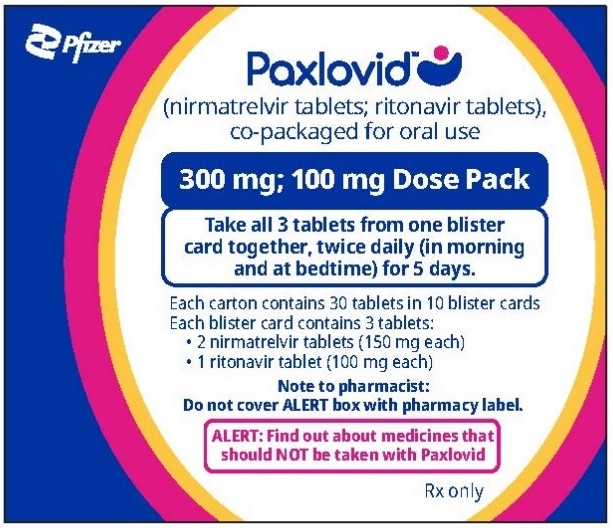 | ||||||
How to take PAXLOVID 300 mg; 100 mg Dose Pack | ||||||
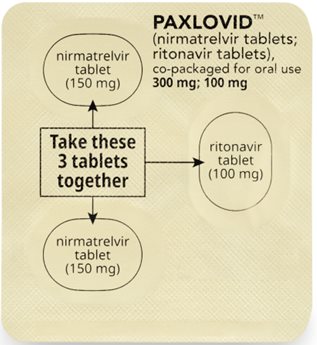 | Morning Dose: | |||||
 | ||||||
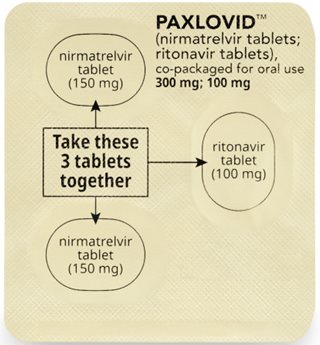 | Bedtime Dose: | |||||
 | ||||||
If you are prescribed PAXLOVID 150 mg; 100 mg Dose Pack | ||||||
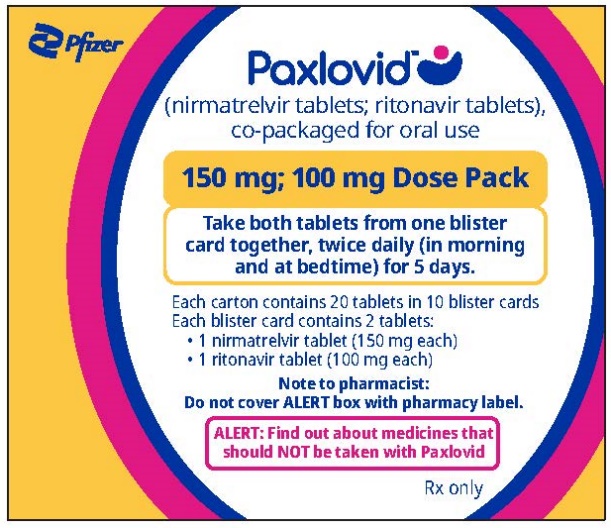 | ||||||
How to take PAXLOVID 150 mg; 100 mg Dose Pack | ||||||
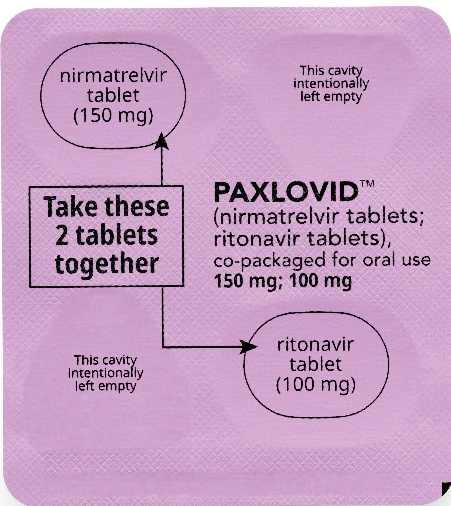 | Morning Dose: | |||||
 | ||||||
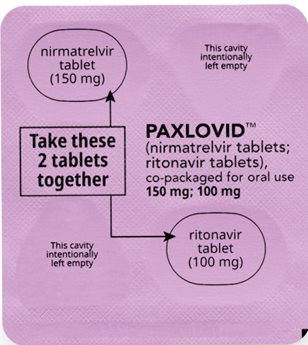 | Bedtime Dose: | |||||
 | ||||||
If you are prescribed PAXLOVID 300 mg; 100 mg (Day 1) and 150 mg; 100 mg (Days 2-5) | ||||||
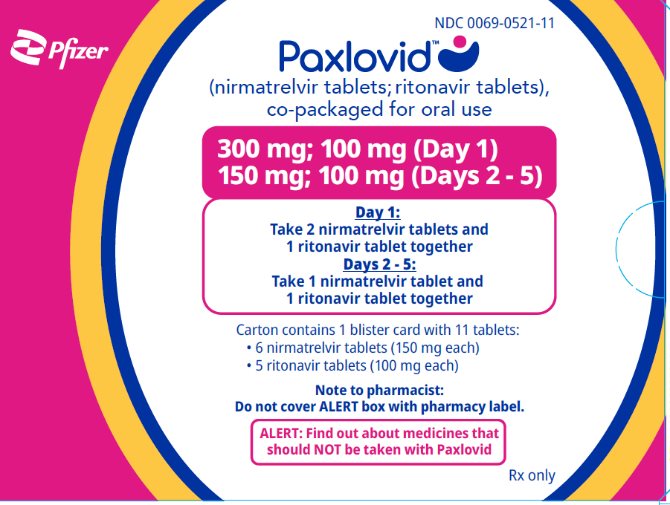 | ||||||
How to take PAXLOVID 300 mg; 100 mg (Day 1) and 150 mg; 100 mg (Days 2-5) | ||||||
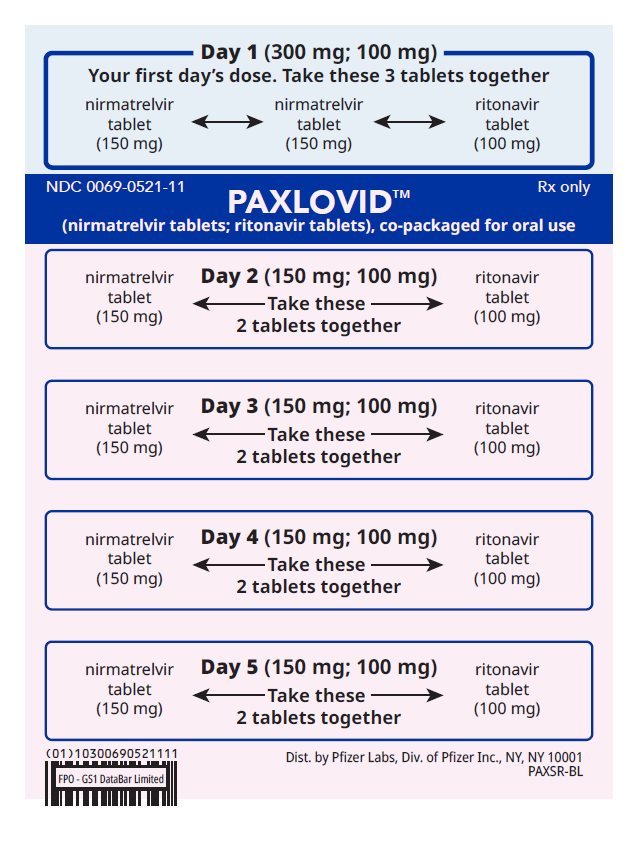 | Day 1 (First Day): Take the 2 pink nirmatrelvir tablets and | |||||
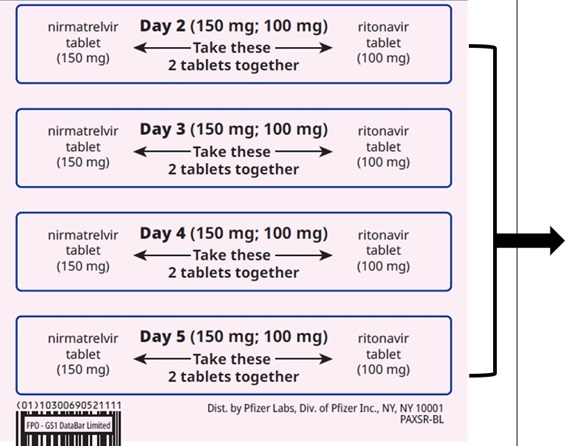 | Days 2-5: Take the 1 pink nirmatrelvir tablet and 1 white ritonavir tablet together | |||||
Talk to your healthcare provider if you do not feel better or if you feel worse after 5 days. | ||||||
What are the possible side effects of PAXLOVID? PAXLOVID may cause serious side effects, including:
| ||||||
|
| |||||
| ||||||
|
| |||||
The most common side effects of PAXLOVID include: altered sense of taste (such as metallic, bitter taste) and diarrhea. Other possible side effects include:
These are not all of the possible side effects of PAXLOVID. For more information, ask your healthcare provider or pharmacist. Call your doctor for medical advice about side effects. You may report side effects to FDA at 1-800-FDA-1088. | ||||||
How should I store PAXLOVID?
Keep PAXLOVID and all medicines out of the reach of children. | ||||||
General information about the safe and effective use of PAXLOVID. | ||||||
What are the ingredients in PAXLOVID? | ||||||
 LAB-1524-5.0 | ||||||


This Patient Information has been approved by the U.S. Food and Drug Administration. Revised: 02/2026
Additional Resources
Chat online with Pfizer Medical Information regarding your inquiry on a Pfizer medicine or vaccine.
Speak with a Pfizer Medical Information Professional regarding your Pfizer medicine or vaccine inquiry.
Available 9AM-5PM ET Monday to Friday; excluding holidays.
Submit a medical question for a Pfizer medicine or a vaccine.
The submission will be reviewed during our standard business hours.
To report an adverse event related to a Pfizer product and you are not part of a clinical trial* for this medication, click the link below to submit your information:
Pfizer Safety Reporting Site
*If you are involved in a clinical trial for either product, adverse events should be reported to your coordinating study site.
If you cannot use the above website to report an adverse event related to a Pfizer medication, please call (800) 438-1985.
You may also contact the U.S. Food and Drug Administration (FDA) directly to report adverse events or product quality concerns either online at www.fda.gov/medwatch or by calling (800) 332-1088.