(nirmatrelvir tablets; ritonavir tablets)
14 CLINICAL STUDIES
14 CLINICAL STUDIES
14.1 Efficacy in Subjects at High Risk of Progression to Severe COVID-19 (EPIC-HR)
EPIC-HR (NCT04960202) was a Phase 2/3, randomized, double-blind, placebo-controlled trial in non-hospitalized symptomatic adult subjects with a laboratory confirmed diagnosis of SARS-CoV-2 infection. Eligible subjects were 18 years of age and older with at least 1 of the following risk factors for progression to severe disease: diabetes, overweight (BMI >25), chronic lung disease (including asthma), chronic kidney disease, current smoker, immunosuppressive disease or immunosuppressive treatment, cardiovascular disease, hypertension, sickle cell disease, neurodevelopmental disorders, active cancer, medically-related technological dependence, or were 60 years of age and older regardless of comorbidities. Subjects with COVID-19 symptom onset of ≤5 days were included in the study. Subjects were randomized (1:1) to receive PAXLOVID (nirmatrelvir/ritonavir 300 mg/100 mg) or placebo orally every 12 hours for 5 days. The trial excluded individuals with a history of prior COVID-19 infection or vaccination and excluded individuals taking any medications with clinically significant drug interactions with PAXLOVID. The primary efficacy endpoint was the proportion of subjects with COVID-19 related hospitalization or death from any cause through Day 28. The analysis was conducted in the modified intent-to-treat (mITT) analysis set [all treated subjects with onset of symptoms ≤3 days who at baseline did not receive nor were expected to receive COVID-19 therapeutic monoclonal antibody (mAb) treatment], the mITT1 analysis set (all treated subjects with onset of symptoms ≤5 days who at baseline did not receive nor were expected to receive COVID-19 therapeutic mAb treatment), and the mITT2 analysis set (all treated subjects with onset of symptoms ≤5 days).
A total of 2,113 subjects were randomized to receive either PAXLOVID or placebo. At baseline, mean age was 45 years; 51% were male; 71% were White, 15% were Asian, 9% were American Indian or Alaska Native, 4% were Black or African American, and 1% was missing or unknown; 41% were Hispanic or Latino; 67% of subjects had onset of symptoms ≤3 days before initiation of study treatment; 49% of subjects were serological negative at baseline; the mean (SD) baseline viral RNA in nasopharyngeal samples was 4.71 log10 copies/mL (2.89); 27% of subjects had a baseline viral RNA of ≥10^7 (log10 copies/mL); 6% of subjects either received or were expected to receive COVID-19 therapeutic monoclonal antibody treatment at the time of randomization and were excluded from the mITT and mITT1 analyses.
The baseline demographic and disease characteristics were balanced between the PAXLOVID and placebo groups.
The proportions of subjects who discontinued treatment due to an adverse event were 2.0% in the PAXLOVID group and 4.2% in the placebo group.
Table 9 provides results of the primary endpoint in mITT1 analysis population. For the primary endpoint, the relative risk reduction in the mITT1 analysis population for PAXLOVID compared to placebo was 86% (95% CI: 72%, 93%).
| PAXLOVID (N=977) | Placebo (N=989) | |
|---|---|---|
| Abbreviations: CI=confidence interval; COVID-19=coronavirus disease 2019; mAb=monoclonal antibody; mITT1=modified intent-to-treat 1 (all treated subjects with onset of symptoms ≤5 days who at baseline did not receive nor were expected to receive COVID-19 therapeutic mAb treatment). The determination of primary efficacy was based on a planned interim analysis of 754 subjects in mITT population. The estimated risk reduction was -6.5% with a 95% CI of (-9.3%, -3.7%) and 2-sided p-value <0.0001. | ||
| ||
COVID-19 Related Hospitalization or Death from Any Cause Through Day 28 | ||
n (%) | 9 (0.9%) | 64 (6.5%) |
Reduction Relative to Placebo* (95% CI), % | -5.6 (-7.3, -4.0) | |
COVID-19 Related Hospitalization Through Day 28, % | 9 (0.9%) | 63 (6.4%) |
All-cause Mortality Through Day 28†, % | 0 | 12 (1.2%) |
Consistent results were observed in the mITT and mITT2 analysis populations.
Similar trends have been observed across subgroups of subjects (see Figure 1).
Figure 1: Subgroup Analysis of Adults with COVID-19 Dosed within 5 Days of Symptom Onset with COVID-19 Related Hospitalization or Death from Any Cause Through Day 28: EPIC-HR
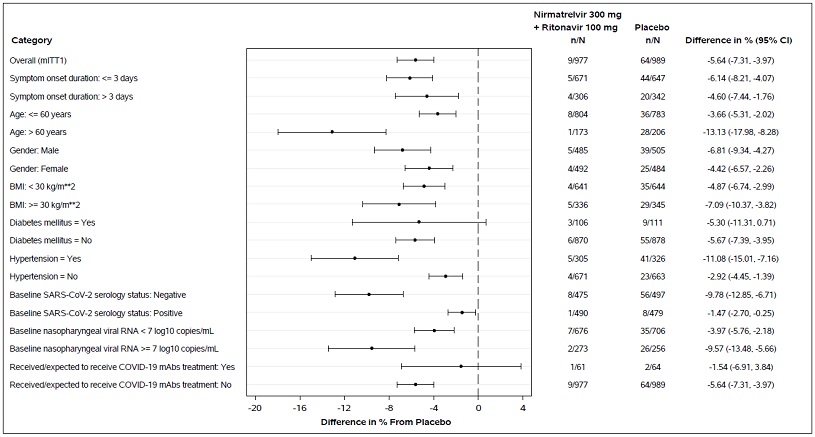
Among subjects who were SARS-CoV-2 seropositive at baseline, 1/490 (0.2%) PAXLOVID recipients versus 8/479 (1.7%) placebo recipients met the primary endpoint of COVID-19 related hospitalization or death from any cause through Day 28 [reduction relative to placebo -1.47% (-2.70%, -0.25%)].
14.2 Trial in Unvaccinated Subjects Without a Risk Factor for Progression to Severe COVID-19 or Subjects Fully Vaccinated Against COVID-19 With at Least One Factor for Progression to Severe COVID-19 (EPIC-SR)
PAXLOVID is not indicated for the treatment of COVID-19 in patients without a risk factor for progression to severe COVID-19.
EPIC-SR (NCT05011513) was a Phase 2/3, randomized, double-blind, placebo-controlled trial in non-hospitalized symptomatic adult subjects with a laboratory confirmed diagnosis of SARS-CoV-2 infection. Eligible subjects were 18 years of age or older with COVID-19 symptom onset of ≤5 days who were at standard risk for progression to severe disease. The trial included previously unvaccinated subjects with no risk factors for progression to severe disease or subjects fully vaccinated against COVID-19 (i.e., completed a primary vaccination series) with at least 1 of the risk factors for progression to severe disease as defined in EPIC-HR. Through the December 19, 2021, data cutoff, a total of 1,075 subjects were randomized (1:1) to receive PAXLOVID or placebo orally every 12 hours for 5 days; of these, 59% were fully vaccinated high-risk subjects.
The primary endpoint in this trial, the difference in time to sustained alleviation of all targeted COVID-19 signs and symptoms through Day 28 among PAXLOVID versus placebo recipients, was not met.
In an exploratory analysis of the subgroup of fully vaccinated subjects with at least 1 risk factor for progression to severe disease, a non-statistically significant numerical reduction relative to placebo for the secondary endpoint of COVID-19 related hospitalization or death from any cause through Day 28 was observed.
14.3 Post-Exposure Prophylaxis Trial
PAXLOVID is not indicated for the post-exposure prophylaxis of COVID-19.
In a double-blind, double-dummy, placebo-controlled trial, the efficacy of PAXLOVID when administered for 5 or 10 days as post-exposure prophylaxis of COVID-19 was evaluated. Eligible subjects were asymptomatic adults 18 years of age and older who were SARS-CoV-2 negative at baseline and who lived in the same household with symptomatic individuals with a recent diagnosis of SARS-CoV-2. A total of 2,736 subjects were randomized (1:1:1) to receive PAXLOVID orally every 12 hours for 5 days, PAXLOVID orally every 12 hours for 10 days, or placebo.
The primary endpoint for this trial was not met. The primary endpoint was the risk reduction between the 5-day and 10-day PAXLOVID regimens versus placebo in the proportion of subjects who developed RT-PCR or RAT-confirmed symptomatic SARS-CoV-2 infection through Day 14 who had a negative SARS-CoV-2 RT-PCR result at baseline. The proportion of subjects who had events through Day 14 was 2.6% for the 5-day PAXLOVID regimen, 2.4% for the 10-day PAXLOVID regimen, and 3.9% for placebo. There was not a statistically significant risk reduction versus placebo for either the 5-day or 10-day PAXLOVID regimen.
MEDICATION GUIDE
PATIENT INFORMATION | ||||||
What is the most important information I should know about PAXLOVID? PAXLOVID can interact with other medicines causing severe or life-threatening side effects or death. It is important to know the medicines that should not be taken with PAXLOVID. Do not take PAXLOVID if:
| ||||||
|
|
| ||||
These are not the only medicines that may cause serious or life-threatening side effects if taken with PAXLOVID. PAXLOVID may increase or decrease the levels of multiple other medicines. It is very important to tell your healthcare provider about all of the medicines you are taking because additional laboratory tests or changes in the dose of your other medicines may be necessary during treatment with PAXLOVID. Your healthcare provider may also tell you about specific symptoms to watch out for that may indicate that you need to stop or decrease the dose of some of your other medicines.
| ||||||
What is PAXLOVID? PAXLOVID is not approved for use as pre-exposure or post-exposure treatment for prevention of COVID-19. | ||||||
Before taking PAXLOVID, tell your healthcare provider about all of your medical conditions, including if you:
Tell your healthcare provider about all the medicines you take, including prescription and over-the-counter medicines, vitamins, and herbal supplements.
Tell your healthcare provider if you are taking combined birth control (hormonal contraceptive). PAXLOVID may affect how your hormonal contraceptives work. Females who are able to become pregnant should use another effective alternative form of contraception or an additional barrier method of contraception during treatment with PAXLOVID. Talk to your healthcare provider if you have any questions about contraceptive methods that might be right for you. | ||||||
How should I take PAXLOVID?
| ||||||
If you are prescribed PAXLOVID 300 mg; 100 mg Dose Pack | ||||||
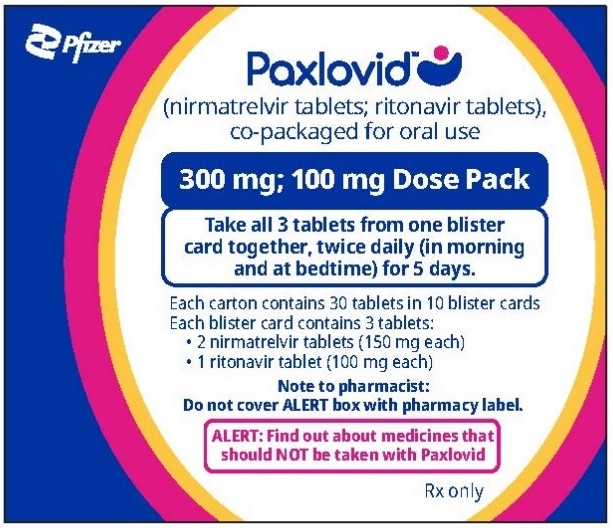 | ||||||
How to take PAXLOVID 300 mg; 100 mg Dose Pack | ||||||
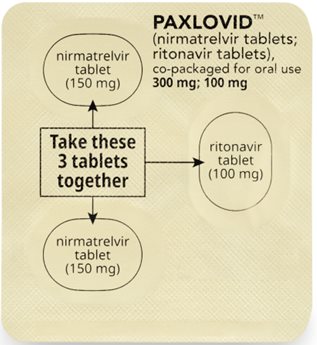 | Morning Dose: | |||||
 | ||||||
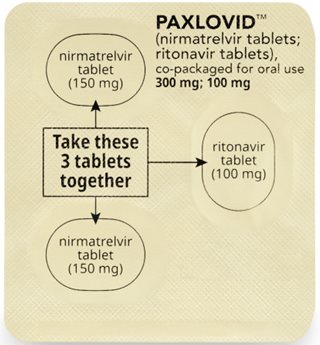 | Bedtime Dose: | |||||
 | ||||||
If you are prescribed PAXLOVID 150 mg; 100 mg Dose Pack | ||||||
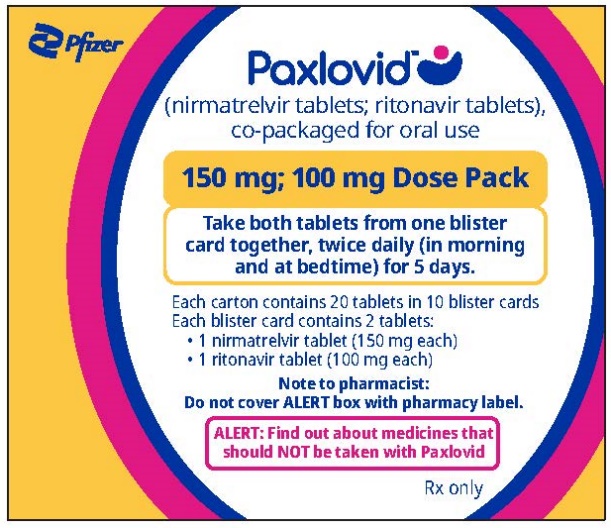 | ||||||
How to take PAXLOVID 150 mg; 100 mg Dose Pack | ||||||
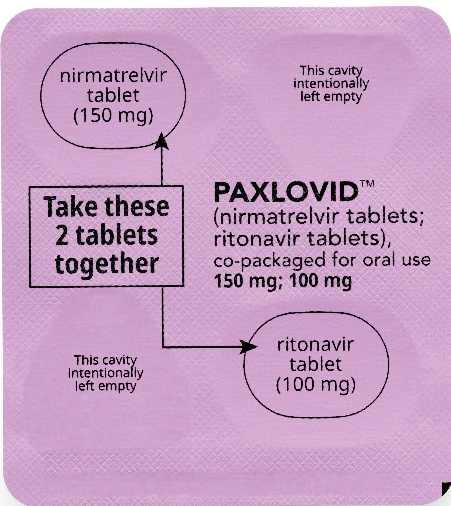 | Morning Dose: | |||||
 | ||||||
 | Bedtime Dose: | |||||
 | ||||||
If you are prescribed PAXLOVID 300 mg; 100 mg (Day 1) and 150 mg; 100 mg (Days 2-5) | ||||||
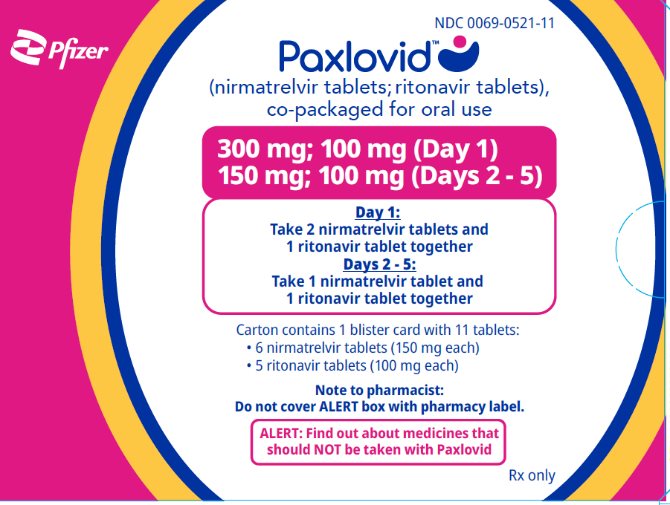 | ||||||
How to take PAXLOVID 300 mg; 100 mg (Day 1) and 150 mg; 100 mg (Days 2-5) | ||||||
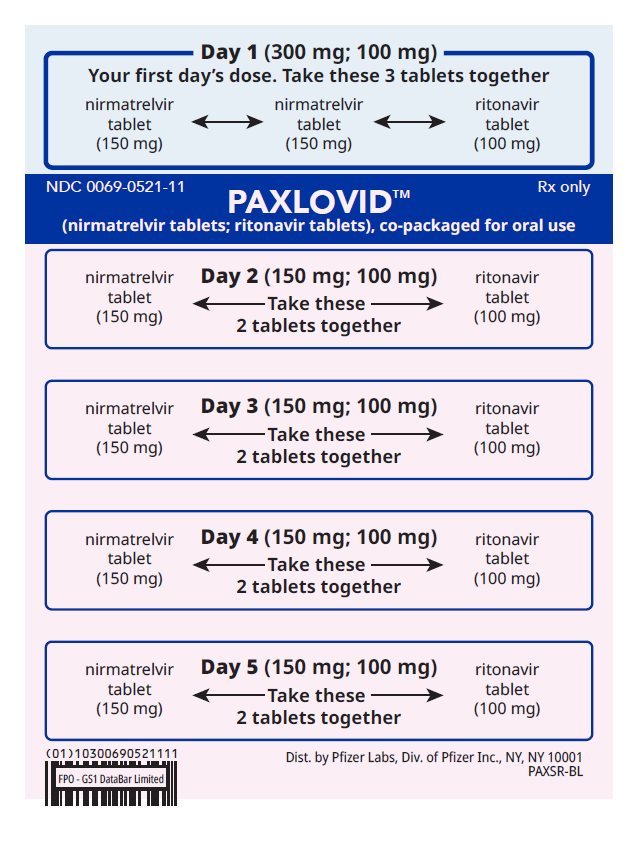 | Day 1 (First Day): Take the 2 pink nirmatrelvir tablets and | |||||
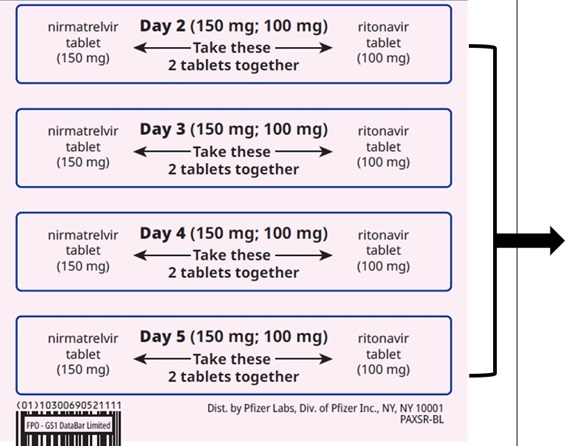 | Days 2-5: Take the 1 pink nirmatrelvir tablet and 1 white ritonavir tablet together | |||||
Talk to your healthcare provider if you do not feel better or if you feel worse after 5 days. | ||||||
What are the possible side effects of PAXLOVID? PAXLOVID may cause serious side effects, including:
| ||||||
|
| |||||
| ||||||
|
| |||||
The most common side effects of PAXLOVID include: altered sense of taste (such as metallic, bitter taste) and diarrhea. Other possible side effects include:
These are not all of the possible side effects of PAXLOVID. For more information, ask your healthcare provider or pharmacist. Call your doctor for medical advice about side effects. You may report side effects to FDA at 1-800-FDA-1088. | ||||||
How should I store PAXLOVID?
Keep PAXLOVID and all medicines out of the reach of children. | ||||||
General information about the safe and effective use of PAXLOVID. | ||||||
What are the ingredients in PAXLOVID? | ||||||
 LAB-1524-5.0 | ||||||


This Patient Information has been approved by the U.S. Food and Drug Administration. Revised: 02/2026
Additional Resources
Chat online with Pfizer Medical Information regarding your inquiry on a Pfizer medicine or vaccine.
Speak with a Pfizer Medical Information Professional regarding your Pfizer medicine or vaccine inquiry.
Available 9AM-5PM ET Monday to Friday; excluding holidays.
Submit a medical question for a Pfizer medicine or a vaccine.
The submission will be reviewed during our standard business hours.
To report an adverse event related to a Pfizer product and you are not part of a clinical trial* for this medication, click the link below to submit your information:
Pfizer Safety Reporting Site
*If you are involved in a clinical trial for either product, adverse events should be reported to your coordinating study site.
If you cannot use the above website to report an adverse event related to a Pfizer medication, please call (800) 438-1985.
You may also contact the U.S. Food and Drug Administration (FDA) directly to report adverse events or product quality concerns either online at www.fda.gov/medwatch or by calling (800) 332-1088.