(nirmatrelvir tablets; ritonavir tablets)
12 CLINICAL PHARMACOLOGY
12 CLINICAL PHARMACOLOGY
12.1 Mechanism of Action
Nirmatrelvir is a severe acute respiratory syndrome coronavirus 2 (SARS-CoV-2) antiviral drug [see Microbiology (12.4)].
Ritonavir is an HIV-1 protease inhibitor but is not active against SARS-CoV-2 Mpro. Ritonavir inhibits the CYP3A-mediated metabolism of nirmatrelvir, resulting in increased plasma concentrations of nirmatrelvir.
12.2 Pharmacodynamics
Cardiac Electrophysiology
At 3 times the steady state peak plasma concentration (Cmax) at the recommended dose, nirmatrelvir does not prolong the QTc interval to any clinically relevant extent.
12.3 Pharmacokinetics
The pharmacokinetics of nirmatrelvir/ritonavir were similar in healthy subjects and in subjects with mild-to-moderate COVID-19.
Nirmatrelvir AUC increased in a less than dose proportional manner over a single dose range from 250 mg to 750 mg (0.83 to 2.5 times the approved recommended dose) and multiple dose range from 75 mg to 500 mg (0.25 to 1.67 times the approved recommended dose), when administered in combination with 100 mg ritonavir. Nirmatrelvir steady state was achieved on Day 2 following administration of the approved recommended dosage and the mean accumulation ratio was approximately 2-fold.
The pharmacokinetic properties of nirmatrelvir/ritonavir are displayed in Table 3.
| Nirmatrelvir (When Given With Ritonavir) | Ritonavir | |
|---|---|---|
| Abbreviations: CL/F=apparent clearance; hr=hour; L/hr=liters per hour; T½=terminal elimination half-life; Tmax=the time to reach Cmax; Vz/F=apparent volume of distribution. | ||
| ||
Absorption | ||
Tmax (hr), median | 3.00* | 3.98* |
Food effect | Test/reference (fed/fasted) ratios of adjusted geometric means (90% CI) AUCinf and Cmax for nirmatrelvir were 119.67 (108.75, 131.68) and 161.01 (139.05, 186.44), respectively.† | |
Distribution | ||
% bound to human plasma proteins | 69% | 98–99% |
Blood-to-plasma ratio | 0.60 | 0.14‡ |
Vz/F (L), mean | 104.7§ | 112.4§ |
Elimination | ||
Major route of elimination | Renal elimination | Hepatic metabolism |
Half-life (T½) (hr), mean | 6.05* | 6.15* |
Oral clearance (CL/F) (L/hr), mean | 8.99§ | 13.92§ |
Metabolism | ||
Metabolic pathways | Nirmatrelvir is a CYP3A substrate but when dosed with ritonavir, metabolic clearance is minimal. | Major CYP3A, Minor CYP2D6 |
Excretion | ||
% drug-related material in feces | 35.3%¶ | 86.4%# |
% of dose excreted as total (unchanged drug) in feces | 27.5%¶ | 33.8%# |
% drug-related material in urine | 49.6%¶ | 11.3%# |
% of dose excreted as total (unchanged drug) in urine | 55.0%¶ | 3.5%# |
The predicted Day 5 nirmatrelvir exposure parameters in adult subjects with mild-to-moderate COVID-19 who were treated with PAXLOVID in EPIC-HR are presented in Table 4.
| Pharmacokinetic Parameter (units)* | Nirmatrelvir† |
|---|---|
| Abbreviations: Cmax=predicted maximal concentration; Cmin=predicted minimal concentration (Ctrough). | |
Cmax (µg/mL) | 3.29 (1.93, 5.40) |
AUCtau (µg*hr/mL)‡ | 28.3 (12.5, 52.5) |
Cmin (µg/mL) | 1.40 (0.48, 3.45) |
Effect of Food
No clinically significant differences in the pharmacokinetics of nirmatrelvir were observed following administration of a high fat meal (800-1,000 calories; 50% fat) to healthy subjects.
Specific Populations
There were no clinically significant differences in the pharmacokinetics of nirmatrelvir based on age (18 to 86 years), sex, or race/ethnicity.
Pediatric Patients
The pharmacokinetics of nirmatrelvir/ritonavir in patients less than 18 years of age have not been established.
Patients with Renal Impairment
The pharmacokinetics of nirmatrelvir in subjects with renal impairment following administration of a single oral dose of nirmatrelvir 100 mg (0.33 times the approved recommended dose) co-administered with ritonavir 100 mg were determined. Compared to healthy controls with no renal impairment, the Cmax and AUC of nirmatrelvir in subjects with mild renal impairment was 30% and 24% higher, in subjects with moderate renal impairment was 38% and 87% higher, and in subjects with severe renal impairment was 48% and 204% higher, respectively.
The pharmacokinetics of nirmatrelvir in subjects with mild-to-moderate COVID-19 and severe renal impairment (eGFR<30 mL/min) either requiring intermittent hemodialysis (n=12) or not requiring hemodialysis (n=2) were evaluated after administration of 300 mg/100 mg nirmatrelvir/ritonavir once on Day 1 followed by 150 mg/100 mg nirmatrelvir/ritonavir once daily on Days 2-5 for a total of 5 doses.
The administration of 300 mg/100 mg nirmatrelvir/ritonavir once on Day 1 followed by 150 mg/100 mg nirmatrelvir/ritonavir once daily on Days 2-5 in subjects with severe renal impairment, either requiring intermittent hemodialysis or not requiring hemodialysis resulted in comparable exposures on Day 1 and at steady-state (AUC0-24 and Cmax) compared to those observed in subjects with normal renal function receiving 300 mg/100 mg nirmatrelvir/ritonavir twice daily for 5 days. During a 4-hour hemodialysis session, approximately 6.9% of nirmatrelvir dose was cleared through dialysis. Hemodialysis clearance was 1.83 L/h.
Patients with Hepatic Impairment
The pharmacokinetics of nirmatrelvir were similar in patients with moderate (Child-Pugh Class B) hepatic impairment compared to healthy subjects following administration of a single oral dose of nirmatrelvir 100 mg (0.33 times the approved recommended dose) co-administered with ritonavir 100 mg. The impact of severe hepatic impairment (Child-Pugh Class C) on the pharmacokinetics of nirmatrelvir or ritonavir has not been studied.
Clinical Drug Interaction Studies
Table 5 describes the effect of other drugs on the Cmax and AUC of nirmatrelvir.
| Co-administered Drug | Dose (Schedule) | N | Percent Ratio (in combination with co-administered drug/alone) of Nirmatrelvir Pharmacokinetic Parameters (90% CI); No Effect=100 | ||
|---|---|---|---|---|---|
| Co-administered Drug | Nirmatrelvir/ Ritonavir | Cmax | AUC* | ||
| Abbreviations: AUC=area under the plasma concentration-time curve; AUCinf=area under the plasma concentration-time profile from time zero extrapolated to infinite time; AUCtau=area under the plasma concentration-time profile from time zero to time tau (τ), the dosing interval. CI=confidence interval; Cmax=observed maximum plasma concentrations. | |||||
Carbamazepine† | 300 mg twice daily | 300 mg/100 mg once daily | 10 | 56.82 | 44.50 |
Itraconazole | 200 mg once daily | 300 mg/100 mg twice daily | 11 | 118.57 | 138.82 |
Table 6 describes the effect of nirmatrelvir/ritonavir on the Cmax and AUCinf of other drugs.
| Co-administered Drug | Dose (Schedule) | N | Percent Ratio of Test/Reference of Geometric Means (90% CI); No Effect=100 | ||
|---|---|---|---|---|---|
| Co-administered Drug | Nirmatrelvir/ Ritonavir | Cmax | AUCinf | ||
| Abbreviations: AUCinf=area under the plasma concentration-time curve from time zero extrapolated to infinite time; CI=confidence interval; Cmax=observed maximum plasma concentrations; CYP3A4=cytochrome P450 3A4; OATP1B1=organic anion transporter polypeptide 1B1; P-gp=p-glycoprotein. | |||||
| |||||
Midazolam* | 2 mg | 300 mg/100 mg twice daily | 10 | 368.33 | 1430.02 |
Dabigatran* | 75 mg | 300 mg/100 mg twice daily | 24 | 233.06 | 194.47 |
Rosuvastatin* | 10 mg (1 dose) | 300 mg/100 mg twice daily | 12 | 212.44 (174.31, 258.90) | 131.18 (115.89, 148.48) |
In Vitro Studies
Cytochrome P450 (CYP) Enzymes:
- •
- Nirmatrelvir is a reversible and time-dependent inhibitor of CYP3A, but not an inhibitor CYP1A2, CYP2B6, CYP2C8, CYP2C9, CYP2C19, or CYP2D6. Nirmatrelvir is an inducer of CYP2B6, 2C8, 2C9, and 3A4, but there is minimal risk for pharmacokinetic interactions arising from induction of these CYP enzymes at the proposed therapeutic dose.
- •
- Ritonavir is a substrate of CYP2D6 and CYP3A. Ritonavir is an inducer of CYP1A2, CYP2C9, CYP2C19, CYP2B6, and CYP3A.
Transporter Systems: Nirmatrelvir is an inhibitor of P-gp and OATP1B1. Nirmatrelvir is a substrate for P-gp, but not BCRP, MATE1, MATE2K, NTCP, OAT1, OAT2, OAT3, OCT1, OCT2, PEPT1, OATP1B1, OATP1B3, OATP2B1, or OATP4C1.
12.4 Microbiology
Mechanism of Action
Nirmatrelvir is a peptidomimetic inhibitor of the SARS-CoV-2 main protease (Mpro), also referred to as 3C-like protease (3CLpro) or nonstructural protein 5 (nsp5) protease. Inhibition of SARS-CoV-2 Mpro renders it incapable of processing the viral polyproteins pp1a and pp1ab, preventing viral replication. Nirmatrelvir inhibited the activity of recombinant SARS-CoV-2 Mpro in a biochemical assay with a Ki value of 3.1 nM and an IC50 value of 19.2 nM. Nirmatrelvir was found to bind directly to the SARS-CoV-2 Mpro active site by X-ray crystallography.
Antiviral Activity
Cell Culture Antiviral Activity
Nirmatrelvir exhibited antiviral activity against SARS-CoV-2 (USA-WA1/2020 isolate) infection of differentiated normal human bronchial epithelial (dNHBE) cells with EC50 and EC90 values of 62 nM (31 ng/mL) and 181 nM (90 ng/mL), respectively, after 3 days of drug exposure.
The antiviral activity of nirmatrelvir against the Omicron sub-variants BA.2, BA.2.12.1, BA.4, BA.4.6, BA.5, BF.7, BQ.1, BQ.1.11, XBB.1.5, EG.5, and JN.1 was assessed in Vero E6-TMPRSS2 cells in the presence of a P-gp inhibitor. Nirmatrelvir had a median EC50 value of 88 nM (range: 39-146 nM) against the Omicron sub-variants, reflecting EC50 value fold changes ≤1.8 relative to the USA-WA1/2020 isolate.
In addition, the antiviral activity of nirmatrelvir against the SARS-CoV-2 Alpha, Beta, Gamma, Delta, Lambda, Mu, and Omicron BA.1 variants was assessed in Vero E6 P-gp knockout cells. Nirmatrelvir had a median EC50 value of 25 nM (range: 16-141 nM). The Beta variant was the least susceptible variant tested, with an EC50 value fold change of 3.7 relative to USA-WA1/2020. The other variants had EC50 value fold changes ≤1.1 relative to USA-WA1/2020.
Clinical Antiviral Activity
In clinical trial EPIC-HR, which enrolled subjects who were primarily infected with the SARS-CoV-2 Delta variant, PAXLOVID treatment was associated with a 0.83 log10 copies/mL greater median decline in viral RNA shedding levels in nasopharyngeal samples through Day 5 (mITT1 analysis set, all treated subjects with onset of symptoms ≤5 days who at baseline did not receive nor were expected to receive COVID-19 therapeutic mAb treatment); similar results were observed in the mITT2 analysis set (all treated subjects with onset of symptoms ≤5 days). In the EPIC-SR trial, which included subjects who were infected with SARS-CoV-2 Delta (79%) or Omicron (19%) variants, PAXLOVID treatment was associated with a 1.05 log10 copies/mL greater median decline in viral RNA shedding levels in nasopharyngeal samples through Day 5, with similar declines observed in subjects infected with Delta or Omicron variants. The degree of reduction in viral RNA levels relative to placebo following 5 days of PAXLOVID treatment was similar between unvaccinated high-risk subjects in EPIC-HR and vaccinated high-risk subjects in EPIC-SR.
Antiviral Resistance
In Cell Culture and Biochemical Assays
SARS-CoV-2 Mpro residues potentially associated with nirmatrelvir resistance have been identified using a variety of methods, including SARS-CoV-2 resistance selection, testing of recombinant SARS-CoV-2 viruses with Mpro substitutions, and biochemical assays with recombinant SARS-CoV-2 Mpro containing amino acid substitutions. Table 7 indicates Mpro substitutions and combinations of Mpro substitutions that have been observed in SARS-CoV-2 under nirmatrelvir selective pressure in cell culture. Individual Mpro substitutions are listed regardless of whether they occurred alone or in combination with other Mpro substitutions. Note that the Mpro S301P and T304I substitutions overlap the P6 and P3 positions of the nsp5/nsp6 cleavage site located at the C-terminus of Mpro. Substitutions at other Mpro cleavage sites have not been associated with nirmatrelvir resistance in cell culture. The clinical significance of these substitutions is unknown.
| Abbreviation: ND=no data. | |
| |
Table 7: SARS-CoV-2 Mpro Amino Acid Substitutions Selected by Nirmatrelvir in Cell Culture* | |
Single Substitutions (EC50 value fold change in cell culture) | T21I (1.1-4.8), S46F (ND), L50F (1.2-4.2), P108S (ND), T135I (ND), F140L (4.1), S144A (2.2-5.3), C160F (2.1), E166A (3.3), E166V (25‑288), L167F (1.9-2.5), T169I (ND), H172Y (15), A173V (0.9-2.3), V186A (ND), R188G (ND), A191V (0.7-1.5), A193P (ND), P252L (5.9), S301P (ND), and T304I (1.4-5.5). |
≥2 Substitutions (EC50 value fold change in cell culture) | T21I+S144A (9.4), T21I+E166V (83-250), T21I+A173V (3.1-8.9), T21I+T304I (3.0-7.9), L50F+E166V (34-175), L50F+T304I (5.9), T135I+T304I (3.8), F140L+A173V (10-17), H172Y+P252L (ND), A173V+T304I (5.8-20), T21I+L50F+A193P+S301P (29), T21I+S144A+T304I (11-28), T21I+C160F+A173V+V186A+T304I (28-29), T21I+A173V+T304I (15-16), and L50F+F140L+L167F+T304I (43-55). |
Table 8 indicates Mpro substitutions and combinations of Mpro substitutions that have been found to reduce nirmatrelvir activity ≥3-fold (based on IC50 or Ki values) in biochemical assays using recombinant SARS-CoV-2 Mpro. Note that these Mpro substitutions were laboratory engineered and most were not observed in PAXLOVID-treated subjects in clinical trials. In addition, according to public sequence databases, most of these substitutions have not been observed in clinical isolates or have been observed but with global cumulative frequencies ≤0.002%. Thus, the clinical relevance of these substitutions is unclear. The following Mpro substitutions and combinations of Mpro substitutions emerged in cell culture in the presence of nirmatrelvir but conferred <3-fold reduced nirmatrelvir activity in biochemical assays: T21I, S46F, L50F, P108S, T135I, C160F, T169I, V186A, A191V, A193P, P252L, S301P, T304I, T21I+T304I, and L50F+T304I.
Table 8: SARS-CoV-2 Mpro Amino Acid Substitutions That Reduce Nirmatrelvir Activity ≥3-Fold in Biochemical Assays
Single Substitutions (IC50/Ki value fold change in biochemical assay) | Y54A/C (3.0-25), F140A/L/S (1.2-230), G143S (3.6-148), S144A/F/G/M/W/Y (1.2-76), S144D/E/H/Q/T/V (81-480), S144K/L/P/R (1,165->5,319), H164N (1.9-6.7), M165D/F/G/T (5.7-51), M165H/K/P/R/W (>384), M165Y (3,838), E166A/G/K/L/Q (4.5-77), E166D/H/I/N/V/Y (143-708), E166R/V (>1,538-7,700), L167F (1.4-4.5), P168del (4.5-9.3), H172D/F/G/K/Q/Y (10-91), H172A/C/E/M/N/R/V/Y (114-858), H172I/L/S/T (1,172-6,740), A173S/V (4.1-52), R188G (38), Q189E/K (1.6-16), Q192A/C/D/E/F/G/H/I/K/L/P/R/S/T/V/W (5.0-61), Q192Y (>384), A260V (0.6-3.3), and V297A (3.0). |
≥2 Substitutions (IC50/Ki value fold change in biochemical assay) | T21I+S144A (20), T21I+E166V (120-11,000), T21I+A173V (15), L50F+E166V (100-4,500), T135I+T304I (5.1), F140L+A173V (95), S144A+T304I (28), E166V+L232R (5,700), P168del+A173V (170-536), H172Y+P252L (180), A173V+T304I (28), T21I+S144A+T304I (51), T21I+A173V+T304I (55), L50F+E166A+L167F (52-180), T21I+L50F+A193P+S301P (7.3), L50F+F140L+L167F+T304I (190), and T21I+C160F+A173V+V186A+T304I (28). |
In Clinical Trials
Treatment-emergent substitutions were evaluated among subjects in clinical trials EPIC-HR/SR with sequence data available at both baseline and post-baseline visits (n=907 PAXLOVID-treated subjects, n=946 placebo-treated subjects). SARS-CoV-2 Mpro amino acid changes were classified as PAXLOVID treatment-emergent substitutions if they occurred at the same amino acid position in 3 or more PAXLOVID-treated subjects and were ≥2.5-fold more common in PAXLOVID-treated subjects than placebo-treated subjects. The following PAXLOVID treatment-emergent Mpro substitutions were observed: T98I/R/del(n=4), E166V (n=3), and W207L/R/del (n=4). In biochemical assays, the T98I and W207L/R substitutions did not affect nirmatrelvir activity (Ki value fold changes were 0.3 and 0.7/0.3, respectively), whereas the E166V substitution (which occurs at a Mpro-nirmatrelvir contact residue) reduced nirmatrelvir activity 187-7,700-fold. Within the Mpro cleavage sites, the following PAXLOVID treatment-emergent substitutions were observed: A5328S/V(n=7) and S6799A/P/Y (n=4). These cleavage site substitutions were not associated with the co-occurrence of any specific Mpro substitutions. In a cell culture replicon assay, the A5328S/V and S6799A substitutions did not affect nirmatrelvir activity (EC50 value fold changes were 0.3/0.2 and 0.7, respectively).
None of the treatment-emergent substitutions listed above in Mpro or Mpro cleavage sites occurred in PAXLOVID-treated subjects who experienced hospitalization. Thus, the clinical significance of these substitutions is unknown.
Viral RNA Rebound and Treatment-Emergent Substitutions
EPIC-HR and EPIC-SR were not designed to evaluate COVID-19 rebound; exploratory analyses were conducted to assess the relationship between PAXLOVID use and rebound in viral RNA shedding levels.
Post-treatment increases in SARS-CoV-2 RNA shedding levels in nasopharyngeal samples were observed on Day 10 and/or Day 14 in a subset of PAXLOVID and placebo recipients in EPIC-HR and EPIC-SR, irrespective of COVID-19 symptoms. The frequency of detection of post-treatment viral RNA rebound varied according to analysis parameters, but was generally similar among PAXLOVID and placebo recipients. A similar or smaller percentage of placebo recipients compared to PAXLOVID recipients had nasopharyngeal viral RNA results < lower limit of quantitation (LLOQ) at all study timepoints in both the treatment and post-treatment periods.
In EPIC-HR, of 59 PAXLOVID-treated subjects identified with post-treatment viral RNA rebound and with available viral sequence data, treatment-emergent substitutions in Mpro potentially reducing nirmatrelvir activity were detected in 2 (3%) subjects, including E166V in 1 subject and T304I in 1 subject. Both subjects had viral RNA shedding levels <LLOQ by Day 14.
Post-treatment viral RNA rebound was not associated with the primary clinical outcome of COVID-19 related hospitalization or death from any cause through Day 28 following the single 5-day course of PAXLOVID treatment. The clinical relevance of post-treatment increases in viral RNA following PAXLOVID or placebo treatment is unknown.
MEDICATION GUIDE
PATIENT INFORMATION | ||||||
What is the most important information I should know about PAXLOVID? PAXLOVID can interact with other medicines causing severe or life-threatening side effects or death. It is important to know the medicines that should not be taken with PAXLOVID. Do not take PAXLOVID if:
| ||||||
|
|
| ||||
These are not the only medicines that may cause serious or life-threatening side effects if taken with PAXLOVID. PAXLOVID may increase or decrease the levels of multiple other medicines. It is very important to tell your healthcare provider about all of the medicines you are taking because additional laboratory tests or changes in the dose of your other medicines may be necessary during treatment with PAXLOVID. Your healthcare provider may also tell you about specific symptoms to watch out for that may indicate that you need to stop or decrease the dose of some of your other medicines.
| ||||||
What is PAXLOVID? PAXLOVID is not approved for use as pre-exposure or post-exposure treatment for prevention of COVID-19. | ||||||
Before taking PAXLOVID, tell your healthcare provider about all of your medical conditions, including if you:
Tell your healthcare provider about all the medicines you take, including prescription and over-the-counter medicines, vitamins, and herbal supplements.
Tell your healthcare provider if you are taking combined birth control (hormonal contraceptive). PAXLOVID may affect how your hormonal contraceptives work. Females who are able to become pregnant should use another effective alternative form of contraception or an additional barrier method of contraception during treatment with PAXLOVID. Talk to your healthcare provider if you have any questions about contraceptive methods that might be right for you. | ||||||
How should I take PAXLOVID?
| ||||||
If you are prescribed PAXLOVID 300 mg; 100 mg Dose Pack | ||||||
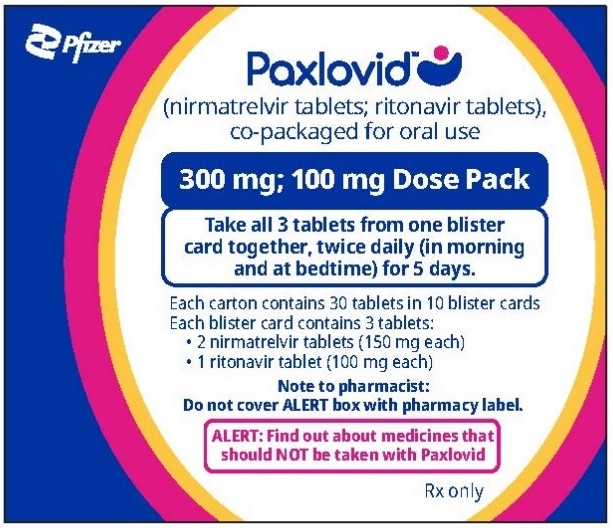 | ||||||
How to take PAXLOVID 300 mg; 100 mg Dose Pack | ||||||
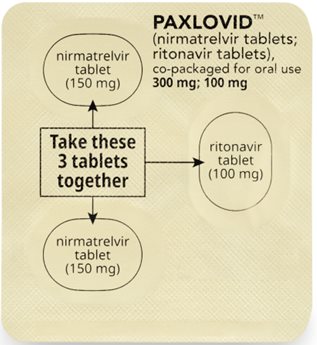 | Morning Dose: | |||||
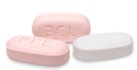 | ||||||
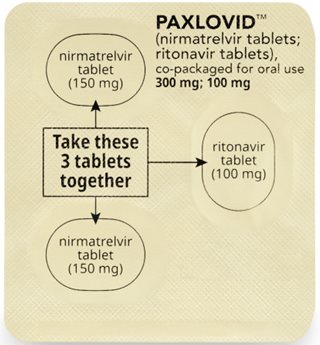 | Bedtime Dose: | |||||
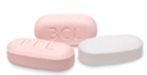 | ||||||
If you are prescribed PAXLOVID 150 mg; 100 mg Dose Pack | ||||||
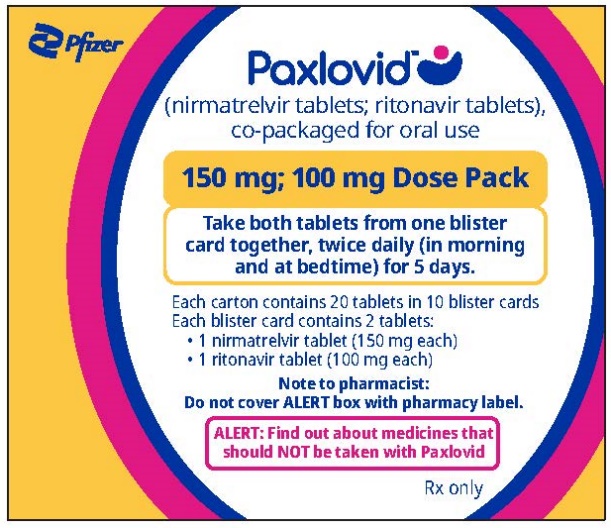 | ||||||
How to take PAXLOVID 150 mg; 100 mg Dose Pack | ||||||
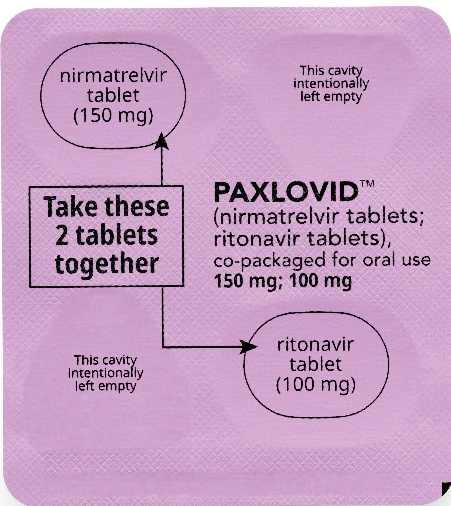 | Morning Dose: | |||||
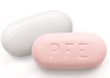 | ||||||
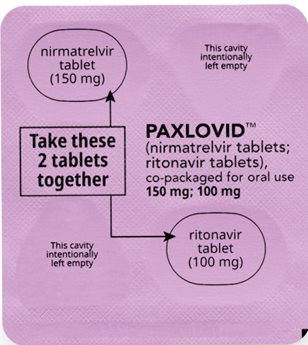 | Bedtime Dose: | |||||
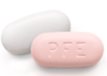 | ||||||
If you are prescribed PAXLOVID 300 mg; 100 mg (Day 1) and 150 mg; 100 mg (Days 2-5) | ||||||
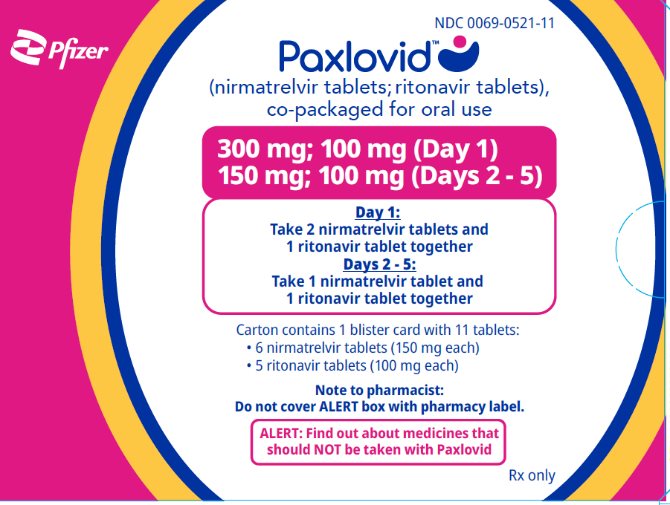 | ||||||
How to take PAXLOVID 300 mg; 100 mg (Day 1) and 150 mg; 100 mg (Days 2-5) | ||||||
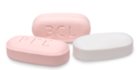
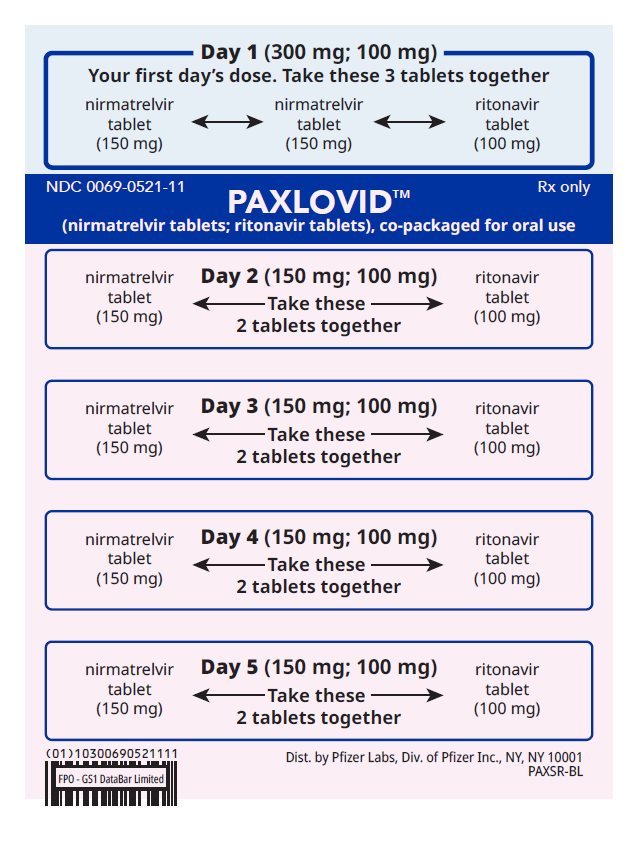 | Day 1 (First Day): Take the 2 pink nirmatrelvir tablets and | |||||
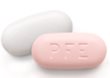
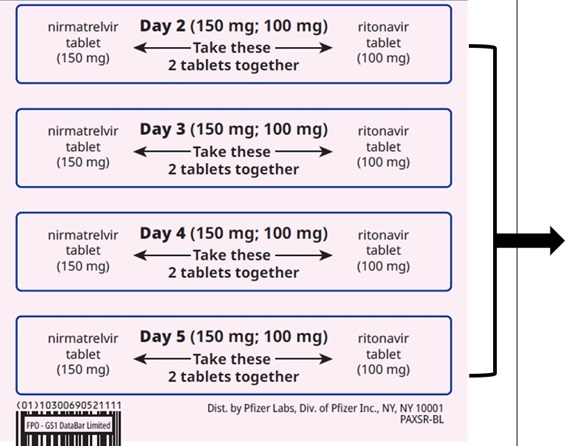 | Days 2-5: Take the 1 pink nirmatrelvir tablet and 1 white ritonavir tablet together | |||||
Talk to your healthcare provider if you do not feel better or if you feel worse after 5 days. | ||||||
What are the possible side effects of PAXLOVID? PAXLOVID may cause serious side effects, including:
| ||||||
|
| |||||
| ||||||
|
| |||||
The most common side effects of PAXLOVID include: altered sense of taste (such as metallic, bitter taste) and diarrhea. Other possible side effects include:
These are not all of the possible side effects of PAXLOVID. For more information, ask your healthcare provider or pharmacist. Call your doctor for medical advice about side effects. You may report side effects to FDA at 1-800-FDA-1088. | ||||||
How should I store PAXLOVID?
Keep PAXLOVID and all medicines out of the reach of children. | ||||||
General information about the safe and effective use of PAXLOVID. | ||||||
What are the ingredients in PAXLOVID? | ||||||
 LAB-1524-5.0 | ||||||
This Patient Information has been approved by the U.S. Food and Drug Administration. Revised: 02/2026
Additional Resources
Chat online with Pfizer Medical Information regarding your inquiry on a Pfizer medicine or vaccine.
Speak with a Pfizer Medical Information Professional regarding your Pfizer medicine or vaccine inquiry.
Available 9AM-5PM ET Monday to Friday; excluding holidays.
Submit a medical question for a Pfizer medicine or a vaccine.
The submission will be reviewed during our standard business hours.
To report an adverse event related to a Pfizer product and you are not part of a clinical trial* for this medication, click the link below to submit your information:
Pfizer Safety Reporting Site
*If you are involved in a clinical trial for either product, adverse events should be reported to your coordinating study site.
If you cannot use the above website to report an adverse event related to a Pfizer medication, please call (800) 438-1985.
You may also contact the U.S. Food and Drug Administration (FDA) directly to report adverse events or product quality concerns either online at www.fda.gov/medwatch or by calling (800) 332-1088.