(enfortumab vedotin-ejfv)
14 CLINICAL STUDIES
14 CLINICAL STUDIES
14.1 Urothelial Cancer
Neoadjuvant and Adjuvant Treatment of Patients with MIBC Who Are Cisplatin-Eligible
EV-304
The efficacy of PADCEV in combination with intravenous pembrolizumab as neoadjuvant treatment and then continued after radical cystectomy (RC) as adjuvant treatment was evaluated in EV-304 (NCT04700124), an open-label, randomized, active-controlled, multicenter trial that enrolled patients with previously untreated MIBC with predominant urothelial carcinoma histology and who were candidates for RC with pelvic lymph node dissection (PLND) and were eligible for cisplatin-based chemotherapy. The study excluded patients with primary non-bladder (i.e., ureter, urethral, or renal pelvis) cancer of the urothelium and those with active autoimmune disease that required systemic therapy within 2 years of treatment or a medical condition that required immunosuppression.
Randomization was stratified by tumor stage (T2N0 vs T3/T4aN0 vs T1-T4aN1), PD-L1 combined positive score (CPS ≥10 vs CPS <10), and geographic region (United States vs European Union vs Rest of World).
Patients were randomized 1:1 to receive:
- •
- Neoadjuvant PADCEV 1.25 mg/kg as an intravenous infusion on Days 1 and 8 in combination with intravenous pembrolizumab 200 mg as an intravenous infusion on Day 1 of a 21-day cycle for 4 cycles prior to surgery, followed by adjuvant PADCEV for up to 5 cycles and intravenous pembrolizumab for up to 13 cycles (21 days per cycle) (n=405).
- •
- Neoadjuvant gemcitabine 1000 mg/m2 on Days 1 and 8 and cisplatin 70 mg/m2 on Day 1 of each 21-day cycle for 4 cycles prior to surgery, followed by observation (n=403).
Treatment continued until completion of the treatment, disease progression, not undergoing or refusal of RC and PLND, disease recurrence in the adjuvant phase, or unacceptable toxicity. Assessment of tumor status, including CT/MRI, was performed at baseline, within 5 weeks prior to RC and PLND, and at 6 weeks post-radical cystectomy. Following RC and PLND, assessment of tumor status, including cystoscopy and urine cytology for patients who did not undergo surgery, was performed every 12 weeks up to 2 years, and every 24 weeks thereafter.
The median age was 66 years (range: 35 to 85 years); 81% were male; 80% were White, 17% were Asian, 1.4% were multiple, 1.2% were Black or African American, 0.6% American Indian or Alaska Native, and race in 0.2% was missing; 90% were not Hispanic or Latino, 8% were Hispanic or Latino, and 1.7% ethnicity unknown/not reported. Patients had a baseline ECOG performance status of 0 (78%) or 1 (22%). Nineteen percent were T2N0, 73% T3/T4aN0, and 8% T1-T4aN1. Eighty-nine percent of patients had pure urothelial carcinoma histology; 4.8% had urothelial carcinoma with squamous differentiation, 2.6% had urothelial carcinoma with glandular differentiation, and 3.1% had urothelial carcinoma with other variant histology.
In the overall population, 351 (87%) patients in the PADCEV in combination with intravenous pembrolizumab arm and 361 (90%) patients in the chemotherapy arm underwent RC and PLND. A total of 25 (6%) of patients in the chemotherapy arm received adjuvant nivolumab.
The trial was not designed to isolate the effect of PADCEV in combination with intravenous pembrolizumab in each phase (neoadjuvant or adjuvant) of treatment.
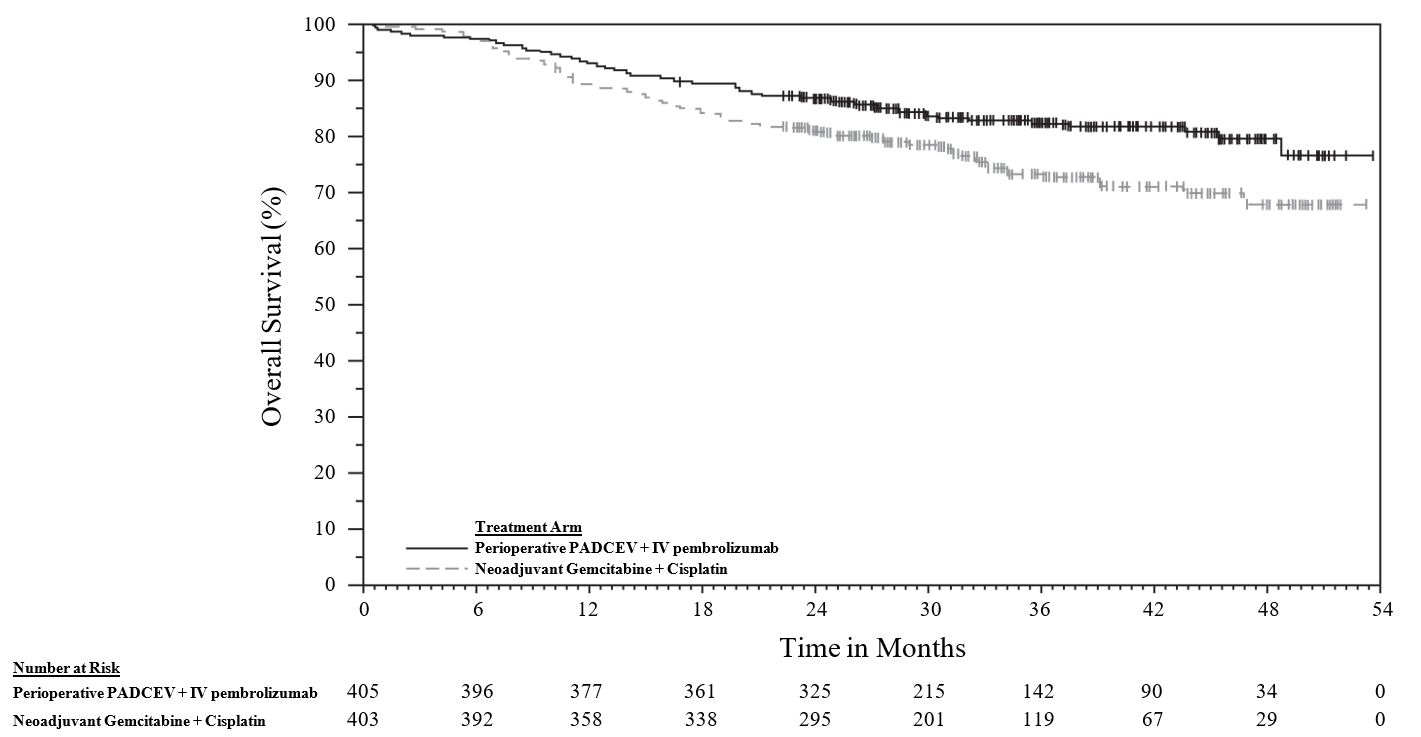
The major efficacy outcome measure was event-free survival (EFS) as assessed by blinded independent central review (BICR). Overall survival (OS) and pathological complete response (pCR) rate as assessed by blinded independent pathology review (BIPR) were additional efficacy outcome measures.
The trial demonstrated statistically significant improvements in EFS and OS in patients treated with neoadjuvant and adjuvant PADCEV in combination with intravenous pembrolizumab compared with neoadjuvant chemotherapy.
Table 20 and Figures 2-3 summarize the efficacy results for EV-304.
| NR = Not Reached. | ||
| ||
Endpoint | Perioperative PADCEV | Neoadjuvant |
Event-Free Survival* | ||
Number (%) of patients with events | 87 (21) | 146 (36) |
Median in months† (95% CI) | NR (NR, NR) | 48.5 (43.3, NR) |
Hazard ratio‡ (95% CI) | 0.53 (0.41, 0.70) | |
p-value§ | <0.0001 | |
Overall Survival | ||
Number (%) of patients with events | 69 (17) | 99 (25) |
Median in months† (95% CI) | NR (NR, NR) | NR (NR, NR) |
Hazard ratio‡ (95% CI) | 0.65 (0.48, 0.89) | |
p-value§ | 0.0029 | |
Figure 2. Kaplan-Meier Plot of Event-Free Survival, EV-304
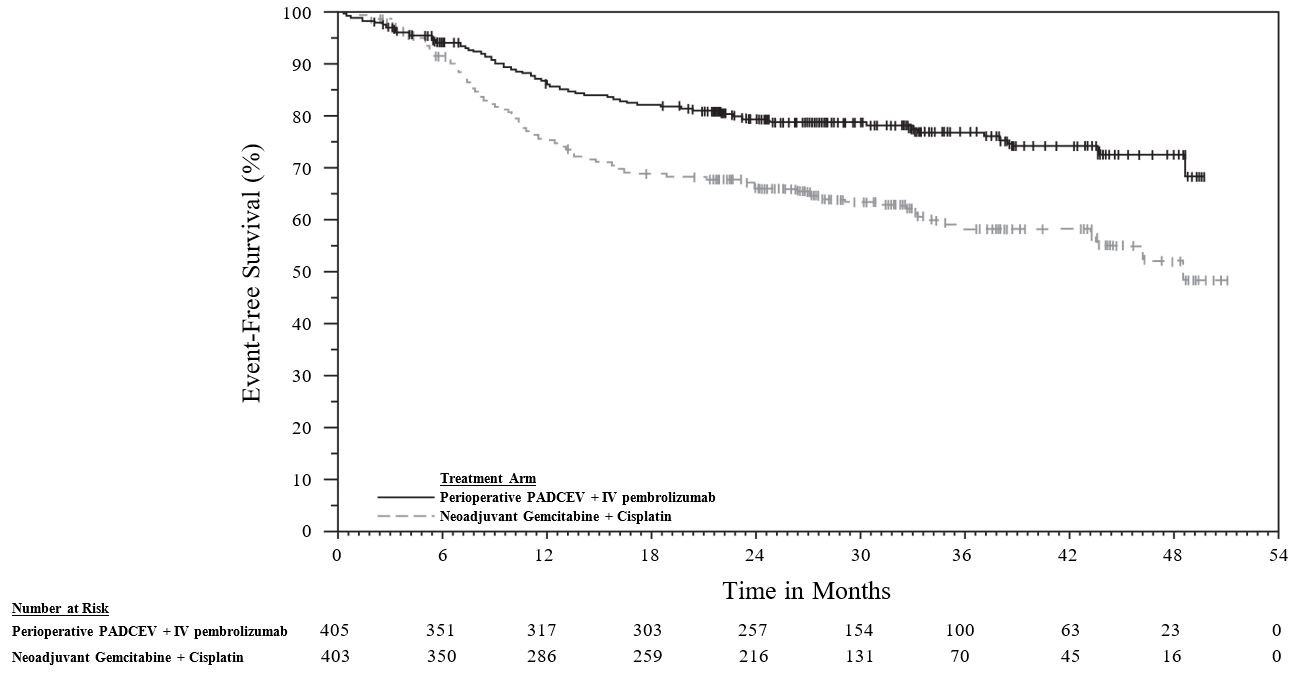
Figure 3. Kaplan-Meier Plot of Overall Survival, EV-304
The trial demonstrated a statistically significant difference in pCR rate (55.8% [95% CI: 50.8, 60.7] vs. 32.5% [95% CI: 28.0, 37.3]; p<0.0001).
Neoadjuvant and Adjuvant Treatment of Patients with MIBC Who Are Cisplatin-Ineligible
EV-303
The efficacy of PADCEV in combination with intravenous pembrolizumab as neoadjuvant treatment and then continued after RC as adjuvant treatment was evaluated in EV-303 (NCT03924895), an open-label, randomized, multicenter trial that enrolled patients with previously untreated MIBC with predominant urothelial carcinoma histology and who were candidates for RC with PLND but were ineligible for or refused cisplatin-based chemotherapy. The study excluded patients with primary non-bladder (i.e., ureter, urethral, or renal pelvis) cancer of the urothelium and those with active autoimmune disease that required systemic therapy within 2 years of treatment or a medical condition that required immunosuppression.
Randomization was stratified by tumor stage (T2N0 vs T3/T4aN0 vs T1-T4aN1), cisplatin-eligibility (cisplatin-ineligible vs cisplatin-eligible but declined), and geographic region (United States vs European Union vs Rest of World).
Patients were randomized 1:1 to receive:
- •
- Neoadjuvant PADCEV 1.25 mg/kg as an intravenous infusion on Days 1 and 8 in combination with intravenous pembrolizumab 200 mg as an intravenous infusion on Day 1 of a 21-day cycle for 3 cycles prior to surgery, followed by adjuvant PADCEV for up to 6 cycles and intravenous pembrolizumab for up to 14 cycles (21 days per cycle) (n=170).
- •
- Immediate RC and PLND alone (n=174).
Treatment continued until completion of the treatment, disease progression, not undergoing or refusal of RC and PLND, disease recurrence in the adjuvant phase, or unacceptable toxicity. Assessment of tumor status, including CT/MRI, was performed at baseline, within 5 weeks prior to RC and PLND, and at 6 weeks post-surgery. Following RC and PLND, assessment of tumor status, including cystoscopy and urine cytology for patients who did not undergo surgery, was performed every 12 weeks up to 2 years, and every 24 weeks thereafter.
The median age was 73 years (range: 46 to 87 years); 78% were male; 78% were White, 16% were Asian, 3.2% were multiple, 1.2% were Black or African American, 0.3% American Indian or Alaska Native, and race in 1.2% was missing; 91% were not Hispanic or Latino, 6% were Hispanic or Latino, and 2.9% were not reported. Patients had a baseline Eastern Cooperative Oncology Group (ECOG) performance status of 0 (57%), 1 (29%), or 2 (14%). Eighteen percent were T2N0, 77% T3/T4aN0, and 4.9% T1-T4aN1. Among the 281 patients who were ineligible for cisplatin, 72% had baseline creatinine clearance of 30-59 mL/min, 17% had ECOG PS of 2, 21% had Grade 2 or greater hearing loss, 3.9% had NYHA Class III heart failure, and 13% met more than one cisplatin-ineligibility criterion. Ninety-one percent of patients had pure urothelial carcinoma histology; 4.4% had urothelial carcinoma with squamous differentiation, 2.6% had urothelial carcinoma with glandular differentiation, and 2% had urothelial carcinoma with other variant histology.
In the overall population, 149 (88%) patients in the PADCEV in combination with intravenous pembrolizumab arm and 156 (90%) patients in the RC and PLND alone arm underwent RC and PLND. A total of 29 (17%) of patients in the RC and PLND alone arm received adjuvant nivolumab.
The trial was not designed to isolate the effect of PADCEV in combination with intravenous pembrolizumab in each phase (neoadjuvant or adjuvant) of treatment.
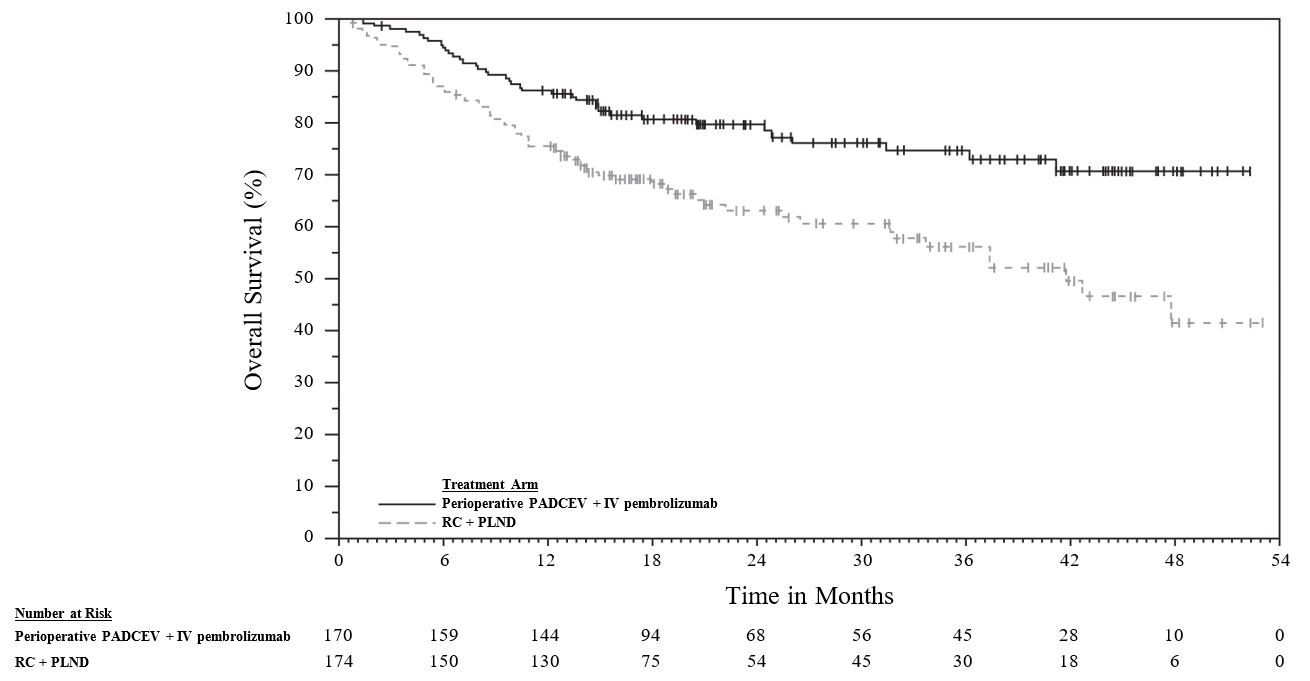
The major efficacy outcome measure was EFS as assessed by BICR. OS and pCR rate as assessed by BIPR were additional efficacy outcome measures.
The trial demonstrated statistically significant improvements in EFS and OS in patients treated with neoadjuvant and adjuvant PADCEV in combination with intravenous pembrolizumab compared with RC and PLND alone.
Table 21 and Figures 4-5 summarize the efficacy results for EV-303.
| NR = Not Reached. | ||
| ||
Endpoint | Perioperative PADCEV | RC with PLND alone |
Event-Free Survival* | ||
Number (%) of patients with events | 48 (28) | 95 (55) |
Median in months† (95% CI) | NR (37.3, NR) | 15.7 (10.3, 20.5) |
Hazard ratio‡ (95% CI) | 0.40 (0.28, 0.57) | |
p-value§ | <0.0001 | |
Overall Survival | ||
Number (%) of patients with events | 38 (22) | 68 (39) |
Median in months† (95% CI) | NR (NR, NR) | 41.7 (31.8, NR) |
Hazard ratio‡ (95% CI) | 0.50 (0.33, 0.74) | |
p-value§ | 0.0002 | |
Figure 4. Kaplan-Meier Plot of Event-Free Survival, EV-303
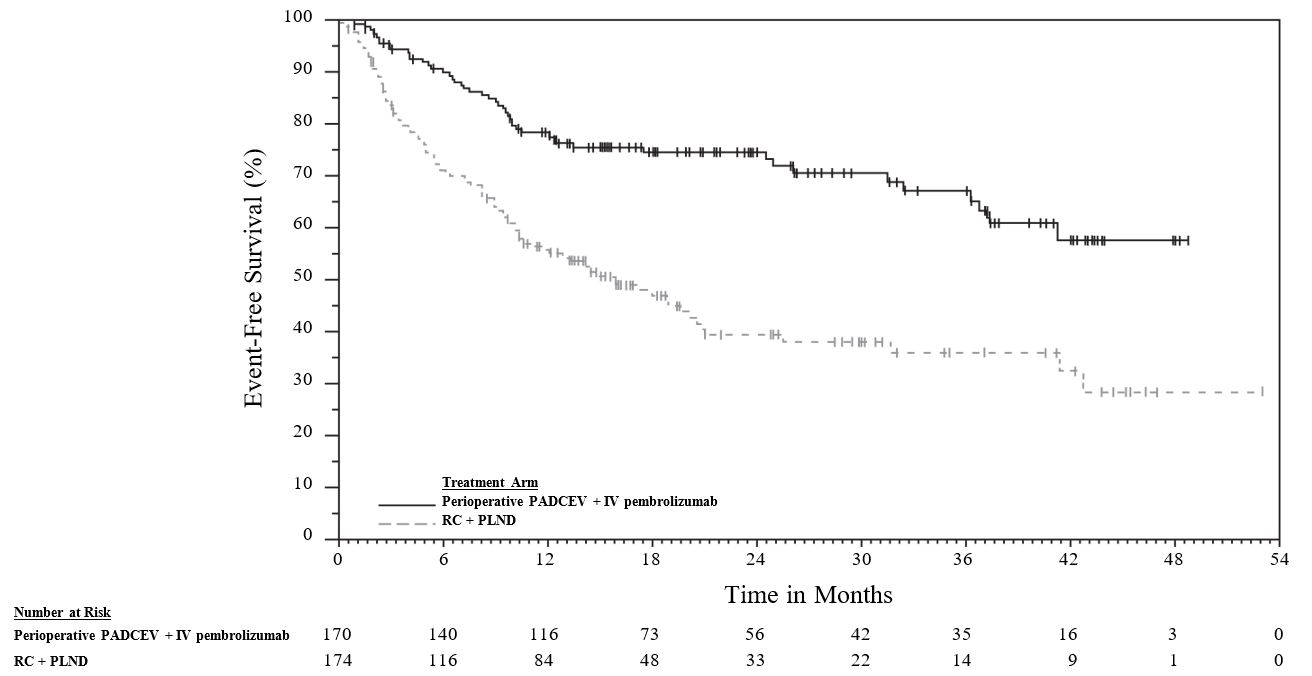
Figure 5. Kaplan-Meier Plot of Overall Survival, EV-303
The trial demonstrated a statistically significant difference in pCR rate (57.1% [95% CI: 49.3, 64.6] vs. 8.6% [95% CI: 4.9, 13.8]; p<0.0001).
Previously Untreated LA/mUC
EV-302
The efficacy of PADCEV in combination with intravenous pembrolizumab was evaluated in EV-302 (NCT04223856), an open label, randomized, multicenter trial that enrolled 886 patients with la/mUC who received no prior systemic therapy for locally advanced or metastatic disease. Patients with active CNS metastases, ongoing sensory or motor neuropathy Grade ≥2, or uncontrolled diabetes defined as hemoglobin A1C (HbA1c) ≥8% or HbA1c ≥7% with associated diabetes symptoms were excluded.
Patients were randomized 1:1 to receive either:
- •
- PADCEV 1.25 mg/kg on Days 1 and 8 of a 21-day cycle followed by intravenous pembrolizumab 200 mg on Day 1 of a 21‑day cycle. Treatment was continued until disease progression or unacceptable toxicity. In the absence of disease progression or unacceptable toxicity, pembrolizumab was continued for up to 2 years.
- •
- Gemcitabine 1000 mg/m2 on Days 1 and 8 of a 21-day cycle with cisplatin 70 mg/m2 or carboplatin (AUC = 4.5 or 5) on Day 1 of a 21-day cycle. Treatment was continued until disease progression or unacceptable toxicity for up to 6 cycles.
Randomization was stratified by cisplatin eligibility, PD-L1 expression, and presence of liver metastases.
The median age was 69 years (range: 22 to 91 years); 77% were male; 67% were White, 22% were Asian, 1% were Black or African American, and 10% were unknown or other; 12% were Hispanic or Latino. Patients had a baseline Eastern Cooperative Oncology Group (ECOG) performance status of 0 (49%), 1 (47%), or 2 (3%). Forty-seven percent of patients had a documented baseline HbA1c of <5.7%. At baseline, 95% of patients had metastatic urothelial cancer, including 72% with visceral and 22% with liver metastases, and 5% had locally advanced urothelial cancer. Eighty-five percent of patients had urothelial carcinoma (UC) histology including 6% with UC mixed squamous differentiation and 2% with UC mixed other histologic variants. Forty-six percent of patients were considered cisplatin-ineligible and 54% were considered cisplatin-eligible at time of randomization.
The major efficacy outcome measures were overall survival (OS) and progression-free survival (PFS) as assessed by blinded independent central review (BICR) according to Response Evaluation Criteria in Solid Tumors (RECIST) v1.1. Additional efficacy outcome measures included objective response rate (ORR) as assessed by BICR.
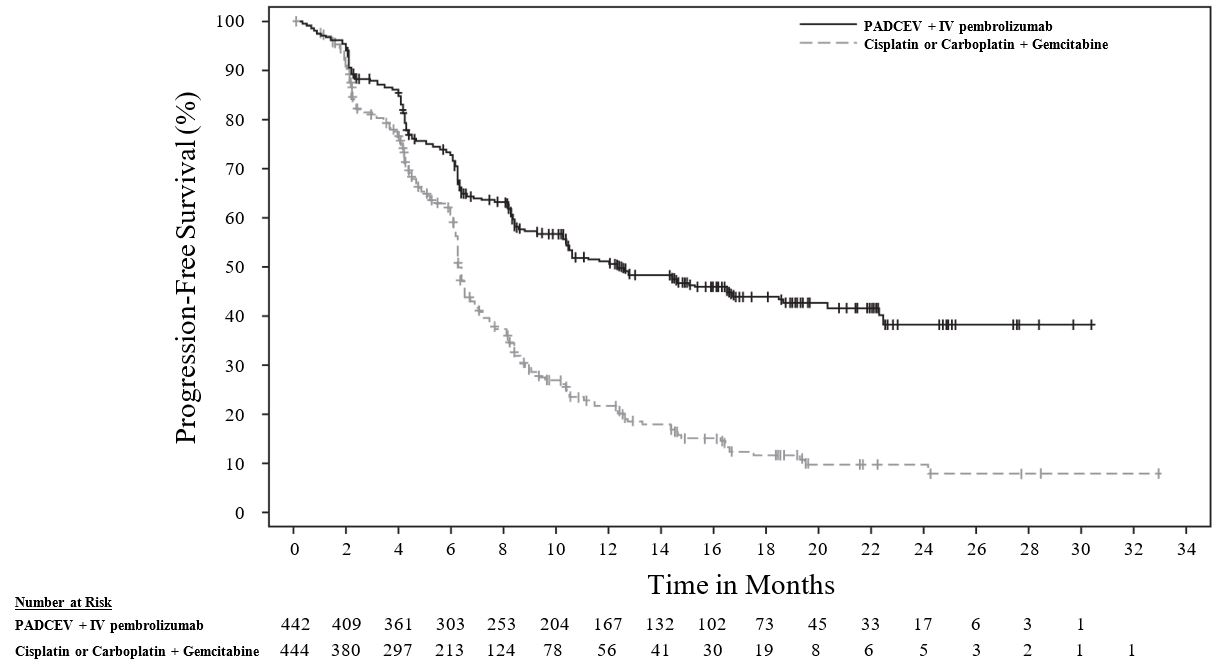
The trial demonstrated statistically significant improvements in OS, PFS, and ORR for patients randomized to PADCEV in combination with intravenous pembrolizumab as compared to platinum-based chemotherapy. Efficacy results were consistent across all stratified patient subgroups. Table 22 and Figures 6-7 summarize the efficacy results for EV-302.
| Endpoint | PADCEV with intravenous pembrolizumab n=442 | Cisplatin or carboplatin with gemcitabine n=444 |
|---|---|---|
| NE = Not Estimable. | ||
| ||
Overall Survival | ||
Number (%) of patients with events | 133 (30.1) | 226 (50.9) |
Median in months (95% CI)* | 31.5 (25.4, NE) | 16.1 (13.9, 18.3) |
Hazard ratio (95% CI) | 0.47 (0.38, 0.58) | |
<0.0001 | ||
Progression-Free Survival | ||
Number (%) of patients with events | 223 (50.5) | 307 (69.1) |
Median in months (95% CI) | 12.5 (10.4, 16.6) | 6.3 (6.2, 6.5) |
Hazard ratio (95% CI)* | 0.45 (0.38, 0.54) | |
<0.0001 | ||
Confirmed Objective Response Rate§ | ||
ORR (%) (95% CI) | 67.7 (63.1, 72.1) | 44.4 (39.7, 49.2) |
<0.0001 | ||
Complete response rate (%) | 29.1 | 12.5 |
Partial response rate (%) | 38.7 | 32.0 |
Figure 6. Kaplan-Meier Plot of Overall Survival, EV-302
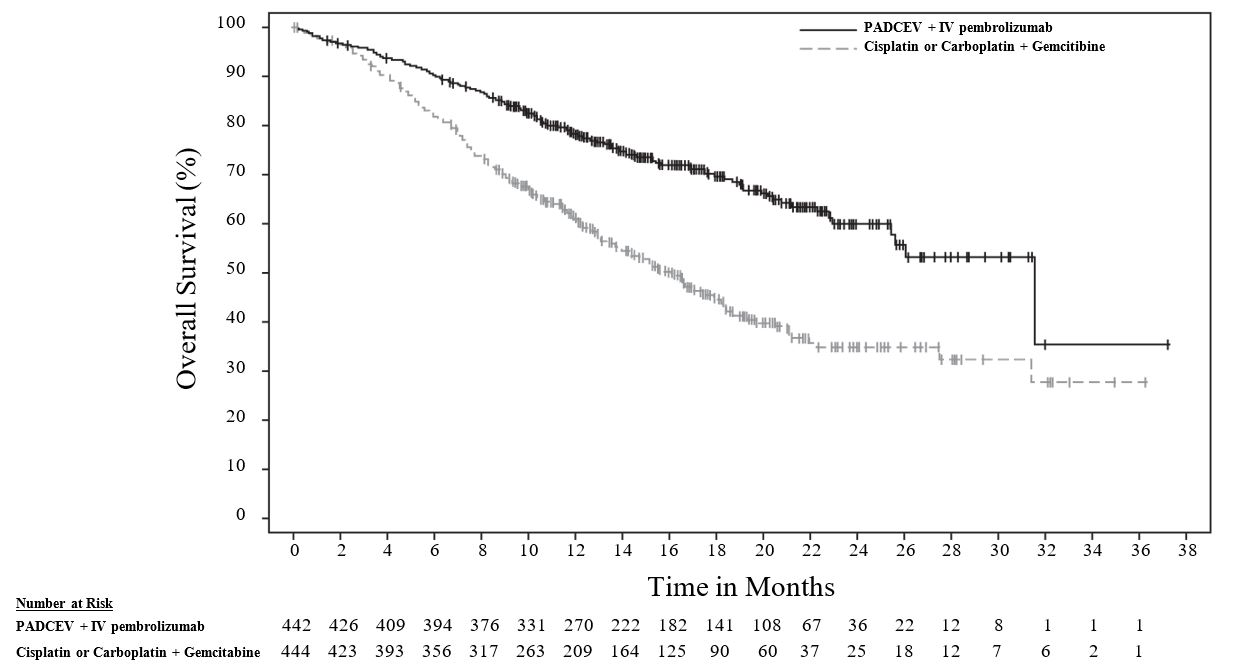
Figure 7. Kaplan-Meier Plot of Progression-Free Survival, EV-302
Patients with Previously Untreated LA/mUC Who Are Cisplatin-Ineligible
EV-103
The efficacy of PADCEV in combination with intravenous pembrolizumab was evaluated in EV-103 (NCT03288545), an open-label, multi-cohort (dose escalation cohort, Cohort A, Cohort K) trial in patients with locally advanced or metastatic urothelial cancer who were ineligible for cisplatin-containing chemotherapy and received no prior systemic therapy for locally advanced or metastatic disease. Patients with active CNS metastases, ongoing sensory or motor neuropathy Grade ≥2, or uncontrolled diabetes defined as hemoglobin A1C (HbA1c) ≥8% or HbA1c ≥7% with associated diabetes symptoms were excluded from participating in the trial.
Patients in the dose escalation cohort (n=5), Cohort A (n=40), and Cohort K (n=76) received PADCEV 1.25 mg/kg as an IV infusion on Days 1 and 8 of a 21-day cycle followed by intravenous pembrolizumab 200 mg on Day 1 of a 21-day cycle. Patients were treated until disease progression or unacceptable toxicity.
A total of 121 patients received PADCEV in combination with intravenous pembrolizumab. The median age was 71 years (range: 51 to 91 years); 74% were male; 85% were White, 5% were Black, 4% were Asian, and 6% were other, unknown, or not reported. Ten percent of patients were Hispanic or Latino. Forty-five percent of patients had an ECOG performance status of 1 and 15% had an ECOG performance status of 2. Forty-seven percent of patients had a documented baseline HbA1c of <5.7%. Reasons for cisplatin ineligibility included: 60% with baseline creatinine clearance of 30-59 mL/min, 10% with ECOG PS of 2, 13% with Grade 2 or greater hearing loss, and 16% with more than one cisplatin-ineligibility criteria.
At baseline, 97.5% of patients had metastatic urothelial cancer and 2.5% of patients had locally advanced urothelial cancer. Thirty-seven percent of patients had upper tract disease. Eighty-four percent of patients had visceral metastasis at baseline including 22% with liver metastases. Thirty-nine percent of patients had transitional cell carcinoma (TCC) histology; 13% had TCC with squamous differentiation and 48% had TCC with other histologic variants.
The major efficacy outcome measures were ORR and DoR as assessed by BICR according to RECIST v1.1.
The median follow-up time for the dose escalation cohort + Cohort A was 44.7 months (range: 0.7 to 52.4 months) and for Cohort K was 14.8 months (range: 0.6 to 26.2 months).
Efficacy results are presented in Table 23 below.
| Endpoint | PADCEV in combination with intravenous pembrolizumab n=121 |
|---|---|
Confirmed ORR (95% CI) | 68% (58.7, 76.0) |
Complete response rate | 12% |
Partial response rate | 55% |
The median duration of response for the dose escalation cohort + Cohort A was 22.1 months (range: 1.0+ to 46.3+ months) and for Cohort K was not reached (range: 1.2 to 24.1+ months).
Previously Treated LA/mUC
EV-301
The efficacy of PADCEV as a single agent was evaluated in EV-301 (NCT03474107), an open-label, randomized, multicenter trial that enrolled 608 patients with la/mUC who received prior treatment with a PD-1 or PD-L1 inhibitor and platinum-based chemotherapy. Patients were randomized 1:1 to receive either PADCEV 1.25 mg/kg on Days 1, 8, and 15 of a 28-day cycle or investigator’s choice of chemotherapy. Randomization was stratified by ECOG PS (0 vs 1), region of world (Western Europe vs US vs Rest of World), and presence of liver metastasis.
Patients were excluded if they had active central nervous system (CNS) metastases, ongoing sensory or motor neuropathy ≥ Grade 2, or uncontrolled diabetes defined as hemoglobin A1C (HbA1c) ≥8% or HbA1c ≥7% with associated diabetes symptoms.
The median age was 68 years (range: 30 to 88 years) and 77% were male. Racial demographics were reported as White (52%), Asian (33%), Black (0.7%), Native Hawaiian or Other Pacific Islander (0.2%), or not reported (15%). Nine percent of patients were Hispanic or Latino. All patients had a baseline ECOG performance status of 0 (40%) or 1 (60%). Thirty‑four percent of patients had tumors located in the upper tract that included the renal pelvis and ureter. Eighty percent of patients had visceral metastases including 31% with liver metastases. Seventy-six percent of patients had pure TCC histology; 14% had TCC with other histologic variants; and 10% had other tumor histologies including adenocarcinoma and squamous cell carcinoma. The median number of prior therapies was 2 (range 1 to ≥3). Sixty‑three percent of patients received prior cisplatin-based regimens, 26% received prior carboplatin-based regimens, and an additional 11% received both cisplatin and carboplatin-based regimens. Patients on the control arm received docetaxel (38%), paclitaxel (36%), or vinflunine (25%).
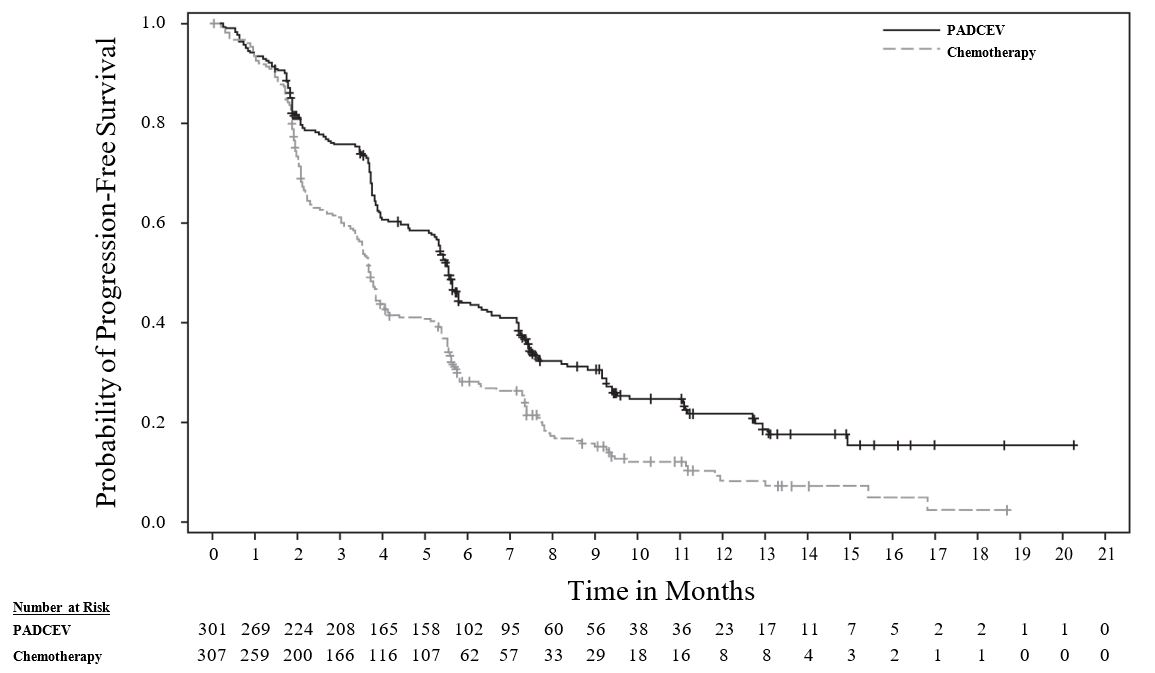
The major efficacy outcome measures were OS, PFS, and ORR assessed by investigator using RECIST v1.1. Efficacy results were consistent across all stratified patient subgroups.
Table 24 and Figures 8-9 summarize the efficacy results for EV-301.
| Endpoint | PADCEV n=301 | Chemotherapy n=307 |
|---|---|---|
Overall Survival* | ||
Number (%) of patients with events | 134 (44.5) | 167 (54.4) |
Median in months (95% CI) | 12.9 (10.6, 15.2) | 9.0 (8.1, 10.7) |
Hazard ratio (95% CI) | 0.70 (0.56, 0.89) | |
p-value | 0.0014 | |
Progression-Free Survival* | ||
Number (%) of patients with events | 201 (66.8) | 231 (75.2) |
Median in months (95% CI) | 5.6 (5.3, 5.8) | 3.7 (3.5, 3.9) |
Hazard ratio (95% CI) | 0.62 (0.51, 0.75) | |
p-value | <0.0001 | |
Overall Response Rate (CR + PR)† | ||
ORR (%) (95% CI) | 40.6 (34.9, 46.5) | 17.9 (13.7, 22.8) |
p-value | <0.0001 | |
Complete response rate (%) | 4.9 | 2.7 |
Partial response rate (%) | 35.8 | 15.2 |
Figure 8. Kaplan-Meier Plot of Overall Survival, EV-301
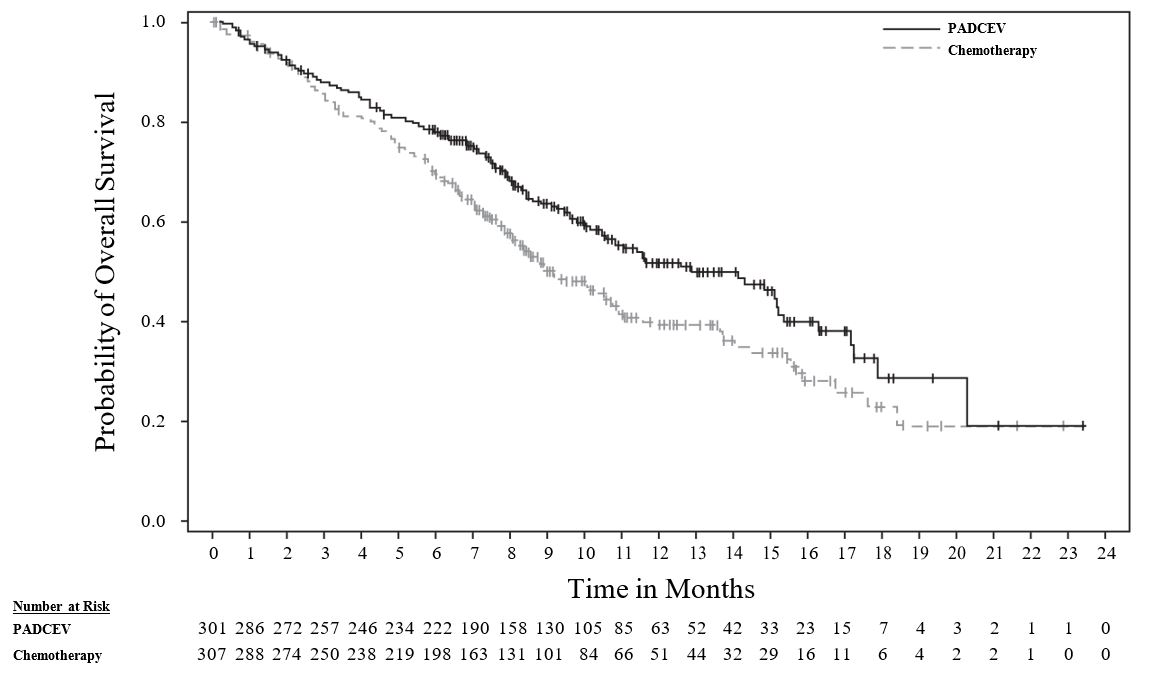
Figure 9. Kaplan-Meier Plot of Progression-Free Survival, EV-301
EV-201, Cohort 1
The efficacy of PADCEV as a single agent was also investigated in Cohort 1 of EV-201 (NCT03219333), a single-arm, multi-cohort, multicenter trial that enrolled 125 patients with la/mUC who received prior treatment with a PD-1 or PD-L1 inhibitor and a platinum-based chemotherapy. Patients were excluded if they had active central nervous system (CNS) metastases, ongoing sensory or motor neuropathy ≥ Grade 2, heart failure, or uncontrolled diabetes defined as hemoglobin A1C (HbA1c) ≥8% or HbA1c ≥7% with associated diabetes symptoms.
PADCEV was administered at a dose of 1.25 mg/kg, as an intravenous (IV) infusion on Days 1, 8, and 15 of each 28-day cycle.
The median age was 69 years (range: 40 to 84 years) and 70% were male. Racial demographics were reported as White (85%), Asian (9%), Black (2%), Other (0.8%), or not reported (4%). Four percent of patients were Hispanic or Latino. All patients had a baseline Eastern Cooperative Oncology Group (ECOG) performance status of 0 (32%) or 1 (68%). Ninety percent of patients had visceral metastases including 40% with liver metastases. Approximately two-thirds (67%) of patients had pure transitional cell carcinoma (TCC) histology; 33% had TCC with other histologic variants. The median number of prior systemic therapies was 3 (range: 1 to 6). Sixty-six percent of patients received prior cisplatin-based regimens, 26% received prior carboplatin-based regimens, and an additional 8% received both cisplatin and carboplatin‑based regimens.
The major efficacy outcome measures were confirmed objective response rate (ORR) and duration of response (DOR) assessed by BICR using RECIST v1.1.
Efficacy results are presented in Table 25.
| Endpoint | PADCEV n=125 |
|---|---|
| NE = Not Estimable. | |
| |
Confirmed ORR (95% CI) | 44% (35.1, 53.2) |
Complete Response Rate (CR) | 12% |
Partial Response Rate (PR) | 32% |
Median* Duration of Response, months (95% CI) | 7.6 (6.3, NE) |
Previously Treated Patients with LA/mUC Who Are Cisplatin-Ineligible
EV-201, Cohort 2
The efficacy of PADCEV as a single agent was also evaluated in Cohort 2 of EV-201, a single-arm, multi-cohort, multicenter trial in 89 patients with la/mUC who received prior treatment with a PD-1 or PD-L1 inhibitor and were cisplatin-ineligible and did not receive platinum in the locally advanced or metastatic setting. Patients were excluded if they had active CNS metastases, ongoing sensory or motor neuropathy ≥ Grade 2, heart failure, or uncontrolled diabetes defined as hemoglobin A1C (HbA1c) ≥8% or HbA1c ≥7% with associated diabetes symptoms.
PADCEV was administered at a dose of 1.25 mg/kg, as an intravenous (IV) infusion on Days 1, 8, and 15 of each 28-day cycle.
The median age was 75 years (range: 49 to 90 years), 74% were male. Racial demographics were reported as White (70%), Asian (22%), or not reported (8%). One percent of patients were Hispanic or Latino. Patients had a baseline ECOG performance status of 0 (42%), 1 (46%), and 2 (12%). Forty-three percent of patients had tumors located in the upper tract that included the renal pelvis and ureter. Seventy-nine percent of patients had visceral metastases and 24% had liver metastases.
Reasons for cisplatin ineligibility included: 66% with baseline creatinine clearance of 30-59 mL/min, 7% with ECOG PS of 2, 15% with Grade 2 or greater hearing loss, and 12% with more than one cisplatin-ineligibility criteria. Seventy percent of patients had TCC histology; 13% had TCC with squamous differentiation and 17% had TCC with other histologic variants.
The median number of prior systemic therapies was 1 (range: 1 to 4).
Efficacy results are presented in Table 26 below.
| NE = Not Estimable. | |
| |
Endpoint | PADCEV n=89 |
Confirmed ORR (95% CI) | 51% (39.8, 61.3) |
Complete Response Rate (CR) | 22% |
Partial Response Rate (PR) | 28% |
Median* Duration of Response, months (95% CI) | 13.8 (6.4, NE) |
MEDICATION GUIDE
PATIENT INFORMATION PADCEV® (PAD-sev) (enfortumab vedotin-ejfv) for injection | ||||
If your healthcare provider prescribes PADCEV in combination with the medicines pembrolizumab or pembrolizumab and berahyaluronidase alfa-pmph, also read the Medication Guide that comes with these medicines for additional important information. | ||||
What is the most important information I should know about PADCEV? PADCEV may cause serious side effects, including: Skin reactions. Skin reactions including severe skin reactions have happened in people treated with PADCEV and may be more common when PADCEV is given with pembrolizumab. In some cases, these severe skin reactions have caused death. Most severe skin reactions occurred during the first cycle of treatment but may happen later. Your healthcare provider will monitor you, may stop your treatment with PADCEV completely or for a period of time (temporarily), may change your dose, and may prescribe medicines if you get skin reactions. Tell your healthcare provider right away if you develop any of these signs of a new or worsening skin reaction: | ||||
|
| |||
See “What are the possible side effects of PADCEV?” for more information about side effects. | ||||
What is PADCEV? PADCEV is a prescription medicine used to treat adults with bladder cancer and cancers of the urinary tract (renal pelvis, ureter, or urethra).
It is not known if PADCEV is safe and effective in children. | ||||
Before receiving PADCEV, tell your healthcare provider about all of your medical conditions, including if you:
Tell your healthcare provider about all the medicines you take, including prescription and over-the-counter medicines, vitamins, and herbal supplements. Taking PADCEV with certain other medicines may cause side effects. | ||||
How will I receive PADCEV?
| ||||
What are the possible side effects of PADCEV? PADCEV may cause serious side effects, including:
| ||||
| ||||
| ||||
Your healthcare provider may decrease your dose of PADCEV, or temporarily or completely stop your treatment with PADCEV if you get severe side effects. The most common side effects of PADCEV when used in combination with pembrolizumab include: | ||||
|
|
| ||
The most common side effects of PADCEV when used alone include: | ||||
|
|
| ||
PADCEV may cause fertility problems in females and males, which may affect the ability to have children. Talk to your healthcare provider if you have concerns about fertility. These are not all of the possible side effects of PADCEV. Call your doctor for medical advice about side effects. You may report side effects to FDA at 1-800-FDA-1088. | ||||
General information about the safe and effective use of PADCEV. Medicines are sometimes prescribed for purposes other than those listed in a Patient Information leaflet. You can ask your pharmacist or healthcare provider for information about PADCEV that is written for healthcare professionals. | ||||
What are the ingredients in PADCEV? Active ingredient: enfortumab vedotin-ejfv Inactive ingredients: histidine, histidine hydrochloride monohydrate, polysorbate 20, and trehalose dihydrate. Manufactured and Marketed by: Astellas Pharma US, Inc., Northbrook, Illinois 60062 Distributed and Marketed by: Seagen Inc., Bothell, WA 98021 U.S. License 2124 PADCEV is a registered trademark jointly owned by Agensys, Inc. and Seagen Inc. ©2026 Agensys, Inc. and Seagen Inc. For more information, go to www.padcev.com or call 1-888-472-3238 10194-EV-US | ||||
- This Patient Information has been approved by the U.S. Food and Drug Administration. Revised: 07/2026
Additional Resources
Chat online with Pfizer Medical Information regarding your inquiry on a Pfizer medicine or vaccine.
Speak with a Pfizer Medical Information Professional regarding your Pfizer medicine or vaccine inquiry.
Available 9AM-5PM ET Monday to Friday; excluding holidays.
Submit a medical question for a Pfizer medicine or a vaccine.
The submission will be reviewed during our standard business hours.
To report an adverse event related to a Pfizer product and you are not part of a clinical trial* for this medication, click the link below to submit your information:
Pfizer Safety Reporting Site
*If you are involved in a clinical trial for either product, adverse events should be reported to your coordinating study site.
If you cannot use the above website to report an adverse event related to a Pfizer medication, please call (800) 438-1985.
You may also contact the U.S. Food and Drug Administration (FDA) directly to report adverse events or product quality concerns either online at www.fda.gov/medwatch or by calling (800) 332-1088.