(pegfilgrastim-apgf)

Prescribing Information
Download Prescribing Information

Instructions For Use

Instructions for Use

NYVEPRIA (nigh-VEP ree-ah)
(pegfilgrastim-apgf)
injection, for subcutaneous use
Single-Dose Prefilled Syringe

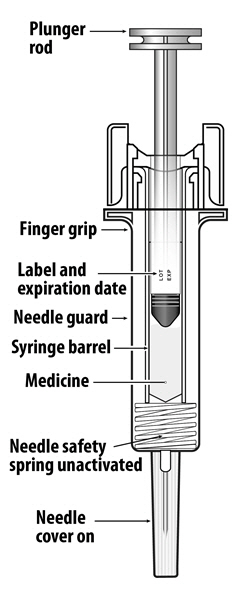
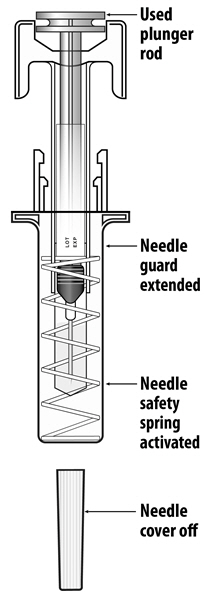
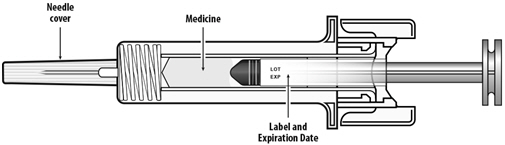
Guide to parts

Before use

After use

FigureFigure

Important: The needle is covered by the needle cover before use.


Important

Read the Patient Information for important information that you need to know about NYVEPRIA before using these Instructions for Use.

Before you use a NYVEPRIA prefilled syringe, read this important information.

Storing the prefilled syringe

Store NYVEPRIA in the refrigerator between 36°F to 46°F (2°C to 8°C).
Do not freeze. If NYVEPRIA is accidentally frozen, allow the prefilled syringe to thaw in the refrigerator before injecting.
Do not use a NYVEPRIA prefilled syringe that has been frozen more than 1 time. Throw it away and use a new NYVEPRIA prefilled syringe.
Keep the prefilled syringe in the original carton to protect from light or physical damage.
Take the prefilled syringe out of the refrigerator 30 minutes before use and allow it to reach room temperature, 68°F to 77°F (20°C to 25°C), before preparing an injection.
Throw away (dispose of) any NYVEPRIA that has been left at room temperature, 68°F to 77°F (20°C to 25°C), for more than 15 days.
Keep NYVEPRIA and all medicines out of the reach of children.

Using the prefilled syringe

It is important that you do not try to give the injection unless you or your caregiver has received training from your healthcare provider.
Make sure the name NYVEPRIA appears on the carton and prefilled syringe label.
Check the carton and prefilled syringe label to make sure the dose strength is 6 mg.
You should not inject a dose of NYVEPRIA to children weighing less than 99 pounds (45 kg) from a NYVEPRIA prefilled syringe. A dose less than 0.6 mL (6 mg) cannot be accurately measured using the NYVEPRIA prefilled syringe.
Do not use a prefilled syringe after the expiration date on the label.
Do not shake the prefilled syringe.
Do not remove the needle cover from the prefilled syringe until you are ready to inject.
Do not use the prefilled syringe if the carton is open or damaged.
Do not use a prefilled syringe if it has been dropped on a hard surface. The prefilled syringe may be broken even if you cannot see the break. Use a new prefilled syringe.
The prefilled syringe has a needle guard that automatically activates to cover the needle after the injection is given. Do not use a prefilled syringe if the needle guard has been activated. Use another prefilled syringe that has not been activated and is ready to use.

Call your healthcare provider if you have any questions.

Step 1: Prepare


A.
Remove the prefilled syringe carton from the refrigerator.

Check the expiration date.

Important: Do not use if the expiration date has passed.

Remove the inner carton containing the prefilled syringe from the outer carton by peeling away the cover. On a clean, well-lit surface, place the inner carton containing the prefilled syringe at room temperature, 68°F to 77°F (20°C to 25°C), for 30 minutes before you give an injection.

Do not use the prefilled syringe if the inner carton is damaged.
Do not try to warm the prefilled syringe by using a heat source such as hot water or microwave.
Do not leave the prefilled syringe in direct sunlight.
Do not shake the prefilled syringe.

Open the inner carton containing the prefilled syringe by peeling away the cover. Grab the needle guard to remove the prefilled syringe from the inner carton containing the prefilled syringe.
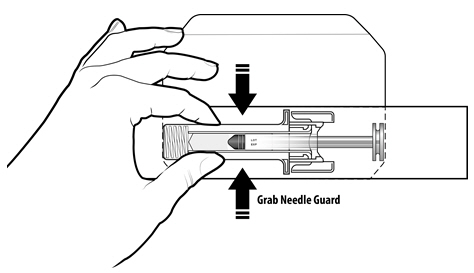
Figure

For safety reasons:

Do not grab the plunger rod.
Do not grab the needle cover.

B. Inspect the medicine and prefilled syringe.
Figure


Make sure the medicine in the prefilled syringe is clear and colorless.
It is normal to see air bubbles in the syringe.

Do not use the prefilled syringe if:
o
The medicine is cloudy or discolored or contains flakes or particles.
o
Any part appears cracked or broken.
o
The prefilled syringe has been dropped.
o
The needle cover is missing or not securely attached.
o
The expiration date printed on the label has passed.


In all cases, use a new prefilled syringe and call your healthcare provider.

C.
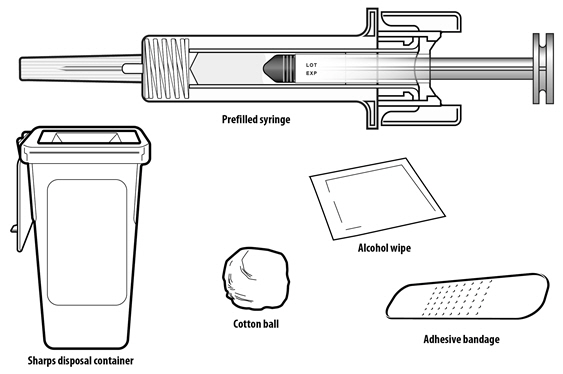
Gather all materials needed for the injection.

Wash your hands thoroughly with soap and water.

On a clean, well-lit work surface, place the:

Prefilled syringe
Alcohol wipe
Cotton ball or gauze pad
Adhesive bandage
Sharps disposal container
Figure

Step 2: Get ready


D.
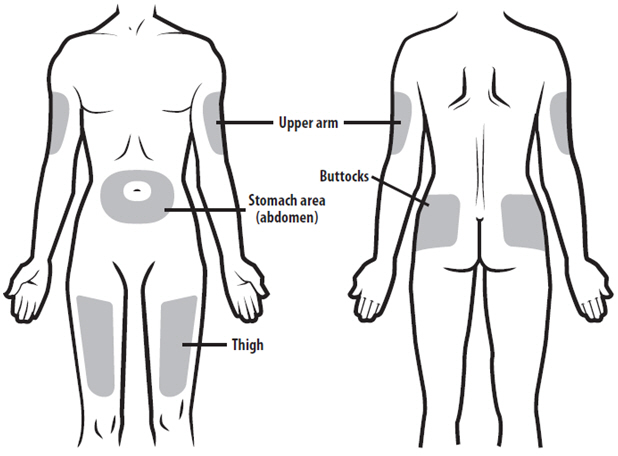
Prepare and clean the injection site.

Figure

You can use:

Thigh
Stomach area (abdomen), except for a 2-inch area right around the navel (belly button)
Upper outer area of the buttocks (only if someone else is giving you the injection)
Outer area of upper arm (only if someone else is giving you the injection)

Clean the injection site with an alcohol wipe. Let the skin dry.
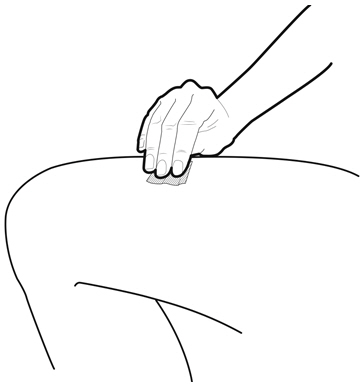
Figure
Do not touch this area again before injecting.
If you want to use the same injection site, make sure it is not the same spot on the injection site you used for a previous injection.
Do not inject into areas where the skin is tender, bruised, red or hard. Avoid injecting into areas with scars or stretch marks.

E. Hold the prefilled syringe by the needle guard. Carefully pull the needle cover straight off and away from the body.
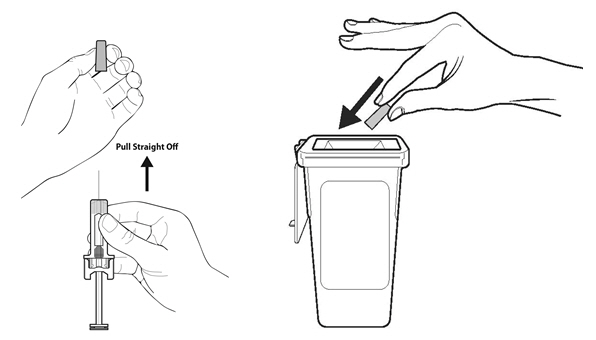
Figure
Do not remove the needle cover from the prefilled syringe until you are ready to inject.
Do not twist or bend the needle cover.
Do not hold the prefilled syringe by the plunger rod.
Do not put the needle cover back onto the prefilled syringe.

Important: Throw the needle cover into the sharps disposal container.

Step 3: Subcutaneous (under the skin) injection


F.
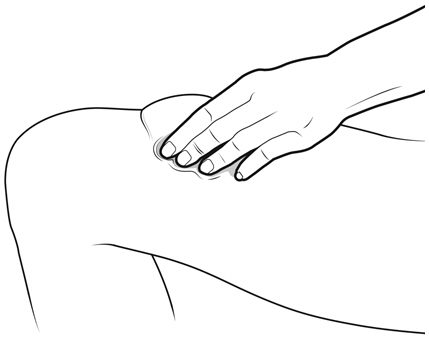
Pinch the injection site to create a firm surface.

Figure


Important:
Keep skin pinched while injecting.

G.
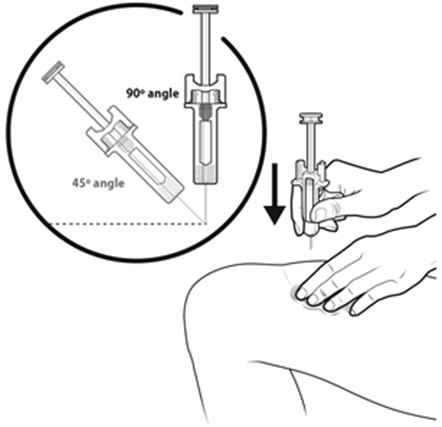
Hold the pinch. Insert the needle into the skin at 45 to 90 degrees.

Figure

H.
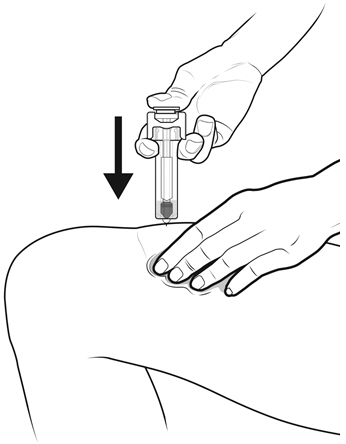
Using slow and constant pressure, push the plunger rod down until it reaches the bottom.

Figure

Step 4: Finish

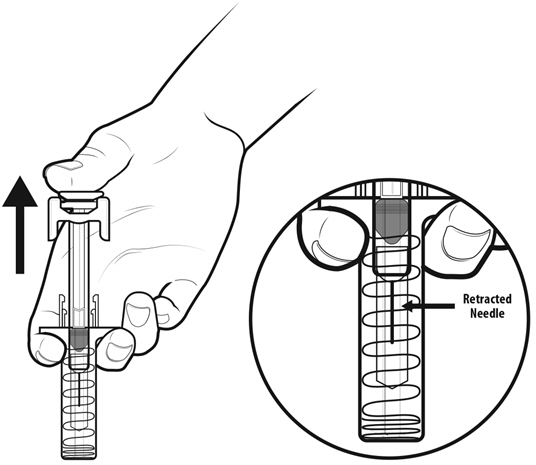
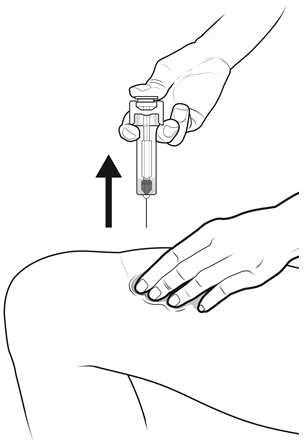
I. When the syringe is empty, keep the plunger rod fully pressed down while you carefully pull the needle straight out from the injection site and off your skin.
Figure

J. Slowly release the plunger rod and allow the syringe needle guard to automatically cover the exposed needle. Do not put the cover back on the needle.

Figure

Important: When you remove the syringe, if it looks like the medicine is still in the syringe barrel, this means you have not received a full dose. Call your healthcare provider right away.
K.
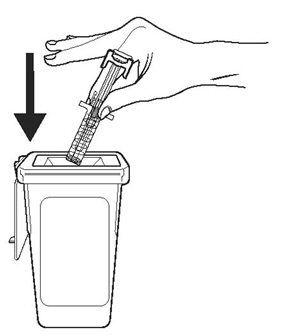
Discard (throw away) the used prefilled syringe.

Figure
Put the used prefilled syringe in a FDA-cleared sharps disposal container right away after use. Do not throw away (dispose of) the syringe in your household trash.
If you do not have a FDA-cleared sharps disposal container, you may use a household container that is:
o
made of a heavy-duty plastic,
o
can be closed with a tight-fitting, puncture-resistant lid, without sharps being able to come out,
o
upright and stable during use,
o
leak-resistant, and
o
properly labeled to warn of hazardous waste inside the container.
When your sharps disposal container is almost full, you will need to follow your community guidelines for the right way to dispose of your sharps disposal container. There may be state or local laws about how you should throw away used needles and syringes. For more information about safe sharps disposal, and for specific information about sharps disposal in the state that you live in, go to the FDA's website at: http://www.fda.gov/safesharpsdisposal.


Do not reuse the prefilled syringe.
Do not recycle the prefilled syringe or sharps disposal container or throw them in the household trash.

Important: Always keep the sharps disposal container out of the reach of children.

L.
Examine the injection site.

If there is blood, press a cotton ball or gauze pad on the injection site. Do not rub the injection site. Apply an adhesive bandage if needed.

This Instructions for Use has been approved by the U.S. Food and Drug Administration.

Manufactured by
Hospira, Inc., a Pfizer Company,
Lake Forest, IL 60045 USA
US License No. 1974

Distributed by Pfizer Labs, division of Pfizer Inc., New York, NY 10001 USA

Figure

For more information go to www.pfizer.com or call 1-800-438-1985.
LAB-1188-4.0
Revised: May 2026

Medication Guide

MEDICATION GUIDE

This Patient Information has been approved by the U.S. Food and Drug Administration.                        Revised: May 2026

Patient Information
NYVEPRIA™ (nigh-VEP ree-ah)
(pegfilgrastim-apgf)
injection
Single-Dose Prefilled Syringe

What is NYVEPRIA?
NYVEPRIA is a prescription medicine that is used in adults and children aged newborn and older to help reduce the chance of infection due to a low white blood cell count, in people with certain types of cancer (non-myeloid), who receive anti-cancer medicines (chemotherapy) that can cause fever and low blood cell count.

Do not take NYVEPRIA if you have had a serious allergic reaction to pegfilgrastim products or filgrastim products.

Before you receive NYVEPRIA, tell your healthcare provider about all of your medical conditions, including if you:

have a sickle cell disorder.
have kidney problems.
are pregnant or plan to become pregnant. It is not known if NYVEPRIA will harm your unborn baby.
are breastfeeding or plan to breastfeed. It is not known if NYVEPRIA passes into your breast milk.

Tell your healthcare provider about all of the medicines you take, including prescription and over-the-counter medicines, vitamins, and herbal supplements.

How will I receive NYVEPRIA?

NYVEPRIA is given as an injection under your skin (subcutaneous injection) by a healthcare provider. If your healthcare provider decides that the subcutaneous injections can be given at home by you or your caregiver, follow the detailed "Instructions for Use" that comes with your NYVEPRIA for information on how to prepare and inject a dose of NYVEPRIA using the single-dose prefilled syringe.
You and your caregiver will be shown how to prepare and inject NYVEPRIA using the single-dose prefilled syringe before you use it.
You should not inject a dose of NYVEPRIA to children weighing less than 99 pounds (45 kg) from a NYVEPRIA prefilled syringe. A dose less than 0.6 mL (6 mg) cannot be accurately measured using the NYVEPRIA prefilled syringe.
If you are receiving NYVEPRIA because you are also receiving chemotherapy, the last dose of NYVEPRIA should be injected at least 14 days before and 24 hours after your dose of chemotherapy.
If you miss a dose of NYVEPRIA, talk to your healthcare provider about when you should give your next dose.
If you inject too much NYVEPRIA, call your healthcare provider or Poison Help line at 1-800-222-1222 or go to the nearest hospital emergency room right away.

What are possible side effects of NYVEPRIA?
NYVEPRIA may cause serious side effects, including:

Spleen rupture. Your spleen may become enlarged and can rupture. A ruptured spleen can cause death. Call your healthcare provider right away if you have pain in the left upper stomach area or your left shoulder.
A serious lung problem called Acute Respiratory Distress Syndrome (ARDS). Call your healthcare provider or get emergency help right away if you have shortness of breath with or without a fever, trouble breathing, or a fast rate of breathing.
Serious allergic reactions. Allergic reactions can cause a rash over your whole body, shortness of breath, wheezing, dizziness, swelling around your mouth or eyes, fast heart rate, and sweating. If you have any of these symptoms, stop using NYVEPRIA and call your healthcare provider or get emergency medical help right away.
Sickle cell crises in people with sickle cell disorder. You may have a severe sickle cell crisis, which could lead to death. Call your healthcare provider right away if you have symptoms of sickle cell crisis such as pain or difficulty breathing.
Kidney injury. Call your healthcare provider right away if you develop any of the following symptoms:
o
swelling of your face or ankles
o
blood in your urine or dark colored urine
o
you urinate less than usual
Increased white blood cell count (leukocytosis). Your healthcare provider will check your blood count during treatment with NYVEPRIA.
Decreased platelet count (thrombocytopenia). Your healthcare provider will check your blood count during treatment with NYVEPRIA. Tell your healthcare provider if you have unusual bleeding or bruising during treatment with NYVEPRIA.
Capillary Leak Syndrome (CLS). NYVEPRIA can cause fluid to leak from blood vessels into your body's tissues. CLS can quickly cause you to have symptoms that may become life-threatening. Get emergency medical help right away if you develop any of the following symptoms:
o
swelling or puffiness and are urinating less than usual
o
trouble breathing
o
swelling of your stomach area (abdomen) and feeling of fullness
o
dizziness or feeling faint
o
a general feeling of tiredness
Myelodysplastic Syndrome (MDS) and Acute Myeloid Leukemia (AML). If you have breast cancer or lung cancer, when NYVEPRIA is used with chemotherapy and radiation therapy, or with radiation therapy alone, you may have an increased risk of developing a precancerous blood condition called MDS or a blood cancer called AML. Call your healthcare provider if you develop any symptoms of MDS and AML, including tiredness, fever, or easy bruising or bleeding.
Inflammation of the aorta (aortitis). Inflammation of the aorta (the large blood vessel that carries blood from the heart to the body) has happened in people who receive pegfilgrastim products. Tell your healthcare provider if you develop fever, stomach (abdominal) pain, feeling tired, or back pain.
 
The most common side effects of NYVEPRIA are pain in the bones, arms, and legs.
 
These are not all the possible side effects of NYVEPRIA.
 
Call your healthcare provider for medical advice about side effects. You may report side effects to FDA at 1-800-FDA-1088.

How should I store NYVEPRIA single-dose prefilled syringe?

Store NYVEPRIA in the refrigerator between 36°F to 46°F (2°C to 8°C).
Do not freeze. If NYVEPRIA is accidentally frozen, allow the prefilled syringe to thaw in the refrigerator before injecting.
Do not use a NYVEPRIA prefilled syringe that has been frozen more than 1 time. Throw it away and use a new NYVEPRIA prefilled syringe.
Keep NYVEPRIA in the original carton to protect from light or physical damage.
Do not shake NYVEPRIA.
Take NYVEPRIA out of the refrigerator 30 minutes before use and allow it to reach room temperature, 68°F to 77°F (20°C to 25°C), before preparing an injection.
Throw away (dispose of) any NYVEPRIA that has been left at room temperature, 68°F to 77°F (20°C to 25°C), for more than 15 days.

Keep NYVEPRIA and all medicines out of the reach of children.

General information about the safe and effective use of NYVEPRIA.
Medicines are sometimes prescribed for purposes other than those listed in a Patient Information leaflet. Do not use NYVEPRIA for a condition for which it was not prescribed. Do not give NYVEPRIA to other people, even if they have the same symptoms that you have. It may harm them. You can ask your pharmacist or healthcare provider for information about NYVEPRIA that is written for health professionals.

What are the ingredients in NYVEPRIA?
Active ingredient: pegfilgrastim-apgf.
Inactive ingredients: acetate, polysorbate 20, sodium, and sorbitol in water for injection.

Manufactured by Hospira, Inc., a Pfizer Company, Lake Forest, IL 60045 USA
US License No. 1974
Distributed by Pfizer Labs, division of Pfizer Inc., New York, NY 10001 USA

Logo

LAB-1187-5.0
For more information go to www.pfizer.com or call 1-800-438-1985.

Additional Resources

Chat online with Pfizer Medical Information regarding your inquiry on a Pfizer medicine or vaccine.

Speak with a Pfizer Medical Information Professional regarding your Pfizer medicine or vaccine inquiry.

Available 9AM-5PM ET Monday to Friday; excluding holidays.


Submit a medical question for a Pfizer medicine or a vaccine. 

The submission will be reviewed during our standard business hours.

To report an adverse event related to a Pfizer product and you are not part of a clinical trial* for this medication, click the link below to submit your information: 
Pfizer Safety Reporting Site

*If you are involved in a clinical trial for either product, adverse events should be reported to your coordinating study site.

If you cannot use the above website to report an adverse event related to a Pfizer medication, please call (800) 438-1985.

You may also contact the U.S. Food and Drug Administration (FDA) directly to report adverse events or product quality concerns either online at www.fda.gov/medwatch or by calling (800) 332-1088.