(nicotine)

Prescribing Information
Download Prescribing Information

WARNINGS

WARNINGS

Nicotine from any source can be toxic and addictive. Smoking causes lung disease, cancer, and heart disease and may adversely affect pregnant women or the fetus. For any smoker, with or without concomitant disease or pregnancy, the risk of nicotine replacement in a smoking cessation program should be weighed against the hazard of continued smoking, and the likelihood of achieving cessation of smoking without nicotine replacement.

Pregnancy, Warning

Tobacco smoke, which has been shown to be harmful to the fetus, contains nicotine, hydrogen cyanide, and carbon monoxide. Nicotine has been shown in animal studies to cause fetal harm. It is therefore presumed that NICOTROL NS can cause fetal harm when administered to a pregnant woman. The effect of nicotine delivery by NICOTROL NS has not been examined in pregnancy (See PRECAUTIONS, Pregnancy). Therefore, pregnant smokers should be encouraged to attempt cessation using educational and behavioral interventions before using pharmacological approaches. If NICOTROL NS is used during pregnancy, or if the patient becomes pregnant while using it, the patient should be apprised of the potential hazard to the fetus.

Safety Note Concerning Children

The amounts of nicotine that are tolerated by adult smokers can produce signs and symptoms of poisoning and could prove fatal if NICOTROL NS is used or ingested by children or pets. Suspected nicotine poisoning in a child should be considered a medical emergency and treated immediately. A full bottle of NICOTROL NS contains 100 mg of nicotine, some of which will still be in the bottle when it is discarded. Therefore, patients should be cautioned to keep both used and unused containers of NICOTROL NS out of the reach of children and pets.

PRECAUTIONS

General

The patient should be urged to stop smoking completely when initiating NICOTROL NS therapy (See DOSAGE AND ADMINISTRATION). Patients should be informed that if they continue to smoke while using the product, they may experience adverse effects due to peak nicotine levels higher than those experienced from smoking alone. If there is a clinically significant increase in cardiovascular or other effects attributable to nicotine, the treatment should be discontinued (See WARNINGS). Physicians should anticipate that concomitant medications may need dosage adjustment (See Drug Interactions).

Sustained use (beyond 6 months) of NICOTROL NS by patients who stop smoking is not recommended and should be discouraged (See DRUG ABUSE AND DEPENDENCE).

Care should be taken not to spray the eyes while administering NICOTROL NS.

Asthma, Bronchospasm and Reactive Airway Disease

Exacerbation of bronchospasm in patients with pre-existing asthma has been reported. Use of NICOTROL NS in patients with severe reactive airway disease is not recommended. In a small clinical study of 33 subjects, use of NICOTROL NS by smokers with chronic rhinitis and sinusitis was associated with irritant effects with no significant impairment in nasal condition.

Effect of NICOTROL NS on the Nasal Mucosa

Topical application of either nicotine or tobacco products is irritating to the nasal mucosa and physicians should consider both the risks and benefits to the patient before initiating or continuing NICOTROL NS therapy.

The effect of NICOTROL NS on the nasal mucosa was studied in 39 cigarette smokers who used NICOTROL NS for 1 month. When compared to baseline, random biopsies taken after four weeks of treatment revealed 1 patient with persistence of pre-existing dysplasia and 1 patient with a newly found dysplasia. In both, dysplasia was not seen after a recovery period of eight weeks.

Forty-two patients who used NICOTROL NS for more than 6 months underwent follow-up ear, nose and throat examinations 1 to 3 months after discontinuing the use of the spray. Many reported local irritant effects of the spray during spray use, but none showed persistent mucosal injury that the examining physician could attribute to use of the product.

The clinical significance of these findings is not known, but extended use of the product beyond six months is not recommended.

Cardiovascular or Peripheral Vascular Diseases

The risks of nicotine replacement in patients with cardiovascular and peripheral vascular diseases should be weighed against the benefits of including nicotine replacement in a smoking cessation program for them. Specifically, patients with coronary heart disease (history of myocardial infarction and/or angina pectoris), serious cardiac arrhythmias, or vasospastic diseases (Buerger's disease, Prinzmetal's variant angina and Raynaud's phenomena) should be evaluated carefully before nicotine replacement is prescribed.

Tachycardia occurring in association with nicotine replacement therapy has been reported. No serious cardiovascular events were reported in clinical studies with NICOTROL NS, but if symptoms occur, its use should be discontinued.

NICOTROL NS generally should not be used in patients during the immediate post myocardial infarction period, nor in patients with serious arrhythmias, or with severe or worsening angina.

Renal or Hepatic Insufficiency

Pharmacokinetic studies in patients with moderate to severe renal impairment or moderate to severe hepatic impairment have shown decreased nicotine clearance. The pharmacokinetics of nicotine have not been studied in the elderly. Given that nicotine is extensively metabolized and that its total system clearance is dependent on liver blood flow, some influence of hepatic impairment on drug kinetics (reduced clearance with potential for increased adverse effects) are anticipated. Moderate and severe renal impairment would be expected to affect the clearance of nicotine or its metabolites from the circulation (See PHARMACOKINETICS). Consider dose reduction and monitoring patients for adverse events (such as nausea or dizziness) associated with elevated levels of nicotine.

Endocrine Diseases

NICOTROL NS therapy should be used with caution in patients with hyperthyroidism, pheochromocytoma or insulin-dependent diabetes, since nicotine causes the release of catecholamines by the adrenal medulla.

Peptic Ulcer Disease

Nicotine delays healing in peptic ulcer disease; therefore, NICOTROL NS therapy should be used with caution in patients with esophagitis, active gastric or peptic ulcers and only when the benefits of including nicotine replacement in a smoking cessation program outweigh the risks.

Accelerated Hypertension

Nicotine therapy constitutes a risk factor for development of malignant hypertension in patients with accelerated hypertension; therefore, NICOTROL NS therapy should be used with caution in these patients and only when the benefits of including nicotine replacement in a smoking cessation program outweigh the risks.

Information To Patient

A patient instruction sheet is included in the package of NICOTROL NS dispensed to the patient. Patients should be encouraged to read the instruction sheet carefully and to ask their physician and pharmacist about the proper use of the product (See DOSAGE AND ADMINISTRATION).

It should be explained to patients that they are likely to experience nasal irritation, which may become less bothersome with continued use.

Patients must be advised to keep both used and unused containers out of the reach of children and pets.

Drug Interactions

The extent of absorption and peak plasma concentration is slightly reduced in patients with the common cold/rhinitis. In addition, the time to peak concentration is prolonged. The use of a nasal vasoconstrictor such as xylometazoline in patients with rhinitis will further prolong the time to peak (See PHARMACOKINETICS). Smoking cessation, with or without nicotine replacement, may alter the pharmacokinetics of certain concomitant medications.

May Require a Decrease in Dose at Cessation of SmokingPossible Mechanism

Acetaminophen, caffeine, imipramine, oxazepam, pentazocine, propranolol, or other beta-blockers, theophylline

Deinduction of hepatic enzymes on smoking cessation.

Insulin

Increase of subcutaneous insulin absorption with smoking cessation.

Adrenergic antagonists (e.g. prazosin, labetalol)

Decrease in circulating catecholamines with smoking cessation.

May Require an Increase in Dose at Cessation of Smoking

Possible Mechanism

Adrenergic agonists (e.g. isoproterenol, phenylephrine)

Decrease in circulating catecholamines with smoking cessation.

Carcinogenesis, Mutagenesis, Impairment Of Fertility

Nicotine itself does not appear to be a carcinogen in laboratory animals. However, nicotine and its metabolites increased the incidences of tumors in the cheek pouches of hamsters and forestomach of F344 rats, respectively, when given in combination with tumor-initiators. One study, which could not be replicated, suggested that cotinine, the primary metabolite of nicotine, may cause lymphoreticular sarcoma in the large intestine of rats.

Neither nicotine nor cotinine were mutagenic in the Ames salmonella test. Nicotine-induced repairable DNA damage in an E. coli test system. Nicotine was shown to be genotoxic in a test system using Chinese hamster ovary cells. In rats and rabbits, implantation can be delayed or inhibited by a reduction in DNA synthesis that appears to be caused by nicotine. Studies have shown a decrease in litter size in rats treated with nicotine during gestation.

Pregnancy

The harmful effects of cigarette smoking on maternal and fetal health are clearly established. These include low birth weight, an increased risk of spontaneous abortion, and increased perinatal mortality. The specific effects of NICOTROL NS on fetal development are unknown. Therefore pregnant smokers should be encouraged to attempt cessation using educational and behavioral interventions before using pharmacological approaches.

Spontaneous abortion during nicotine replacement therapy has been reported; as with smoking, nicotine as a contributing factor cannot be excluded.

NICOTROL NS should be used during pregnancy only if the likelihood of smoking cessation justifies the potential risk of using it by the pregnant patient, who might continue to smoke.

Teratogenicity

Animal Studies

Nicotine was shown to produce skeletal abnormalities in the offspring of mice when toxic doses were given to the dams (25 mg/kg IP or SC).

Human Studies

Nicotine teratogenicity has not been studied in humans except as a component of cigarette smoke (each cigarette smoked delivers about 1 mg of nicotine). It has not been possible to conclude whether cigarette smoking is teratogenic to humans.

Other Effects

Animal Studies

A nicotine bolus (up to 2 mg/kg) to pregnant rhesus monkeys caused acidosis, hypercarbia, and hypotension (fetal and maternal concentrations were about 20 times those achieved after smoking one cigarette in 5 minutes). Fetal breathing movements were reduced in the fetal lamb after intravenous injection of 0.25 mg/kg nicotine to the ewe (equivalent to smoking 1 cigarette every 20 seconds for 5 minutes). Uterine blood flow was reduced about 30% after infusion of 0.1 µg/kg/min nicotine to pregnant rhesus monkeys (equivalent to smoking about six cigarettes every minute for 20 minutes).

Human Experience

Cigarette smoking during pregnancy is associated with an increased risk of spontaneous abortion, low birth weight infants and perinatal mortality. Nicotine and carbon monoxide are considered the most likely mediators of these outcomes. The effects of cigarette smoking on fetal cardiovascular parameters have been studied near term. Cigarettes increased fetal aortic blood flow and heart rate and decreased uterine blood flow and fetal breathing movements. NICOTROL NS has not been studied in pregnant women.

Labor and Delivery

NICOTROL NS is not recommended for use during labor and delivery. The effect of nicotine on a mother or the fetus during labor is unknown.

Use in Nursing Mothers

Caution should be exercised when NICOTROL NS is administered to nursing mothers. The safety of NICOTROL NS therapy in nursing infants has not been examined. Nicotine passes freely into breast milk; the milk to plasma ratio averages 2.9. Nicotine is absorbed orally. An infant has the ability to clear nicotine by hepatic first-pass clearance; however, the efficiency of removal is probably lowest at birth. Nicotine concentrations in milk can be expected to be lower with NICOTROL NS when used as recommended than with cigarette smoking, as maternal plasma nicotine concentrations are generally reduced with nicotine replacement. The risk of exposure of the infant to nicotine from NICOTROL NS therapy should be weighed against the risks associated with the infant's exposure to nicotine from continued smoking by the mother (passive smoke exposure and contamination of breast milk with other components of tobacco smoke) and from NICOTROL NS alone, or in combination with continued smoking.

Pediatric Use

NICOTROL NS therapy is not recommended for use in the pediatric population because its safety and effectiveness in children and adolescents who smoke have not been evaluated.

Geriatric Use

Clinical studies of NICOTROL NS did not include sufficient numbers of subjects age 65 and over to determine whether they respond differently from younger subjects. Other reports on clinical experience have not identified differences between older and younger patients. In general, dosage selection for an elderly patient should be cautious, usually starting at the low end of the dosage range reflecting the greater frequency of decreased hepatic, renal, or cardiac function, and of concomitant disease.

Medication Guide

NICOTROL®NS(NICOTINE NASAL SPRAY)

Nicotrol®NS (nicotine nasal spray)

An Aid To Help You Stop Smoking

PATIENT INFORMATION

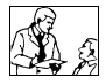
Read and follow carefully. If you have questions or want more information, ask your doctor or pharmacist.

IMPORTANT INFORMATION—Read carefully

1.
NICOTROL® NS Nasal Spray is designed to help you quit smoking by reducing your urge to smoke. What causes the urge to smoke? It is the nicotine in cigarettes. NICOTROL® NS contains nicotine. Your doctor may increase or decrease dosage during the first few weeks. As your body adjusts to not smoking, your doctor will either tell you to stop using NICOTROL® NS or gradually reduce your dose.
People who use NICOTROL® NS with a comprehensive behavioral smoking cessation program are more successful in quitting smoking. This program can include support groups, counseling or specific behavior change techniques.
2.
Side Effects—During the first week or so most people experience the following side effects: hot, peppery feeling in back of throat or nose, sneezing, coughing, watery eyes, or runny nose. Wait 5 minutes before driving. Be sure to use regularly for the first week to help adjust to the side effects.
3.
Because nicotine is addictive, it is possible to become dependent on the Nasal Spray. It is important to use the Nasal Spray only for as long as needed to overcome your smoking habit (as directed by your doctor). Your chance of becoming dependent on the Nasal Spray increases if you use it longer than 6 months.

WARNINGS—Read before using NICOTROL® NS
Figure step 1
1.
Commit yourself—NO SMOKING! For NICOTROL® NS to help, you must be firmly committed to quitting! Stop smoking as soon as you start using NICOTROL® NS. Do not smoke or use any other tobacco product at any time while under treatment with NICOTROL® NS—nicotine overdose can occur. If symptoms of overdose occur, call a doctor or Poison Control Center.

Nicotine overdose symptoms include:

bad headaches
dizziness
upset stomach
drooling
vomiting
diarrhea
cold sweat
weak and irregular pulse
blurred vision
hearing difficulties
mental confusion
weakness and fainting
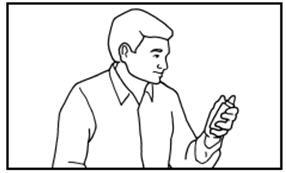
Figure step 2
2.
Keep out of reach of children and pets. NICOTROL® NS can cause serious illness in children and pets—even in very small amounts. If a child uses or handles NICOTROL® NS, call a doctor or Poison Control Center. When the bottle is empty, replace cap and throw away out of reach of children and pets. Even empty bottles contain enough nicotine to seriously harm children and pets.
3.
Tell your doctor if you have:
chronic nasal problems such as
nasal allergies, inflammation,
sinusitis or nasal polyps (growths)
heart problems (recent heart attack, irregular heartbeat, severe or worsening heart pain)
high blood pressure
drug allergies
stomach ulcers or heartburn
wheezing or asthma
overactive thyroid
diabetes requiring insulin
kidney or liver disease
Figure step 3
 
Tell your doctor about any medicines you are taking—the dosages may need to be changed. Check with your doctor before taking any new medicine while using NICOTROL® NS.
4.
If you are pregnant or breast-feeding, only use this medicine on the advice of your health care provider. Smoking can seriously harm your child. Try to stop smoking without using any nicotine replacement medicine. This medicine is believed to be safer than smoking. However, the risks to your child from this medicine are not fully known.

FOLLOW DIRECTIONS

BEFORE YOU USE — Read information on both sides
BEFORE YOU USE—Read information on both sides

Figure direction 1Figure direction 2

FOLLOW DOSAGE:

WHAT TO EXPECT (First Week):

Use as directed by doctor.
But do not use more than 5 times an hour or 40 times in 24 hours.
Stop smoking completely during NICOTROL® NS treatment program.
Hot, peppery feeling in back of throat or nose, sneezing, coughing, watery eyes, or runny nose.
To Help Adjust to Spray—use regularly for first week.
Side effects will lessen for most people in a few days—don't stop using the Nasal Spray. If side effects do not lessen after a week, call your doctor.
Figure direction 3Figure direction 4

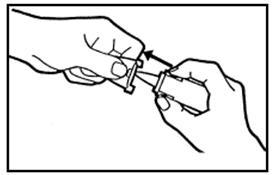
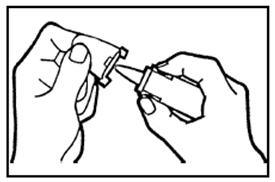
REMOVE CAP:

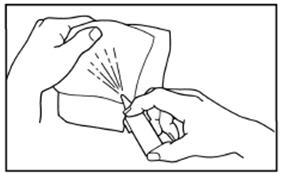
PRIME PUMP (before first use):

Press in circles on sides of bottle.
Pull off cap as shown.
Get a tissue or paper towel.
Hold bottle as shown.
Press up on bottom with thumb.
Pump into tissue until you see a fine spray (6 to 8 times).
Throw tissue away.

FOLLOW DIRECTIONS EXACTLY — Questions? (call 1-888-642-6876)

Figure direction 5Figure direction 6
Blow nose if it is not clear.
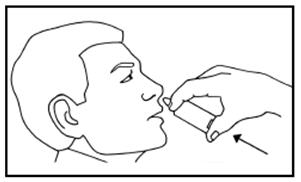
Tilt head back slightly.
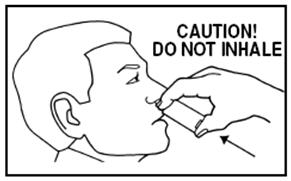
Hold bottle as shown.
Insert tip of bottle into nostril—as far as is comfortable.
Breathe through mouth.
Spray once in each nostril. Do not sniff or inhale while spraying.
If nose runs, gently sniff to keep the Nasal Spray in nose. Wait 2 or 3 minutes before blowing nose.
Figure direction 7

AVOID contact with skin, eyes, and mouth. If bottle breaks, wear rubber gloves, wipe up with paper towel and wash surfaces thoroughly. Do not let nicotine come in contact with your skin, mouth, or eyes. If it does, rinse with plain water immediately. Nicotine overdose can occur when nicotine is absorbed through the skin. If symptoms of overdose occur (see other side for symptoms), call a doctor or Poison Control Center.

Place cap back on bottle after use.
Store at room temperature, 59°F to 86°F (15°C to 30°C), out of reach of children.
If you don't use the Nasal Spray for 24 hours, prime pump in tissue 1 or 2 times.
Most vials of NICOTROL® NS contain 100 doses (200 sprays), but excessive priming will reduce the amount of medicine available for use. Avoid excessive priming.

Additional Resources

Chat online with Pfizer Medical Information regarding your inquiry on a Pfizer medicine or vaccine.

Speak with a Pfizer Medical Information Professional regarding your Pfizer medicine or vaccine inquiry.

Available 9AM-5PM ET Monday to Friday; excluding holidays.


Submit a medical question for a Pfizer medicine or a vaccine. 

The submission will be reviewed during our standard business hours.

To report an adverse event related to a Pfizer product and you are not part of a clinical trial* for this medication, click the link below to submit your information: 
Pfizer Safety Reporting Site

*If you are involved in a clinical trial for either product, adverse events should be reported to your coordinating study site.

If you cannot use the above website to report an adverse event related to a Pfizer medication, please call (800) 438-1985.

You may also contact the U.S. Food and Drug Administration (FDA) directly to report adverse events or product quality concerns either online at www.fda.gov/medwatch or by calling (800) 332-1088.