(nicotine)
DOSAGE AND ADMINISTRATION
DOSAGE AND ADMINISTRATION
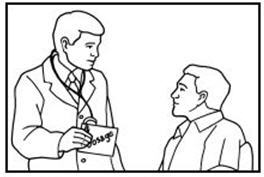
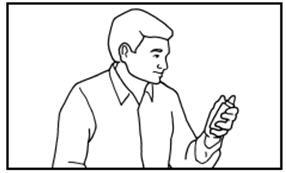
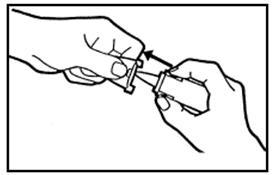
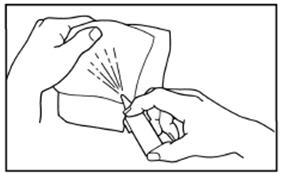
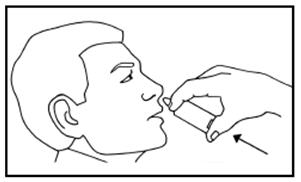
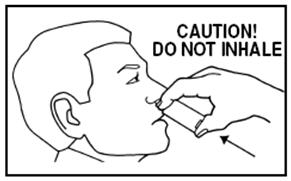
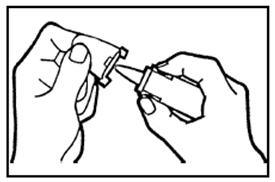
It is important that patients understand the instructions for use of NICOTROL NS, and have their questions answered. They should clearly understand the directions for using NICOTROL NS and safely disposing of the used container. They should be instructed to stop smoking completely when they begin using the product.
Patients should be instructed not to sniff, swallow or inhale through the nose as the spray is being administered. They should also be advised to administer the spray with the head tilted back slightly.
The dose of NICOTROL NS, should be individualized on the basis of each patient's nicotine dependence and the occurrence of symptoms of nicotine excess (See Individualization of Dosage).
Each actuation of NICOTROL NS delivers a metered 50 microliter spray containing 0.5 mg of nicotine. One dose is 1 mg of nicotine (2 sprays, one in each nostril).
Patients should be started with 1 or 2 doses per hour, which may be increased up to a maximum recommended dose of 40 mg (80 sprays, somewhat less than 1/2 bottle) per day. For best results, patients should be encouraged to use at least the recommended minimum of 8 doses per day, as less is unlikely to be effective. In clinical trials, the patients who successfully quit smoking used the product heavily when nicotine withdrawal was at its peak, sometimes up to the recommended maximum of 40 doses per day ( in heavier smokers). Dosing recommendations are summarized in Table 4.
| Maximum Recommended Duration of Treatment | Recommended Doses per Hour | Maximum Doses per Hour | Maximum Doses per Day |
|---|---|---|---|
| |||
3 months | 1–2* | 5 | 40 |
No tapering strategy has been shown to be optimal in clinical studies. Many patients simply stopped using the spray at their last clinic visit.
Recommended strategies for discontinuation of use include suggesting that patients: use only 1/2 a dose (1 spray) at a time, use the spray less frequently, keep a tally of daily usage, try to meet a steadily reducing usage target, skip a dose by not medicating every hour, or set a planned "quit date" for stopping use of the spray.
Individualization of Dosage
The success or failure of smoking cessation is influenced by the quality, intensity and frequency of supportive care. Patients are more likely to quit smoking if they are seen frequently and participate in formal smoking cessation programs.
The goal of NICOTROL NS therapy is complete abstinence. If a patient is unable to stop smoking by the fourth week of therapy, treatment should probably be discontinued.
Patients who fail to quit on any attempt may benefit from interventions to improve their chances for success on subsequent attempts. Patients who were unsuccessful should be counseled and should then probably be given a "therapy holiday" before the next attempt. A new quit attempt should be encouraged when conditions are more favorable.
Based on the clinical trials, a reasonable approach to assisting patients in their attempt to quit smoking is to begin initial treatment, using the recommended dosage (See DOSAGE AND ADMINISTRATION). Regular use of the spray during the first week of treatment may help patients adapt to the irritant effects of the spray. Dosage can then be adjusted in those subjects with signs or symptoms of nicotine withdrawal or excess. Patients who are successfully abstinent on NICOTROL NS should be treated at the selected dosage for up to 8 weeks, following which use of the spray should be discontinued over the next 4 to 6 weeks. Some patients may not require gradual reduction of dosage and may abruptly stop treatment successfully. Treatment with NICOTROL NS for longer periods has not been shown to improve outcome, and the safety of use for periods longer than 6 months has not been established.
The symptoms of nicotine withdrawal overlap those of nicotine excess (See CLINICAL PHARMACOLOGY, Pharmacodynamics and ADVERSE REACTIONS). Since patients using NICOTROL NS may also smoke intermittently, it is sometimes difficult to determine if patients are experiencing nicotine withdrawal or nicotine excess. Controlled clinical trials of nicotine products suggest that palpitations, nausea and sweating are more often symptoms of nicotine excess, whereas anxiety, nervousness and irritability are more often symptoms of nicotine withdrawal.
NICOTROL®NS(NICOTINE NASAL SPRAY)
Nicotrol®NS (nicotine nasal spray)
An Aid To Help You Stop Smoking
PATIENT INFORMATION
Read and follow carefully. If you have questions or want more information, ask your doctor or pharmacist.
IMPORTANT INFORMATION—Read carefully
- 1.
- NICOTROL® NS Nasal Spray is designed to help you quit smoking by reducing your urge to smoke. What causes the urge to smoke? It is the nicotine in cigarettes. NICOTROL® NS contains nicotine. Your doctor may increase or decrease dosage during the first few weeks. As your body adjusts to not smoking, your doctor will either tell you to stop using NICOTROL® NS or gradually reduce your dose.
- •
- People who use NICOTROL® NS with a comprehensive behavioral smoking cessation program are more successful in quitting smoking. This program can include support groups, counseling or specific behavior change techniques.
- 2.
- Side Effects—During the first week or so most people experience the following side effects: hot, peppery feeling in back of throat or nose, sneezing, coughing, watery eyes, or runny nose. Wait 5 minutes before driving. Be sure to use regularly for the first week to help adjust to the side effects.
- 3.
- Because nicotine is addictive, it is possible to become dependent on the Nasal Spray. It is important to use the Nasal Spray only for as long as needed to overcome your smoking habit (as directed by your doctor). Your chance of becoming dependent on the Nasal Spray increases if you use it longer than 6 months.
WARNINGS—Read before using NICOTROL® NS
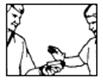


FOLLOW DIRECTIONS
BEFORE YOU USE — Read information on both sides
Additional Resources
Chat online with Pfizer Medical Information regarding your inquiry on a Pfizer medicine or vaccine.
Speak with a Pfizer Medical Information Professional regarding your Pfizer medicine or vaccine inquiry.
Available 9AM-5PM ET Monday to Friday; excluding holidays.
Submit a medical question for a Pfizer medicine or a vaccine.
The submission will be reviewed during our standard business hours.
To report an adverse event related to a Pfizer product and you are not part of a clinical trial* for this medication, click the link below to submit your information:
Pfizer Safety Reporting Site
*If you are involved in a clinical trial for either product, adverse events should be reported to your coordinating study site.
If you cannot use the above website to report an adverse event related to a Pfizer medication, please call (800) 438-1985.
You may also contact the U.S. Food and Drug Administration (FDA) directly to report adverse events or product quality concerns either online at www.fda.gov/medwatch or by calling (800) 332-1088.